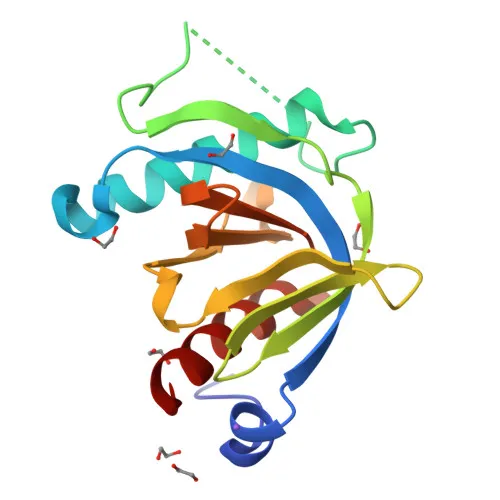
Phosphorylated Antibodies
Phospho-SHC1-Y427 Rabbit pAb - P29353
Item Number : CM0001636
Price varies based on specs and customizations
- Application
- WB, ELISA
- Cross Reactivity
- Human, Mouse
- Protein Weight
- 63kDa

Shipping:
Contact us to get shipping details Enjoy On-time Dispatch Guarantee.
Why Choose Us
Easy ordering process, quality products, and dedicated support for your business success.
Core Product Specifications and Parameters
| Parameter | Value |
|---|---|
| Product Name | Phospho-SHC1-Y427 Rabbit pAb |
| Remarks/Alias | SHC; SHCA; Phospho-SHC1-Y427 |
| Species | Human |
| GeneID (Human) | 6464 |
| GeneID | 6464 |
| Immunogen | Synthetic peptide | A synthetic phosphorylated peptide around Y427 of human SHC1 (NP_892113.4) |
| Source | Rabbit |
| Category | Phosphorylated Antibodies |
| Application | WB, ELISA |
| Cross Reactivity | Human, Mouse |
| SWISS | P29353 |
| Protein Weight | 63kDa |
| Shipping | Ice bag |
Biological Background: SHC1 Function and Localization
- SHC1 encodes three main isoforms—p46Shc, p52Shc, and p66Shc—generated by alternative splicing and alternative promoter usage.
- Isoforms p46Shc and p52Shc couple activated receptor tyrosine kinases to the Ras signaling pathway by recruiting the GRB2/SOS complex, thereby propagating mitogenic signals.
- Isoform p66Shc is not involved in Ras activation but mediates oxidative stress responses and apoptosis; it acts downstream of p53 to increase intracellular oxidants and cytochrome c release.
- SHC1 participates in angiopoietin receptor TEK/TIE2 signaling, regulating endothelial cell migration and sprouting angiogenesis.
- It is involved in oncostatin-M-mediated signaling through the type II OSM receptor, contributing to Ras/Raf/MAPK pathway activation via JAK1-dependent recruitment to the OSMR subunit and SHC1 association with GRB2. Related references: PMID:11016927
- SHC1 localizes to the cytoplasm, focal adhesions, and mitochondrial matrix, reflecting its diverse signaling roles.
- The protein is widely expressed, notably in neural stem cells, but is absent in mature neurons.
- Key post-translational modifications include phosphorylation (it is a phosphoprotein) and acetylation; it contains an SH2 domain essential for protein-protein interactions.
Experimental Guidance and Technical Tips
- The immunogen is a synthetic phosphorylated peptide around Y427, enabling specific detection of phosphorylation at this residue. For Western blot, consider using phospho-specific and total protein controls to confirm band identity.
- Validate antibody performance in relevant human or mouse cell lines stimulated with appropriate growth factors (e.g., EGF, PDGF) to induce SHC1 phosphorylation.
- For ELISA, confirm specificity by competitive inhibition with the phosphorylated versus non-phosphorylated peptide.
- Optimize primary antibody dilution and blocking conditions; a typical starting dilution for WB might be 1:500–1:2000, but empirical determination in your system is recommended.
- Because SHC1 is involved in multiple signaling cascades, interpret results in the context of the complete pathway and potential feedback mechanisms.
CamelBio: Your One-Stop Sourcing Bridge
CamelBio provides diagnostic manufacturers and researchers with a streamlined one‑stop sourcing platform for IVD raw materials, including validated antibody pairs, optimized monoclonal/polyclonal antibodies, and bulk ancillary reagents. For signaling pathway research, such as studies on SHC1 phosphorylation in angiogenesis and oxidative stress, we offer reliable antibody reagents and flexible supply solutions to support your assay development from concept to clinic.
REQUEST A QUOTE
Our professional team will reply to you within one business day. Please feel free to contact us!