Phosphorylated Antibodies
Phospho-Rpb1 CTD-S2/S5 Rabbit mAb - P24928
Item Number : CM0001654
Price varies based on specs and customizations
- Application
- WB, IP, ChIP, CUT&Tag, ELISA
- Cross Reactivity
- Human
- Protein Weight
- 217kDa

Shipping:
Contact us to get shipping details Enjoy On-time Dispatch Guarantee.
Why Choose Us
Easy ordering process, quality products, and dedicated support for your business success.
Core Product Specifications and Parameters
| Parameter | Value |
|---|---|
| Product Name | Phospho-Rpb1 CTD-S2/S5 Rabbit mAb |
| Remarks/Alias | RPB1; RPO2; POLR2; POLRA; RPBh1; RPOL2; NEDHIB; RpIILS; hsRPB1; hRPB220; Phospho-POLR2A-S2/S5 |
| Species | Human |
| GeneID (human) | 5430 |
| GeneID | 5430 |
| Immunogen | A phospho specific peptide corresponding to residues surrounding S2/S5 of human POLR2A |
| Source | Rabbit |
| Category | Phosphorylated Antibodies |
| Application | WB, IP, ChIP, CUT&Tag, ELISA |
| Cross Reactivity | Human |
| SWISS | P24928 |
| Protein Weight | 217kDa |
| Shipping | Ice bag |
Biological Background: DNA-directed RNA polymerase II subunit RPB1 Function and Localization
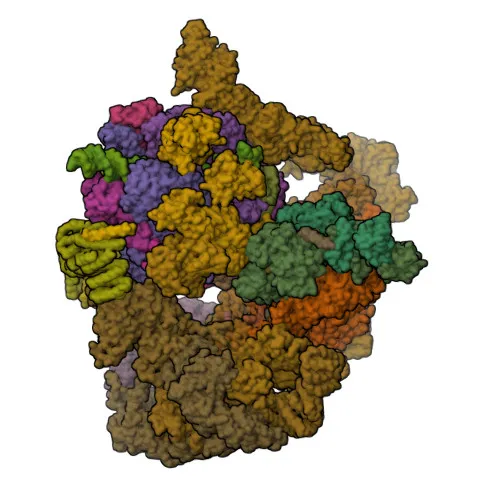
- DNA-directed RNA polymerase II subunit RPB1 (also known as POLR2A) is the largest and catalytic core component of RNA polymerase II, responsible for synthesizing mRNA precursors and many functional non-coding RNAs. Related references: PMID:23748380 PMID:27193682 PMID:30190596
- The Pol II transcription cycle includes initiation, elongation, and termination. During initiation, the pre-initiation complex assembles at promoters; elongation involves processive RNA synthesis; termination releases the transcript. Related references: PMID:23748380 PMID:27193682 PMID:28108474
- The enzyme catalyzes nucleotide addition via a two-metal-ion mechanism, with POLR2A contributing a Mg²⁺-coordinating DxDGD motif and POLR2B providing additional coordination. Related references: PMID:30190596 PMID:8381534 PMID:9852112
- Possesses 3'→5' exonuclease proofreading activity, enabling removal of misincorporated nucleotides. Related references: PMID:8381534
- The unique C-terminal domain (CTD) consists of 52 heptapeptide repeats (YSPTSPS) and undergoes dynamic phosphorylation, primarily at Ser2 and Ser5, which regulates promoter escape, elongation, and mRNA processing. Related references: PMID:24207025 PMID:26124092
- CTD lysine acetylation and methylation balance gene expression, with acetylation promoting transcription of growth-factor-induced genes and methylation generally repressing expression. Related references: PMID:24207025 PMID:26124092
- Additionally, RPB1 can function as an RNA-dependent RNA polymerase, extending non-coding RNAs, and acts in the replication of hepatitis delta virus.
- Subcellular localization: predominantly nuclear, but also found in the cytoplasm and associated with chromosomes.
Experimental Guidance and Technical Tips
- When performing Western blot, ensure lysis buffers contain phosphatase inhibitors to preserve CTD phosphorylation. Include a phosphatase-treated control to confirm phospho-specificity.
- For chromatin immunoprecipitation (ChIP) and CUT&Tag, this antibody may help profile RNA polymerase II occupancy and Ser2/Ser5 phosphorylation patterns across the genome.
- In ELISA, the antibody can be used to quantify phospho-POLR2A levels in lysates or purified samples.
CamelBio: Your One-Stop Sourcing Bridge
CamelBio accelerates diagnostic development by providing a comprehensive range of IVD raw materials and technical support—from concept to clinic. For transcription research targeting RNA polymerase II and CTD modifications, we offer validated antibody pairs, optimized monoclonal/polyclonal antibodies, bulk ancillary reagents, and rare target sourcing. Partner with us to secure reliable, high-quality materials for your assays.
REQUEST A QUOTE
Our professional team will reply to you within one business day. Please feel free to contact us!