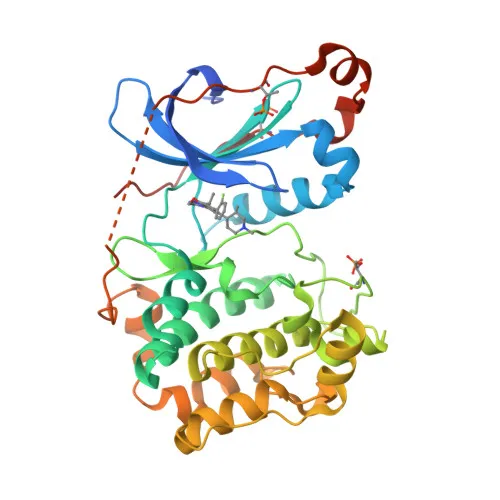
Phosphorylated Antibodies
Phospho-PKC alpha-T638 + PKC beta II-T641 Rabbit Monoclonal Antibody for WB, ELISA - P17252/P05771
Item Number : CM0001106
Price varies based on specs and customizations
- Application
- WB, ELISA
- Cross Reactivity
- Human
- Protein Weight
- 76kDa/77kDa

Shipping:
Contact us to get shipping details Enjoy On-time Dispatch Guarantee.
Why Choose Us
Easy ordering process, quality products, and dedicated support for your business success.
Core Product Specifications and Parameters
| Parameter | Value |
|---|---|
| Product Name | Phospho-PKC alpha-T638 + PKC beta II-T641 Rabbit mAb |
| Remarks/Alias | PKC-beta; PKCB; PRKCB1; PRKCB2; Phospho-PKC alpha-T638 + PKC beta II-T641 |
| Species | Human |
| Gene ID (Human) | 5578/5579 |
| Gene ID | 5578/5579 |
| Immunogen | A synthetic phosphorylated peptide around T638 of human PRKCA (NP_002728.2) |
| Source | Rabbit |
| Category | Phosphorylated Antibodies |
| Application | WB, ELISA |
| Cross Reactivity | Human |
| SWISS | P17252/P05771 |
| Protein Weight | 76kDa/77kDa |
| Shipping | Ice bag |
Biological Background: PKC alpha and PKC beta Function and Localization
- This antibody recognizes the phosphorylated forms of protein kinase C alpha (PRKCA) at Thr638 and protein kinase C beta II (PRKCB) at Thr641, both members of the serine/threonine kinase PKC family.
- PKC alpha is a calcium-, phospholipid- and diacylglycerol-dependent kinase involved in diverse cellular processes such as proliferation, apoptosis, differentiation, migration, adhesion, tumorigenesis, cardiac hypertrophy, and angiogenesis.
- It dynamically localizes to the cytoplasm, cell membrane, mitochondrial membrane, and nucleus, depending on cellular context and stimuli.
- In chemokine-induced CD4+ T cell migration, phosphorylates DOCK8, leading to CDC42 activation. Related references: PMID:28028151
- In response to angiotensin II, phosphorylates KLHL3, reducing its interaction with WNK4 and modulating ion homeostasis. Related references: PMID:25313067
- Phosphorylates and activates LRRK1, which in turn phosphorylates RAB proteins to regulate intracellular trafficking. Related references: PMID:36040231
- PKC alpha is highly expressed in numerous cancers and can act as a tumor promoter, with implications in gliomas and breast cancers.
- It plays critical roles in angiogenesis and platelet aggregation through VEGFA-dependent signaling and CD36/RAP1GAP-mediated pathways.
Experimental Guidance and Technical Tips
- The antibody is raised against a phosphorylated peptide; consider treating samples with lambda phosphatase to confirm phosphorylation-specific binding.
- For western blot, bands are expected near 76 kDa (PKC alpha) and 77 kDa (PKC beta II). Optimize gel percentage and transfer conditions for proteins in this range.
- Validate specificity by including both phosphorylated and non-phosphorylated peptide controls in ELISA.
- Choose relevant cell lines or tissue models known to express active PKC alpha and PKC beta II, and consider appropriate stimuli (e.g., phorbol ester) to induce phosphorylation.
CamelBio: Your One-Stop Sourcing Bridge
CamelBio serves as a comprehensive sourcing partner for IVD raw materials, supporting diagnostic developers and researchers with reliable access to validated antibodies and ancillary reagents. This phospho-specific PKC antibody, targeting key signaling nodes in cancer, cardiovascular, and inflammatory pathways, aligns with our capability to supply optimized monoclonal/polyclonal raw materials for assay development. Beyond individual antibodies, we facilitate procurement of bulk reagents, matched pairs, and rare-target materials to streamline your project from concept to clinical application.
REQUEST A QUOTE
Our professional team will reply to you within one business day. Please feel free to contact us!