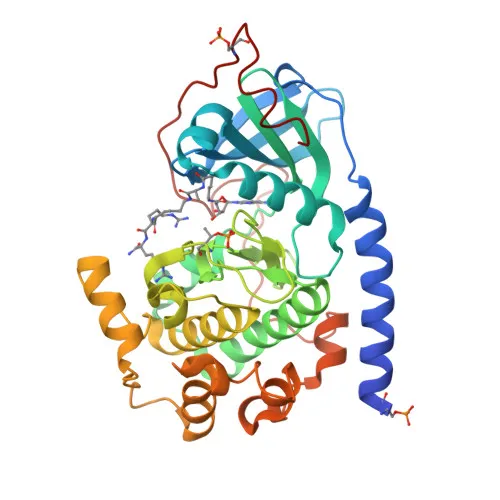
Phosphorylated Antibodies
Phospho-PKA C-alpha (PRKACA)-T197 Rabbit pAb - P17612
Item Number : CM0001951
Price varies based on specs and customizations
- Application
- WB, ELISA
- Cross Reactivity
- Human, Mouse, Rat
- Protein Weight
- 41kDa

Shipping:
Contact us to get shipping details Enjoy On-time Dispatch Guarantee.
Why Choose Us
Easy ordering process, quality products, and dedicated support for your business success.
Core Product Specifications and Parameters
| Parameter | Value |
|---|---|
| Product Name | Phospho-PKA C-alpha (PRKACA)-T197 Rabbit pAb |
| Remarks/Alias | CAFD1; PKACA; PPNAD4; Phospho-PKA C-alpha (PRKACA)-T197 |
| Species | Human |
| GeneID (Human) | 5566 |
| GeneID | 5566 |
| Immunogen | Synthetic peptide: A synthetic phosphorylated peptide around T197 of human PKA C-alpha (PRKACA) (NP_002721.1). |
| Source | Rabbit |
| Category | Phosphorylated Antibodies |
| Application | WB, ELISA |
| Cross Reactivity | Human, Mouse, Rat |
| SWISS | P17612 |
| Protein Weight | 41kDa |
| Shipping | Ice bag |
Biological Background: PKA C-alpha Function and Localization
- cAMP-dependent protein kinase catalytic subunit alpha (PRKACA) is a serine/threonine kinase that phosphorylates numerous substrates in response to cAMP, regulating key cellular processes including metabolism, transcription, and cell cycle (PubMed:15642694, PubMed:15905176, PubMed:16387847). Related references: PMID:15642694 PMID:15905176 PMID:16387847
- PRKACA localizes to multiple subcellular compartments, including cytoplasm, nucleus, cell membrane, mitochondrion, and cilia, enabling spatially restricted signaling.
- Two isoforms exist: isoform 1 is ubiquitously expressed, while isoform 2 is sperm-specific and enriched in pachytene spermatocytes, reflecting distinct tissue functions.
- The kinase is regulated by cAMP-mediated dissociation from regulatory subunits and by phosphorylation; it is a phosphoprotein with multiple modification sites.
- PRKACA acts as a key inhibitor of the smoothened signaling pathway by phosphorylating GLI transcription factors, preventing their transcriptional activation in the absence of hedgehog ligands (PubMed:16705181). Related references: PMID:16705181
- Mutations in PRKACA are associated with Cushing syndrome, illustrating its critical role in endocrine regulation.
Experimental Guidance and Technical Tips
- The immunogen is a synthetic phosphorylated peptide spanning the T197 region; as a phospho-specific antibody, consider validating specificity using phosphatase-treated lysates alongside positive controls.
- For WB applications, anticipate a single band at approximately 41 kDa; include phosphatase inhibitors in lysis buffers to preserve phosphorylation.
- Cross-reactivity with mouse and rat is reported; sequence alignment of the T197 motif across species is advisable to confirm epitope conservation.
- ELISA experiments may benefit from coating with the phospho-peptide and using non-phosphorylated peptide as a negative control to ensure phospho-selectivity.
CamelBio: Your One-Stop Sourcing Bridge
CamelBio offers comprehensive sourcing for IVD raw materials, including phospho-specific antibodies like this anti-PKA C-alpha (p-T197) rabbit pAb, alongside complementary reagents for kinase signaling research. As your one-stop partner, we supply validated antibody pairs, optimized monoclonal/polyclonal antibodies, and bulk ancillary reagents to streamline assay development from concept to clinic.
REQUEST A QUOTE
Our professional team will reply to you within one business day. Please feel free to contact us!