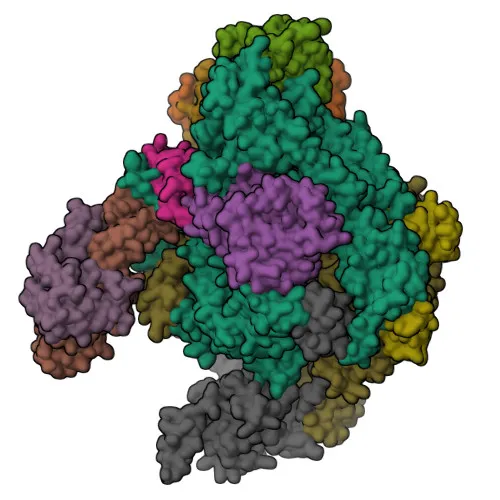
Phosphorylated Antibodies
Phospho-p53-S46 Rabbit Polyclonal Antibody for WB, IP, ELISA - P04637
Item Number : CM0001303
Price varies based on specs and customizations
- Application
- WB, IP, ELISA
- Cross Reactivity
- Human
- Protein Weight
- 44kDa

Shipping:
Contact us to get shipping details Enjoy On-time Dispatch Guarantee.
Why Choose Us
Easy ordering process, quality products, and dedicated support for your business success.
Core Product Specifications and Parameters
| Parameter | Value |
|---|---|
| Product Name | Phospho-p53-S46 Rabbit pAb |
| Remarks/Alias | P53; BCC7; LFS1; BMFS5; TRP53; Phospho-p53-S46 |
| Species | Human |
| Gene ID | 7157 |
| Immunogen | A synthetic phosphorylated peptide around S46 of human p53 (NP_000537.3) |
| Source | Rabbit |
| Category | Phosphorylated Antibodies |
| Application | WB, IP, ELISA |
| Cross Reactivity | Human |
| SWISS | P04637 |
| Protein Weight | 44kDa |
| Shipping | Ice bag |
Biological Background: p53 Function and Localization
- The p53 protein, encoded by the TP53 gene, is a multifunctional transcription factor and critical tumor suppressor that maintains genomic stability. Related references: PMID:11025664 PMID:12524540 PMID:12810724
- Upon activation, p53 induces cell cycle arrest, primarily via transcriptional upregulation of the cyclin-dependent kinase inhibitor p21, to allow DNA repair. Related references: PMID:11025664 PMID:12524540 PMID:12810724
- p53 promotes apoptosis through transcriptional activation of pro-apoptotic genes such as BAX and FAS, and repression of anti-apoptotic Bcl-2, with regulation by ASPP family members. Related references: PMID:12524540 PMID:17189187
- In addition to apoptosis, p53 is involved in oxidative stress-induced necrosis, circadian clock regulation, and non-coding RNA-mediated gene silencing. Related references: PMID:24051492
- p53 is a phosphoprotein regulated by extensive post-translational modifications, including phosphorylation, acetylation, ubiquitination, and methylation, which modulate its stability and transcriptional activity.
- Subcellularly, p53 dynamically localizes to the nucleus, cytoplasm, mitochondria, endoplasmic reticulum, and centrosome, reflecting its diverse roles.
- The protein is ubiquitously expressed, with multiple tissue-dependent isoforms detected in normal tissues.
- Keywords: tumor suppressor, transcription, apoptosis, cell cycle, phosphoprotein, DNA damage response.
Experimental Guidance and Technical Tips
- The immunogen is a synthetic phosphopeptide corresponding to residues around Ser46 of human p53; antibody specificity for the phosphorylated form should be confirmed using phosphatase-treated samples or phospho-blocking peptides.
- For Western blot (WB), a band at ~44 kDa is expected. Optimal primary antibody dilution should be determined empirically; consider starting with 1:500-1:2000.
- For immunoprecipitation (IP), the antibody may capture phosphorylated p53; include phosphatase inhibitors in lysis buffers to preserve phospho-signals.
- For ELISA, use the antibody in a direct or sandwich format as a capture or detection reagent; pair with appropriate standards.
- Cross-reactivity with non-human species has not been evaluated; validate in the relevant sample system if using other species.
CamelBio: Your One-Stop Sourcing Bridge
CamelBio provides diagnostic manufacturers, labs, and research institutes with one-stop access to IVD raw materials, technical services, and consulting—covering every stage from concept to clinic. As a trusted supply partner, we offer validated antibody pairs, optimized monoclonal and polyclonal antibodies, bulk ancillary reagents, and rare target sourcing for p53 signaling and apoptosis research, enabling efficient assay development and biomarker validation.
REQUEST A QUOTE
Our professional team will reply to you within one business day. Please feel free to contact us!