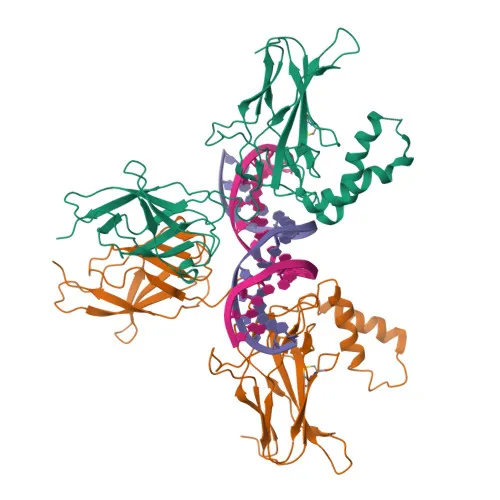
Phosphorylated Antibodies
Phospho-NF-κB2-S866 Rabbit Monoclonal Antibody for WB, ELISA - Q00653
Item Number : CM0000964
Price varies based on specs and customizations
- Application
- WB, ELISA
- Cross Reactivity
- Mouse
- Protein Weight
- 97kDa

Shipping:
Contact us to get shipping details Enjoy On-time Dispatch Guarantee.
Why Choose Us
Easy ordering process, quality products, and dedicated support for your business success.
Core Product Specifications and Parameters
| Parameter | Value |
|---|---|
| Product Name | Phospho-NF-κB2-S866 Rabbit mAb |
| Remarks/Alias | p52; p100; H2TF1; LYT10; CVID10; LYT-10; NF-kB2; p49/p100; Phospho-NF-κB2-S866 |
| Species | Human |
| GeneID (human) | 4791 |
| GeneID | 4791 |
| Immunogen | Synthetic peptide|A synthetic phosphorylated peptide around S866 of human Phospho-NF-κB2-S866 (NP_001070962.1). |
| Source | Rabbit |
| Category | Phosphorylated Antibodies |
| Application | WB, ELISA |
| Cross Reactivity | Mouse |
| SWISS | Q00653 |
| Protein Weight | 97kDa |
| Shipping | Ice bag |
Biological Background: NF-κB2 (p100/p52) Function and Localization
- NF-κB2 encodes the p100 subunit, which is proteolytically processed to generate the p52 DNA-binding subunit. p100 is the major form, while p52 is the minor form, produced via non-canonical NF-κB activation.
- The NF-κB complex is a homo- or heterodimeric transcription factor that regulates inflammation, immunity, cell growth, and apoptosis. p52 forms heterodimers with RelB to activate transcription or homodimers to repress transcription.
- In the non-canonical pathway, phosphorylation of p100 at S866 (and other residues) triggers ubiquitin-dependent processing to p52, allowing nuclear translocation and target gene activation.
- NF-κB2 localizes to both the cytoplasm and the nucleus; p100 primarily retains associated NF-κB proteins in the cytoplasm, while p52 dimers shuttle into the nucleus upon stimulation.
- p52 binds the κB DNA consensus sequence 5'-GGRNNYYCC-3' in enhancers of immune and acute-phase response genes.
- In concert with RELB, NF-κB2 regulates the circadian clock by repressing the transcriptional activator activity of the CLOCK-BMAL1 heterodimer.
- The protein is a phosphoprotein with multiple modifications; mutations in NFKB2 are associated with common variable immunodeficiency (CVID10).
Experimental Guidance and Technical Tips
- This antibody was raised against a synthetic phosphopeptide corresponding to S866 of human p100, and thus recognizes NF-κB2 only when phosphorylated at this residue.
- For western blotting, verify detection of a ~97 kDa band (p100) and possibly a ~52 kDa band (p52) in lysates from cells stimulated to activate the non-canonical NF-κB pathway (e.g., with lymphotoxin β or anti-LTβR antibodies).
- Since the antibody cross-reacts with mouse NF-κB2, it may be suitable for studies in mouse models; however, validate in the relevant tissue or cell type.
- For ELISA, consider using the antibody as a capture or detection reagent with appropriate controls to ensure phospho-specificity.
CamelBio: Your One-Stop Sourcing Bridge
CamelBio provides diagnostic manufacturers, labs, and research institutes with one-stop access to IVD raw materials, technical services, and consulting—covering every stage from concept to clinic. Our portfolio includes validated antibody pairs, optimized monoclonal and polyclonal antibodies like this phospho-NF-κB2-S866 mAb, bulk ancillary reagents, and rare-target raw-material sourcing, all tailored to support NF-κB signaling research and immune disorder studies.
Product Datasheet
Phospho-NF-κB2-S866 Rabbit Monoclonal Antibody for WB, ELISA - Q00653
REQUEST A QUOTE
Our professional team will reply to you within one business day. Please feel free to contact us!