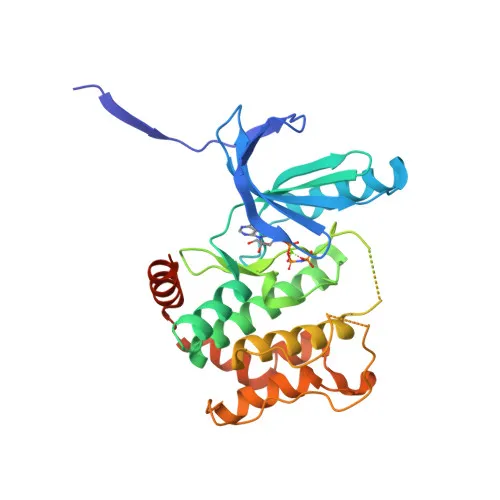
Phosphorylated Antibodies
Phospho-MAP2K4-T261 Rabbit pAb - P45985
Item Number : CM0000940
Price varies based on specs and customizations
- Application
- WB, ELISA
- Cross Reactivity
- Human, Mouse, Rat
- Protein Weight
- 44kDa

Shipping:
Contact us to get shipping details Enjoy On-time Dispatch Guarantee.
Why Choose Us
Easy ordering process, quality products, and dedicated support for your business success.
Core Product Specifications and Parameters
| Parameter | Value |
|---|---|
| Product Name | Phospho-MAP2K4-T261 Rabbit pAb |
| Remarks/Alias | JNKK; MEK4; MKK4; SEK1; SKK1; JNKK1; SERK1; MAPKK4; PRKMK4; SAPKK1; SAPKK-1; Phospho-MAP2K4-T261 |
| Species | Human |
| GeneID (human) | 6416 |
| GeneID | 6416 |
| Immunogen | Synthetic peptide |
| Source | Rabbit |
| Category | Phosphorylated Antibodies |
| Application | WB, ELISA |
| Cross Reactivity | Human, Mouse, Rat |
| SWISS | P45985 |
| Protein Weight | 44kDa |
| Shipping | Ice bag |
Biological Background: MAP2K4 Function and Localization
- MAP2K4 (also known as MEK4, MKK4, SEK1, JNKK1, among other aliases) is a dual specificity protein kinase that functions as a key component of the mitogen-activated protein (MAP) kinase signaling cascade.
- It is an essential kinase in the stress-activated protein kinase/c-Jun N-terminal kinase (SAP/JNK) pathway, directly phosphorylating and activating JNKs (MAPK8/JNK1, MAPK9/JNK2, MAPK10/JNK3) and also the p38 MAPKs (MAPK11, MAPK12, MAPK13, MAPK14).
- MAP2K4 preferentially phosphorylates the tyrosine residue within the Thr-Pro-Tyr motif of JNKs, while MAP2K7 targets the threonine residue; together they synergistically activate JNKs in response to various stimuli.
- This kinase is required for maintaining peripheral lymphoid homeostasis and is involved in mitochondrial death signaling, including cytochrome c release leading to apoptosis.
- Subcellular localization includes both the cytoplasm and nucleus, consistent with its role in signal transduction from cell surface to the nucleus.
- MAP2K4 is widely expressed across tissues, with particularly abundant expression observed in skeletal muscle.
- The protein undergoes several post-translational modifications, including acetylation, methylation, and phosphorylation, which regulate its activity, and is subject to alternative splicing.
Experimental Guidance and Technical Tips
- As a phospho-specific antibody raised against a synthetic phosphorylated peptide around Thr261, it is critical to include phosphatase inhibitors in lysis buffers to preserve the phosphorylation state of endogenous MAP2K4 during sample preparation.
- Validate antibody specificity by treating cell lysates with lambda phosphatase; successful dephosphorylation should abolish the signal if the antibody strictly recognizes the phospho-T261 form.
- For western blotting, the expected molecular weight is approximately 44 kDa; use appropriate gel percentages and transfer conditions for this size range.
- Cross-reactivity is predicted with human, mouse, and rat based on sequence homology of the immunogen region; however, verification in the relevant species is recommended.
- In ELISA applications, consider using this antibody as a capture or detection reagent, and optimize coating and detection conditions empirically with phosphorylated peptide or protein standards.
CamelBio: Your One-Stop Sourcing Bridge
CamelBio supports diagnostic developers and researchers with integrated access to high-quality IVD raw materials, including validated antibody pairs and bulk reagents for MAP kinase signaling targets like MAP2K4. Our supply capabilities encompass monoclonal and polyclonal antibodies, recombinant proteins, and ancillary reagents, all backed by robust sourcing and quality assessment. Whether you need routine or rare-target raw materials, CamelBio streamlines your path from concept to clinic.
REQUEST A QUOTE
Our professional team will reply to you within one business day. Please feel free to contact us!