Phosphorylated Antibodies
Phospho-Histone H3-T3 Rabbit pAb for WB, ELISA - Q16695 / P68431
Item Number : CM0000899
Price varies based on specs and customizations
- Application
- WB, ELISA
- Cross Reactivity
- Human, Mouse, Rat, Other (Wide Range Predicted)
- Protein Weight
- 15kDa

Shipping:
Contact us to get shipping details Enjoy On-time Dispatch Guarantee.
Why Choose Us
Easy ordering process, quality products, and dedicated support for your business success.
Core Product Specifications and Parameters
| Parameter | Value |
|---|---|
| Product Name | Phospho-Histone H3-T3 Rabbit pAb |
| Remarks/Alias | H3/A; H3C2; H3C3; H3C4; H3C6; H3C7; H3C8; H3FA; H3C10; H3C11; H3C12; HIST1H3A; Phospho-Histone H3-T3 |
| Species | Human |
| GeneID (Human) | H3 |
| GeneID | 8290/8350 |
| Immunogen | Synthetic Peptide – A synthetic phosphorylated peptide around T3 of human HIST1H3A (NP_003520.1). |
| Source | Rabbit |
| Category | Phosphorylated Antibodies |
| Application | WB, ELISA |
| Cross Reactivity | Human, Mouse, Rat, Other (Wide Range Predicted) |
| SWISS | Q16695/P68431 |
| Protein Weight | 15kDa |
| Shipping | Ice bag |
Biological Background: Histone H3 Function and Localization
- Histone H3.1t (also designated H3/g or H3.4) is a testis‑specific variant of the canonical histone H3. It is encoded by the H3-4 (HIST3H3) gene and belongs to the large histone H3 family, which includes additional genes such as HIST1H3A.
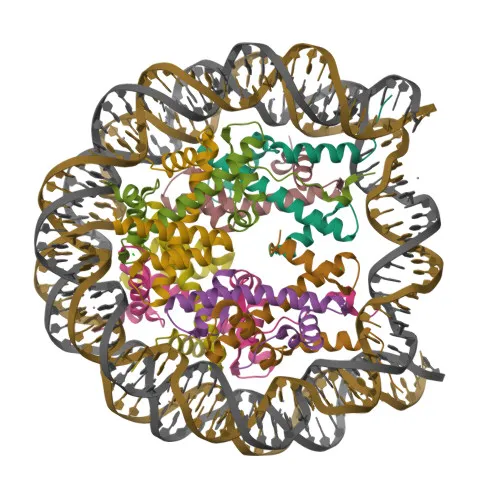
- As a core histone, H3 assembles with H2A, H2B, and H4 into the histone octamer that forms the nucleosome, the fundamental repeating unit of chromatin. Nucleosomes package DNA into a compact structure that restricts access to the genetic information.
- This compaction plays a central role in regulating transcription, DNA replication, DNA repair, and overall chromosomal stability. The controlled unwrapping or remodeling of nucleosomes allows cellular machinery to read, copy, or repair the DNA template.
- Histone function is dynamically regulated by a complex array of post‑translational modifications on their N‑terminal tails—the “histone code.” These include phosphorylation (e.g., at Thr‑3), acetylation, methylation, and many others, which act together to modulate chromatin state and recruit downstream effector proteins.
- H3.1t localizes exclusively to the nucleus and is integrated into chromatin. Consistent with its role in DNA packaging, it is tightly associated with chromosomes throughout the cell cycle.
- Expression of H3.1t is largely restricted to testicular cells, suggesting a specialized function in chromatin reorganization during spermatogenesis. Other H3 variants are expressed more broadly and fulfill similar nucleosomal roles in somatic cells.
- The UniProt keywords for H3.1t include “Phosphoprotein,” “Acetylation,” “Methylation,” “Citrullination,” and “ADP‑ribosylation,” highlighting the extensive modification landscape that governs its functions.
Experimental Guidance and Technical Tips
- The immunogen is a synthetic phosphopeptide spanning Thr‑3 of human HIST1H3A. This design aims to generate antibodies that specifically recognize the phosphorylated form of histone H3. Researchers should confirm specificity by comparing signals between phosphatase‑treated and untreated samples.
- The antibody is validated for Western blotting (WB) and ELISA. For WB, whole‑cell lysates or histone‑enriched extracts may be used, and a band near 15 kDa is expected. Migration can vary depending on the modification status of H3. Always include phosphatase inhibitors during lysis and sample preparation to preserve the phosphorylation signal.
- In ELISA, consider coating the plate with the phosphorylated peptide or phosphorylated histone protein. Include appropriate controls (e.g., non‑phosphopeptide) to assess binding specificity.
- Predicted cross‑reactivity is wide (human, mouse, rat, and others) due to the high conservation of the H3 N‑terminal tail across vertebrates. However, validation in the relevant species and tissue is recommended before quantitative applications.
- For immunohistochemical or immunocytochemical applications, note that the antibody was not originally developed for these formats; pilot testing with appropriate antigen retrieval and detection conditions is advisable.
CamelBio: Your One-Stop Sourcing Bridge
CamelBio specializes in providing diagnostic manufacturers, laboratories, and research institutes with direct access to a comprehensive portfolio of IVD‑grade antibodies and ancillary raw materials. This phospho‑specific histone H3 antibody supports research in epigenetics, chromatin biology, and cancer biomarker development. With our established supply network, we facilitate sourcing of validated antibody pairs, optimized monoclonal and polyclonal antibodies, bulk ancillary reagents, and hard‑to‑find target raw materials to streamline development from concept to clinic.
REQUEST A QUOTE
Our professional team will reply to you within one business day. Please feel free to contact us!