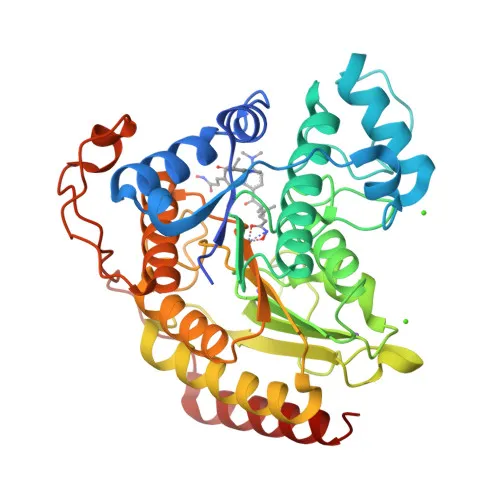
Phosphorylated Antibodies
Phospho-HDAC8-S39 Rabbit pAb - Q9BY41
Item Number : CM0000900
Price varies based on specs and customizations
- Application
- IF/ICC
- Cross Reactivity
- Human
- Protein Weight
- 42kDa

Shipping:
Contact us to get shipping details Enjoy On-time Dispatch Guarantee.
Why Choose Us
Easy ordering process, quality products, and dedicated support for your business success.
Core Product Specifications and Parameters
| Parameter | Value |
|---|---|
| Product Name | Phospho-HDAC8-S39 Rabbit pAb |
| Remarks/Alias | HD8; WTS; RPD3; CDA07; CDLS5; KDAC8; MRXS6; HDACL1; Phospho-HDAC8-S39 |
| Species | Human |
| Gene ID (Human) | 55869 |
| Gene ID | 55869 |
| Immunogen | Synthetic peptide; A phospho specific peptide corresponding to residues surrounding S39 of human HDAC8 |
| Source | Rabbit |
| Category | Phosphorylated Antibodies |
| Application | IF/ICC |
| Cross Reactivity | Human |
| SWISS | Q9BY41 |
| Protein Weight | 42kDa |
| Shipping | Ice bag |
Biological Background: HDAC8 Function and Localization
-
Histone deacetylase 8 (HDAC8) is a class I histone deacetylase that catalyzes the deacetylation of lysine residues on core histones (H2A, H2B, H3, H4), leading to chromatin compaction and transcriptional repression.
Related references: PMID:10748112, PMID:10922473, PMID:10926844 -
Beyond histones, HDAC8 deacetylates non-histone proteins such as the cohesin complex protein SMC3, regulating the release of cohesin from chromatin during cell division.
Related references: PMID:22885700 -
HDAC8 also functions as a protein decrotonylase, removing crotonyl groups from histones, thereby expanding the spectrum of epigenetic modifications it regulates.
Related references: PMID:28497810 -
The protein is primarily localized to the nucleus and chromosomes, but it can also be detected in the cytoplasm, indicating dynamic subcellular trafficking or context-dependent functions.
-
HDAC8 is weakly expressed in most tissues, with higher expression levels observed in heart, brain, kidney, and pancreas, and lower levels in liver, lung, placenta, and prostate.
-
Phosphorylation at serine 39 (S39) is a key regulatory modification that may influence HDAC8 catalytic activity, protein stability, or interaction with regulatory partners.
-
Mutations in HDAC8 are associated with Cornelia de Lange syndrome spectrum disorders (CDLS5) and may contribute to intellectual disability and obesity phenotypes.
Experimental Guidance and Technical Tips
- For immunofluorescence/immunocytochemistry (IF/ICC) detection of phosphorylated HDAC8 (S39) in human samples, consider optimizing fixation and permeabilization protocols to preserve both the phospho-epitope and cellular ultrastructure.
- Since the immunogen is a phospho-specific peptide, it is critical to validate the antibody’s specificity for the phosphorylated form by treating samples with a phosphatase or using a non-phosphorylated peptide control in parallel.
- Expect predominantly nuclear staining with possible cytoplasmic signal, consistent with HDAC8’s described localization; include appropriate subcellular markers as references.
- The predicted molecular weight of HDAC8 is approximately 42 kDa; verify the band of interest by western blotting on a separate gel if needed, though note that the validated application is IF/ICC.
CamelBio: Your One-Stop Sourcing Bridge
CamelBio is a one-stop sourcing partner for IVD raw materials, supporting diagnostic manufacturers, laboratories, and research institutes from initial concept to clinical application. This Phospho-HDAC8-S39 antibody is part of our extensive portfolio for epigenetic and chromatin biology research; we also supply validated antibody pairs, optimized monoclonal and polyclonal antibodies, bulk ancillary reagents, and can assist with sourcing rare target reagents. Contact us to explore how our comprehensive supply capabilities can accelerate your diagnostic development projects.
REQUEST A QUOTE
Our professional team will reply to you within one business day. Please feel free to contact us!