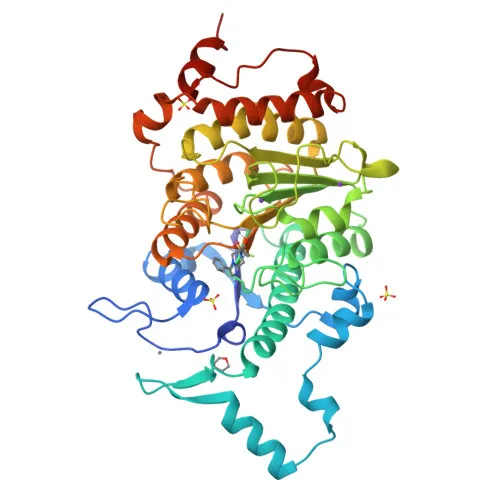
Phosphorylated Antibodies
Phospho-HDAC4-S632 Rabbit Monoclonal Antibody for WB and ELISA - P56524
Item Number : CM0001615
Price varies based on specs and customizations
- Application
- WB, ELISA
- Cross Reactivity
- Human
- Protein Weight
- 119kDa

Shipping:
Contact us to get shipping details Enjoy On-time Dispatch Guarantee.
Why Choose Us
Easy ordering process, quality products, and dedicated support for your business success.
Core Product Specifications and Parameters
| Parameter | Value |
|---|---|
| Product Name | Phospho-HDAC4-S632 Rabbit mAb |
| Remarks/Alias | HD4; AHO3; BDMR; HDACA; HA6116; HDAC-4; HDAC-A; NEDCHF; NEDCHID; Phospho-HDAC4-S632 |
| Species | Human |
| GeneID | 9759 |
| Immunogen | A synthetic phosphorylated peptide around S632 of human Phospho-HDAC4-S632 (NP_006028.2) |
| Source | Rabbit |
| Category | Phosphorylated Antibodies |
| Application | WB, ELISA |
| Cross Reactivity | Human |
| SWISS | P56524 |
| Protein Weight | 119kDa |
| Shipping | Ice bag |
Biological Background: HDAC4 Function and Localization
- Histone deacetylase 4 (HDAC4) catalyzes the removal of acetyl groups from lysine residues on core histones (H2A, H2B, H3, H4), leading to chromatin condensation and transcriptional repression.
- HDAC4 plays critical roles in cell cycle progression and developmental events by forming large multiprotein complexes that epigenetically silence gene expression.
- It is involved in muscle maturation through interactions with myocyte enhancer factors MEF2A, MEF2C, and MEF2D, repressing genes promoting myogenesis until appropriate signals relieve repression.
- In breast cancer, HDAC4 participates in MTA1-mediated epigenetic regulation of estrogen receptor alpha (ESR1) expression, influencing hormone signaling pathways.
- HDAC4 also deacetylates non-histone substrates; for example, it deacetylates HSPA1A and HSPA1B at Lys-77, promoting their binding to the co-chaperone STUB1 (PubMed:27708256). Related references: PMID:27708256
- Subcellular localization is dynamic: HDAC4 shuttles between the nucleus and cytoplasm, regulated by phosphorylation and other post-translational modifications.
- It is ubiquitously expressed across tissues, consistent with its fundamental role in chromatin regulation.
- Keywords: Alternative splicing, chromatin regulator, disease variants (epilepsy, intellectual disability), metal-binding, phosphoprotein, and Ubl conjugation, reflecting its regulatory complexity.
Experimental Guidance and Technical Tips
- As a phospho-specific antibody targeting serine 632, ensure sample preparation includes phosphatase inhibitors to preserve the phosphorylation state during lysis and handling.
- For Western blot, denaturing and reducing conditions are recommended to detect the ~119 kDa HDAC4 protein; optimize antibody dilution experimentally (e.g., starting range 1:500–1:2000).
- In ELISA applications, use the antibody to capture or detect phosphorylated HDAC4 in cell lysates or recombinant protein systems; confirm specificity with phosphatase-treated controls and non-phosphopeptide competition.
- Because phosphorylation may vary with cell type and treatment, validate detection conditions thoroughly in your specific experimental model.
CamelBio: Your One-Stop Sourcing Bridge
CamelBio is your comprehensive sourcing partner for IVD raw materials, offering validated antibody pairs, optimized monoclonal and polyclonal antibodies, bulk ancillary reagents, and rare target sourcing solutions. Our Phospho-HDAC4-S632 Rabbit mAb supports epigenetics and transcriptional regulation research, and we can assist you in seamlessly transitioning from concept to clinical application. Explore our one-stop supply capabilities to accelerate your diagnostic development pipeline.
REQUEST A QUOTE
Our professional team will reply to you within one business day. Please feel free to contact us!