Phosphorylated Antibodies
Phospho-ERK3-S189 Rabbit Polyclonal Antibody for WB, ELISA - Q16659
Item Number : CM0000551
Price varies based on specs and customizations
- Application
- WB, ELISA
- Cross Reactivity
- Human, Mouse, Rat
- Protein Weight
- 83kDa

Shipping:
Contact us to get shipping details Enjoy On-time Dispatch Guarantee.
Why Choose Us
Easy ordering process, quality products, and dedicated support for your business success.
Easy Process
Quality Assured
Dedicated Support
Core Product Specifications and Parameters
| Parameter | Value |
|---|---|
| Product Name | Phospho-ERK3-S189 Rabbit pAb |
| Remarks/Alias | ERK3; PRKM6; p97MAPK; HsT17250; Phospho-ERK3-S189 |
| Species | Human |
| Gene ID (Human) | 5597 |
| Gene ID | 5597 |
| Immunogen | A synthetic phosphorylated peptide around S189 of human ERK3 (NP_002739.1) |
| Source | Rabbit |
| Category | Phosphorylated Antibodies |
| Application | WB, ELISA |
| Cross Reactivity | Human, Mouse, Rat |
| SWISS | Q16659 |
| Protein Weight | 83kDa |
| Shipping | Ice bag |
Biological Background: Mitogen-activated protein kinase 6 Function and Localization
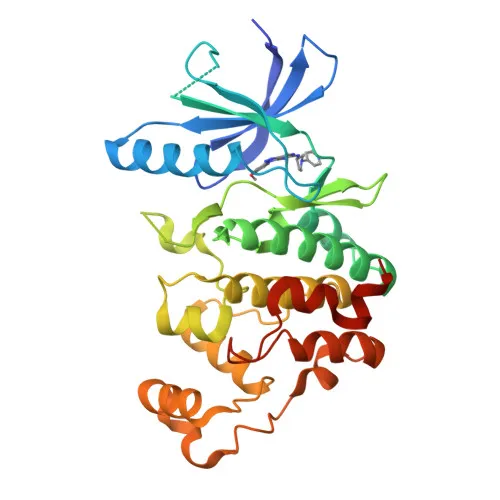
- Mitogen-activated protein kinase 6 (MAPK6), also known as extracellular signal-regulated kinase 3 (ERK-3) or p97-MAPK, is an atypical MAPK encoded by the MAPK6 gene.
- MAPK6 lacks the typical TXY activation motif and displays low basal kinase activity; it phosphorylates substrates such as microtubule-associated protein 2 (MAP2) and MAPK-activated protein kinase 5 (MAPKAPK5).
- The kinase forms a complex with MAPKAPK5, where ERK3/MAPK6 is first phosphorylated at Ser-189, which then mediates phosphorylation and activation of MAPKAPK5; MAPKAPK5 in turn phosphorylates ERK3/MAPK6 in a regulatory feedback loop (By similarity).
- May play a role in promoting cell cycle entry, although the precise biological function remains under investigation (By similarity).
- Subcellularly, MAPK6 localizes to both the cytoplasm and nucleus, consistent with its involvement in signaling pathways that transmit extracellular cues.
- Tissue expression is highest in skeletal muscle and brain, with additional presence in heart, placenta, lung, liver, pancreas, kidney, and skin fibroblasts.
- Keywords from UniProt highlight its classification as a serine/threonine-protein kinase, nucleotide-binding, ATP-binding, phosphoprotein, and its involvement in the cell cycle.
Experimental Guidance and Technical Tips
- As a phospho-specific antibody targeting ERK3 phosphorylated at Ser-189, it is critical to use appropriate phosphatase inhibitors during sample preparation to preserve the phosphorylation signal.
- For Western blot (WB), consider including a phosphatase-treated control or a non-phospho peptide blocking experiment to confirm phospho-specificity.
- The antibody is reactive with human, mouse, and rat ERK3; validate detection in the relevant cell or tissue lysates where ERK3 is expressed (e.g., skeletal muscle, brain).
- For ELISA, use a phosphorylated peptide corresponding to the immunogen as a positive control and a non-phosphorylated peptide as a specificity control.
- Note that the predicted protein weight is approximately 83 kDa; however, the observed band may shift slightly depending on post-translational modifications or gel conditions.
CamelBio: Your One-Stop Sourcing Bridge
- CamelBio offers a comprehensive portfolio of IVD raw materials, including validated antibody pairs, optimized monoclonal and polyclonal antibodies, and bulk ancillary reagents to accelerate your diagnostic development.
- Whether you are developing assays targeting MAP kinase signaling pathways or need rare-target raw-material sourcing for phospho-specific antibodies, CamelBio provides reliable supply-chain solutions from concept to clinic.
- As your sourcing partner, we ensure seamless access to research-grade and IVD-grade antibodies, helping you maintain consistent performance across batches and applications.
REQUEST A QUOTE
Our professional team will reply to you within one business day. Please feel free to contact us!