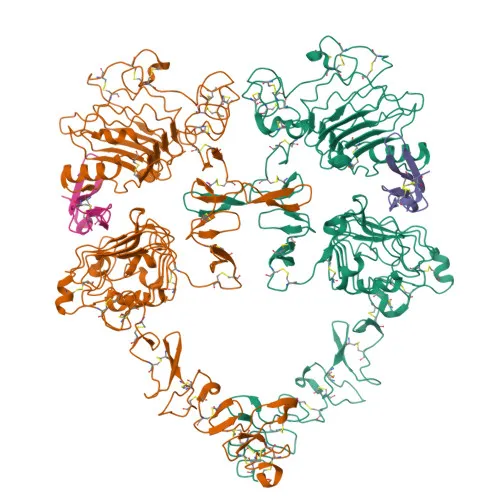
Phosphorylated Antibodies
Phospho-EGFR (Y1148) Rabbit Polyclonal Antibody for WB, ELISA - P00533
Item Number : CM0001955
Price varies based on specs and customizations
- Application
- WB, ELISA
- Cross Reactivity
- Human
- Protein Weight
- 134kDa

Shipping:
Contact us to get shipping details Enjoy On-time Dispatch Guarantee.
Why Choose Us
Easy ordering process, quality products, and dedicated support for your business success.
Core Product Specifications and Parameters
| Parameter | Value |
|---|---|
| Product Name | Phospho-EGFR-Y1148 Rabbit pAb |
| Remarks/Alias | ERBB; ERRP; HER1; mENA; ERBB1; PIG61; NISBD2; Phospho-EGFR-Y1148 |
| Species | Human |
| GeneID (Human) | 1956 |
| GeneID | 1956 |
| Immunogen | Synthetic peptide: A synthetic phosphorylated peptide around Y1148 of human EGFR (NP_005219.2) |
| Source | Rabbit |
| Category | Phosphorylated Antibodies |
| Application | WB, ELISA |
| Cross Reactivity | Human |
| SWISS | P00533 |
| Protein Weight | 134kDa |
| Shipping | Ice bag |
Biological Background: EGFR Function and Localization
- EGFR is a receptor tyrosine kinase that binds EGF family ligands (EGF, TGF-alpha, AREG, epigen, betacellulin, epiregulin, HB-EGF) and triggers receptor dimerization and autophosphorylation on key tyrosine residues, including Y1148. Related references: PMID:10805725, PMID:27153536
- Autophosphorylated EGFR serves as a docking site for adapter proteins like GRB2, activating downstream signaling cascades: RAS-RAF-MEK-ERK, PI3K-AKT, PLCγ-PKC, and STAT modules. It also activates NF-kappa-B and directly phosphorylates RGS16 and MUC1, coupling to G-protein and beta-catenin pathways. Related references: PMID:27153536, PMID:11116146, PMID:11602604, PMID:11483589
- EGFR positively regulates cell migration through interaction with CCDC88A/GIV, and contributes to learning, memory, and pain signaling. Related references: PMID:20462955
- Isoform 2 may act as an antagonist of EGF action and is also expressed in ovarian cancers; overall, EGFR is ubiquitously expressed.
- Subcellularly, EGFR resides in the cell membrane, ER, Golgi, nucleus, endosomes, and is secreted.
- In viral infection, EGFR acts as a receptor for hepatitis C virus (HCV), mediating entry by promoting CD81-CLDN1 complex formation.
- Keywords: receptor, tyrosine-protein kinase, proto-oncogene, phosphoprotein, glycoprotein; critical for signal transduction and often dysregulated in cancer.
Experimental Guidance and Technical Tips
- For Western blot, use a molecular weight marker appropriate for 134 kDa and include positive control lysates from EGF‑stimulated human cell lines to confirm phospho‑specificity.
- Verify phosphorylation dependence by treating samples with lambda phosphatase prior to immunoblotting; signal loss confirms phospho‑specific binding.
- For ELISA, consider coating with phospho‑peptide and non‑phospho‑peptide controls to assess cross‑reactivity; optimize antibody dilution and detection conditions.
- Since this antibody is rabbit polyclonal, an HRP‑conjugated anti‑rabbit secondary antibody is recommended; use BSA blocking to minimize non‑specific binding.
CamelBio: Your One‑Stop Sourcing Bridge
CamelBio supports diagnostic manufacturers and researchers with comprehensive IVD raw‑material solutions, from optimized monoclonal and polyclonal antibodies to bulk ancillary reagents. For EGFR pathway studies, CamelBio offers validated phospho‑specific antibody pairs and rare target reagents to accelerate your assay development. Contact us to streamline your procurement from concept to clinic.
REQUEST A QUOTE
Our professional team will reply to you within one business day. Please feel free to contact us!