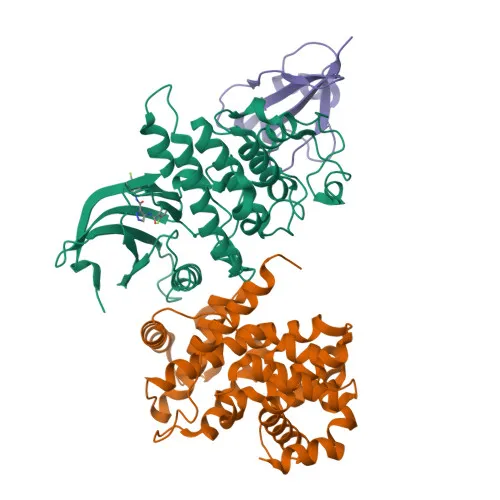
Phosphorylated Antibodies
Phospho-CDK1-T161 Rabbit pAb - P06493
Item Number : CM0001656
Price varies based on specs and customizations
- Application
- WB, IP, IF-P, IHC-P, ELISA
- Cross Reactivity
- Human, Mouse, Rat
- Protein Weight
- 34kDa

Shipping:
Contact us to get shipping details Enjoy On-time Dispatch Guarantee.
Why Choose Us
Easy ordering process, quality products, and dedicated support for your business success.
Core Product Specifications and Parameters
| Parameter | Value |
|---|---|
| Product Name | Phospho-CDK1-T161 Rabbit pAb |
| Remarks/Alias | CDC2; CDC28A; P34CDC2; Phospho-CDK1-T161 |
| Species | Human |
| Gene ID | 983 |
| Immunogen | A synthetic phosphorylated peptide around T161 of human CDK1 (NP_001777.1) |
| Source | Rabbit |
| Category | Phosphorylated Antibodies |
| Application | WB, IP, IF-P, IHC-P, ELISA |
| Cross Reactivity | Human, Mouse, Rat |
| SWISS | P06493 |
| Protein Weight | 34kDa |
| Shipping | Ice bag |
Biological Background: CDK1 Function and Localization
- CDK1 (also known as CDC2) is a serine/threonine-protein kinase essential for G2-M transition in the cell cycle, phosphorylating numerous substrates to drive mitotic events. Related references: PMID:16407259, PMID:16933150, PMID:17459720
- Its activation requires phosphorylation at Thr161 by the CDK-activating kinase (CAK) complex, while inhibitory phosphorylation at Thr14 and Tyr15 by WEE1 and PKMYT1 maintains it inactive; dephosphorylation by CDC25 phosphatases triggers mitotic entry. Related references: PMID:18480403, PMID:20360007, PMID:2188730, PMID:41100585
- CDK1 phosphorylates nuclear lamins (LMNA, LMNB1, LMNB2) causing nuclear envelope breakdown during mitosis. Related references: PMID:2188730, PMID:2344612, PMID:37788673
- Upon DNA damage, CDK1 is inactivated via PKR/WEE1 to enforce G2 arrest, and reactivated after repair through WIP1/CDC25 signaling. Related references: PMID:20360007, PMID:20395957
- CDK1 localizes to multiple subcellular compartments including the nucleus, cytoplasm, mitochondrion, centrosome, and mitotic spindle, enabling coordination of diverse mitotic processes.
- CDK1 participates in circadian clock regulation by phosphorylating NR1D1, marking it for degradation; it also acts as a receptor for hepatitis C virus entry into hepatocytes. Related references: PMID:27238018
Experimental Guidance and Technical Tips
- Since this antibody targets a phosphorylation site (Thr161), maintain phospho-status during sample preparation by including phosphatase inhibitors and avoiding heating in phosphate-free buffers.
- For Western blot, a band at approximately 34 kDa is expected; consider using mitotic cell lysates (e.g., cells arrested at G2/M) as positive controls and lambda phosphatase treatment as a negative control.
- In immunoprecipitation, the antibody's performance may depend on the abundance of the phospho-epitope; enrich for mitotic cells to enhance detection.
- For immunofluorescence and IHC, standard antigen retrieval coupled with rapid fixation can preserve the phosphorylation signal; pilot experiments to optimize detection are advised.
- Although listed for ELISA, direct antigen coating with the phosphopeptide may be required; competitive ELISA can be designed to quantify phosphorylation levels.
CamelBio: Your One-Stop Sourcing Bridge
CamelBio offers this phospho-CDK1-T161 antibody as part of a comprehensive portfolio for cell cycle and cancer research. With a one-stop supply model, we provide validated antibody pairs, optimized recombinant antibodies, and ancillary reagents, ensuring seamless integration into IVD assay development. Our team assists in sourcing rare phosphorylation-specific reagents to accelerate your diagnostic projects.
REQUEST A QUOTE
Our professional team will reply to you within one business day. Please feel free to contact us!