Phosphorylated Antibodies
Phospho-c-Jun-T93 Rabbit pAb for WB, ELISA - P05412
Item Number : CM0000487
Price varies based on specs and customizations
- Application
- WB, ELISA
- Cross Reactivity
- Human, Mouse
- Protein Weight
- 36kDa

Shipping:
Contact us to get shipping details Enjoy On-time Dispatch Guarantee.
Why Choose Us
Easy ordering process, quality products, and dedicated support for your business success.
Core Product Specifications and Parameters
| Parameter | Value |
|---|---|
| Product Name | Phospho-c-Jun-T93 Rabbit pAb |
| Remarks/Alias | AP1; p39; AP-1; cJUN; c-Jun; Phospho-c-Jun-T93 |
| Species | Human |
| GeneID (human) | 3725 |
| GeneID | 3725 |
| Immunogen | Synthetic peptide: A synthetic phosphorylated peptide around T93 of human JUN (NP_002219.1) |
| Source | Rabbit |
| Category | Phosphorylated Antibodies |
| Application | WB, ELISA |
| Cross Reactivity | Human, Mouse |
| SWISS | P05412 |
| Protein Weight | 36kDa |
| Shipping | Ice bag |
Biological Background: c-Jun Function and Localization
-
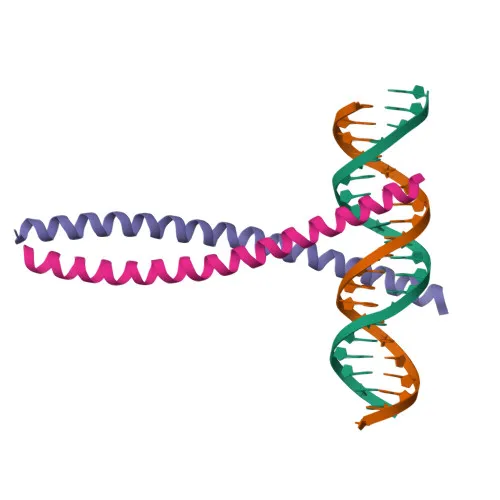
Recognizes and binds to the AP-1 consensus motif 5'-TGA[GC]TCA-3' to regulate transcription. Related references: PMID:10995748, PMID:22083952
-
Heterodimerizes with FOS family proteins to form the activator protein-1 (AP-1) transcription complex.
-
Together with FOSB, c-Jun regulates activation-induced T cell death by binding to the AP-1 site in the FASLG/CD95L promoter and inducing expression. Related references: PMID:12618758
-
When phosphorylated by HIPK3, c-Jun promotes NR5A1 activity, leading to increased steroidogenic gene expression upon cAMP signaling pathway stimulation. Related references: PMID:17210646
-
Mediates activated KRAS-driven transcriptional activation of USP28 in colorectal cancer cells by binding to the USP28 promoter. Related references: PMID:24623306
-
Upon Epstein-Barr virus (EBV) infection, c-Jun transactivates viral BZLF1 expression by binding to the BZLF1 Z promoter.
-
Primarily localizes to the nucleus; expressed in developing and adult prostate and prostate cancer cells; classified as a phosphoprotein, with phosphorylation at Thr93 being a key regulatory modification.
Experimental Guidance and Technical Tips
- The immunogen is a synthetic phosphorylated peptide around Thr93 of human c-Jun; thus, this antibody specifically recognizes the phosphorylated form. Verify phosphorylation-dependent binding by treating samples with phosphatases.
- For Western blot, the expected molecular weight is approximately 36 kDa. Include appropriate positive controls (e.g., stimulated cells) and phospho-specific inhibition controls.
- In ELISA, consider pairing with a total c-Jun antibody for normalization. Optimize coating and detection conditions to distinguish phospho-specific signal.
- Cross-reactivity with mouse c-Jun allows application in mouse model studies; validate the antibody's performance in the relevant species and tissue.
- As with any phospho-specific antibody, confirm specificity in your specific experimental context, as c-Jun phosphorylation at Thr93 may vary with cell type and stimulation conditions.
CamelBio: Your One-Stop Sourcing Bridge
CamelBio provides a one-stop sourcing solution for IVD raw materials, supporting research and diagnostic development from concept to clinic. For studies on the AP-1 transcription factor complex and c-Jun signaling, we offer validated antibody pairs, optimized monoclonal and polyclonal antibodies (including phospho-specific reagents), and bulk ancillary materials. Our global supply network also enables sourcing of rare or custom targets to accelerate your assay and product development timelines.
REQUEST A QUOTE
Our professional team will reply to you within one business day. Please feel free to contact us!