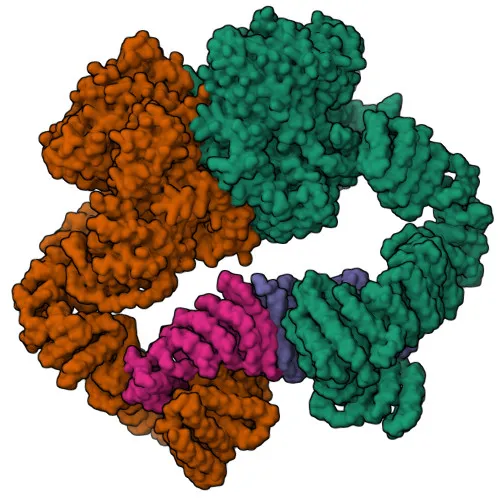
Phosphorylated Antibodies
Phospho-ATR-S428 Rabbit mAb - Q13535
Item Number : CM0001558
Price varies based on specs and customizations
- Application
- WB, IF-P, IHC-P, ELISA
- Cross Reactivity
- Human
- Protein Weight
- 301kDa

Shipping:
Contact us to get shipping details Enjoy On-time Dispatch Guarantee.
Why Choose Us
Easy ordering process, quality products, and dedicated support for your business success.
Core Product Specifications and Parameters
| Parameter | Value |
|---|---|
| Product Name | Phospho-ATR-S428 Rabbit mAb |
| Remarks/Alias | FRP1; MEC1; SCKL; FCTCS; SCKL1; Phospho-ATR-S428 |
| Species | Human |
| GeneID (Human) | 545 |
| GeneID | 545 |
| Immunogen | Synthetic peptide, A synthetic phosphorylated peptide around S428 of human ATR (NP_001175.2) |
| Source | Rabbit |
| Category | Phosphorylated Antibodies |
| Application | WB, IF-P, IHC-P, ELISA |
| Cross Reactivity | Human |
| SWISS | Q13535 |
| Protein Weight | 301kDa |
| Shipping | Ice bag |
Biological Background: ATR Function and Localization
- Serine/threonine-protein kinase that acts as a DNA damage sensor, activating checkpoint signaling upon genotoxic stresses such as ionizing radiation, UV, or DNA replication stalling. Related references: PMID:10597277 PMID:10608806 PMID:10859164
- Recognizes the substrate consensus sequence [ST]-Q and phosphorylates downstream targets including BRCA1, CHEK1, RAD17, and TP53, leading to inhibition of DNA replication and mitosis while promoting repair and apoptosis. Related references: PMID:11114888 PMID:11418864 PMID:11865061
- Phosphorylates histone variant H2AX at ‘Ser-139’ at DNA damage sites, regulating the DNA damage response. Related references: PMID:11673449
- Required for FANCD2 ubiquitination and critical for maintenance of fragile site stability and centrosome duplication. Related references: PMID:15314022 PMID:12526805
- Acts as a regulator of the S-G2 transition by restricting CDK1 activity during S-phase to prevent premature entry into G2. Related references: PMID:30139873
- Functions as a mechanical stress sensor at the nuclear envelope, phosphorylating CHEK1 and LMNA to mediate nuclear envelope rupture and innate immune activation via the cGAS-STING pathway in response to DNA damage or genomic instability. Related references: PMID:25083873 PMID:37788673 PMID:37832547
- Ubiquitously expressed with highest levels in testis; isoform 2 is detected in pancreas, placenta, and liver but not in heart, testis, and ovary. Mutations in ATR are associated with Seckel syndrome, characterized by dwarfism and intellectual disability.
Experimental Guidance and Technical Tips
- The immunogen is a synthetic phosphopeptide around S428, suggesting specificity for ATR phosphorylated at S428. Validate phospho-specificity in relevant cell models with phosphatase treatment.
- For Western blot, expect a band at approximately 301 kDa; use appropriate gel percentage and transfer conditions for high molecular weight proteins.
- Suitable for immunofluorescence (IF-P) and immunohistochemistry (IHC-P), but optimize detection conditions and include controls to confirm phospho-specificity.
- ELISA can be used for quantitative detection; consider pairing with other antibodies for sandwich assays.
CamelBio: Your One-Stop Sourcing Bridge
As a premier one-stop supplier of IVD raw materials, CamelBio provides validated monoclonal antibodies like this phospho-ATR-S428 rabbit mAb to support DNA damage and checkpoint research. Our portfolio includes optimized antibody pairs, bulk ancillary reagents, and custom sourcing for rare targets, enabling seamless integration into your diagnostic and research workflows.
REQUEST A QUOTE
Our professional team will reply to you within one business day. Please feel free to contact us!