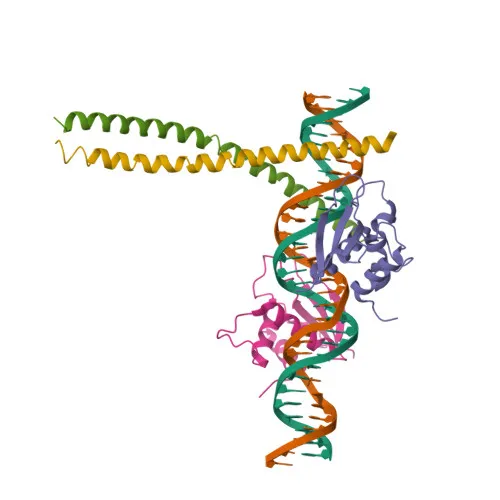
Phosphorylated Antibodies
Phospho-ATF2-T71 Rabbit mAb for WB and ELISA - P15336
Item Number : CM0000690
Price varies based on specs and customizations
- Application
- WB, ELISA
- Cross Reactivity
- Mouse
- Protein Weight
- 55kDa

Shipping:
Contact us to get shipping details Enjoy On-time Dispatch Guarantee.
Why Choose Us
Easy ordering process, quality products, and dedicated support for your business success.
Core Product Specifications and Parameters
| Parameter | Value |
|---|---|
| Product Name | Phospho-ATF2-T71 Rabbit mAb |
| Remarks/Alias | HB16; CREB2; TREB7; CREB-2; CRE-BP1; Phospho-ATF2-T71 |
| Species | Human |
| GeneID (Human) | 1386 |
| GeneID | 1386 |
| Immunogen | Synthetic Peptide |
| Source | Rabbit |
| Category | Phosphorylated Antibodies |
| Application | WB, ELISA |
| Cross Reactivity | Mouse |
| SWISS | P15336 |
| Protein Weight | 55kDa |
| Shipping | Ice bag |
Biological Background: ATF2 Function and Localization
- ATF2 is a cyclic AMP-dependent transcription factor that binds CRE (cAMP response element) and AP-1 consensus sequences, regulating genes involved in anti-apoptosis, cell growth, and DNA damage response.
- It localizes to the nucleus, cytoplasm, and mitochondrial outer membrane; its subcellular distribution influences its function in transcription and apoptosis.
- In the cytoplasm, ATF2 interacts with mitochondrial outer membrane complexes, impairing membrane potential and promoting cell death.
- It plays a role in the DNA damage response, particularly in ionizing radiation-induced S phase checkpoint control and MRN complex recruitment.
- ATF2 possesses intrinsic histone acetyltransferase (HAT) activity, acetylating histones H2B and H4 in vitro. Related references: PMID:10821277
- The protein is heavily regulated by phosphorylation; phosphorylation at Thr71 (T71) modulates its activity, and this antibody specifically recognizes the phosphorylated form.
- ATF2 is ubiquitously expressed, with higher levels in the brain, and alternative splicing generates multiple isoforms.
- It is a zinc-finger phosphoprotein involved in a variety of cellular processes, including oncogenesis and tumor suppression depending on the tissue context.
Experimental Guidance and Technical Tips
- As a phospho-specific antibody, experimental conditions that preserve protein phosphorylation (e.g., use of phosphatase inhibitors, gentle lysis) are critical.
- For Western blotting, optimize blocking and antibody dilution; consider including a phosphatase-treated control to confirm signal specificity.
- Validate the antibody’s reactivity with your target sample; for mouse cross-reactivity, verify detection in mouse-derived tissue or cell lines.
- When performing ELISA, use the immunizing phospho-peptide as a positive control and appropriate non-phosphorylated peptide as a negative control.
CamelBio: Your One-Stop Sourcing Bridge
CamelBio provides diagnostic manufacturers, laboratories, and research institutes with streamlined access to premium IVD raw materials, from concept to clinic. For transcription factor and phospho-specific antibody needs, our portfolio includes validated antibody pairs, optimized monoclonal and polyclonal antibodies, and ancillary reagents for bulk procurement. Backed by a global sourcing network, we readily accommodate rare‑target and custom‑development inquiries to accelerate your assay development.
REQUEST A QUOTE
Our professional team will reply to you within one business day. Please feel free to contact us!