Phosphorylated Antibodies
Phospho-ATF-2 (Thr69/71)/ATF-7 (Thr51/53) Rabbit Polyclonal Antibody for WB, ELISA - P15336/P17544
Item Number : CM0001230
Price varies based on specs and customizations
- Application
- WB, ELISA
- Cross Reactivity
- Human
- Protein Weight
- 54kDa/51kDa

Shipping:
Contact us to get shipping details Enjoy On-time Dispatch Guarantee.
Why Choose Us
Easy ordering process, quality products, and dedicated support for your business success.
Core Product Specifications and Parameters
| Parameter | Value |
|---|---|
| Product Name | Phospho-ATF-2 (Thr69/71)/ATF-7 (Thr51/53) Rabbit pAb |
| Remarks/Alias | HB16; CREB2; TREB7; CREB-2; CRE-BP1; ATFA; Phospho-ATF-2 (Thr69/71)/ATF-7 (Thr51/53) |
| Species | Human |
| GeneID (Human) | 1386/11016 |
| GeneID | 1386/11016 |
| Immunogen | Synthetic Peptide|A synthetic phosphorylated peptide around Thr69/71 and Thr51/53 of human Phospho-ATF-2/ATF-7. |
| Source | Rabbit |
| Category | Phosphorylated Antibodies |
| Application | WB, ELISA |
| Cross Reactivity | Human |
| SWISS | P15336/P17544 |
| Protein Weight | 54kDa/51kDa |
| Shipping | Ice bag |
Biological Background: ATF-2/ATF-7 Function and Localization
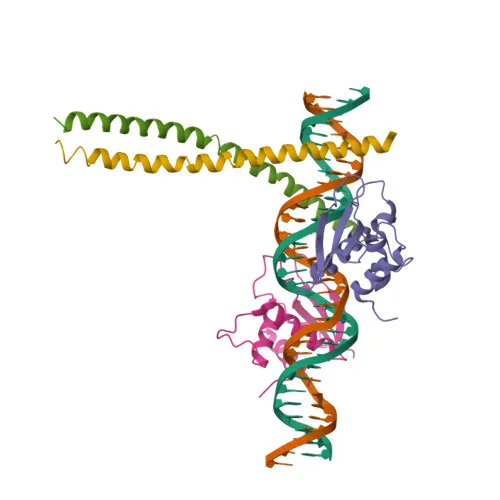
- ATF-2, also known as CREB-2 or CRE-BP1, is a member of the ATF/CREB family of basic region-leucine zipper (bZIP) transcription factors. It regulates gene expression by binding to CRE (5'-TGACGTCA-3') or AP-1 (5'-TGACTCA-3') consensus sequences, playing roles in anti-apoptosis, cell growth, and DNA damage response.
- The protein exhibits dual functions in cell survival and death: in the nucleus it promotes transcription, while in the cytoplasm it interacts with mitochondrial complexes (HK1/VDAC1) to induce mitochondrial leakage and cell death.
- ATF-2 is ubiquitously expressed with higher abundance in the brain, and localizes to the nucleus, cytoplasm, and mitochondrial outer membrane.
- It possesses intrinsic histone acetyltransferase (HAT) activity, acetylating histones H2B and H4 in vitro. Related references: PMID:10821277
- In response to DNA damage, ATM-mediated phosphorylation of ATF-2 at Thr69/71 contributes to S-phase checkpoint control and the recruitment of the MRN complex to ionizing radiation-induced foci.
- ATF-2 can act as either an oncogene or tumor suppressor depending on the cellular context, highlighting its complex role in cancer biology.
- This antibody also recognizes the homologous phosphorylation site in ATF-7 (Thr51/53), a related bZIP transcription factor that shares functional redundancy with ATF-2 in some signaling pathways.
Experimental Guidance and Technical Tips
- Since the antibody targets phosphorylation-dependent epitopes, ensure that samples are prepared with phosphatase inhibitors to preserve phospho-signals.
- For Western blot, consider using non-phospho-specific antibodies as controls to verify phosphorylation-specific detection.
- Cross-reactivity with the homologous ATF-7 phosphorylation site (Thr51/53) is expected based on sequence similarity; validate specificity in your experimental system using appropriate peptide competition or knockout models.
- The antibody is suitable for ELISA; appropriate blocking and washing conditions should be optimized for phospho-peptide coating.
CamelBio: Your One-Stop Sourcing Bridge
CamelBio provides diagnostic manufacturers and research laboratories with a comprehensive range of IVD raw materials, including validated phospho-specific and total antibodies, recombinant proteins, and ancillary reagents. This anti-phospho-ATF-2/ATF-7 antibody is part of our transcription factor and cell signaling portfolio, supporting biomarker discovery and assay development. With one-stop sourcing and technical support, we help streamline your workflow from concept to clinic.
REQUEST A QUOTE
Our professional team will reply to you within one business day. Please feel free to contact us!