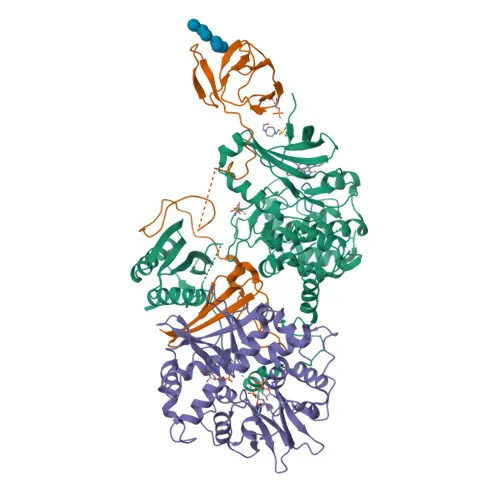
Phosphorylated Antibodies
Phospho-AMPKa1-T183/AMPKa2-T172 Rabbit Polyclonal Antibody for WB, ELISA - Q13131 / P54646
Item Number : CM0000538
Price varies based on specs and customizations
- Application
- WB, ELISA
- Cross Reactivity
- Human, Mouse, Rat
- Protein Weight
- 64kDa/65kDa/62kDa

Shipping:
Contact us to get shipping details Enjoy On-time Dispatch Guarantee.
Why Choose Us
Easy ordering process, quality products, and dedicated support for your business success.
Core Product Specifications and Parameters
| Parameter | Value |
|---|---|
| Product Name | Phospho-AMPKa1-T183/AMPKa2-T172 Rabbit pAb |
| Remarks/Alias | AMPKa1/AMPKa2; Phospho-AMPKa1-T183/AMPKa2-T172 |
| Species | Human |
| GeneID (Human) | 5562/5563 |
| GeneID | 5562/5563 |
| Immunogen | Synthetic peptide: A synthetic phosphorylated peptide around T183 of human PRKAA1 (NP_006242.5). |
| Source | Rabbit |
| Category | Phosphorylated Antibodies |
| Application | WB, ELISA |
| Cross Reactivity | Human, Mouse, Rat |
| SWISS | Q13131/P54646 |
| Protein Weight | 64kDa/65kDa/62kDa |
| Shipping | Ice bag |
Biological Background: AMPKα1/AMPKα2 Function and Localization
- The 5'-AMP-activated protein kinase catalytic subunit alpha-1 (AMPKα1, encoded by PRKAA1) functions as the principal energy sensor in eukaryotic cells, phosphorylating a diverse array of substrates to orchestrate metabolic adaptation. Related references: PMID:17307971, PMID:17712357, PMID:24563466
- It inhibits anabolic pathways including protein, carbohydrate, and lipid biosynthesis, while promoting catabolic processes such as fatty acid oxidation and glucose uptake, in part through direct phosphorylation of metabolic enzymes like ACACA and HMGCR.
- AMPKα1 also regulates gene expression by phosphorylating transcription regulators (e.g., CRTC2, FOXO3, SREBF1), impacting gluconeogenesis, lipid metabolism, and stress responses. Related references: PMID:11518699, PMID:11554766, PMID:15866171
- Beyond metabolism, AMPKα1 controls cell growth and autophagy through mTORC1 inhibition (phosphorylating RPTOR, TSC2, FNIP1) and ULK1 activation, ensuring survival under nutrient stress. Related references: PMID:14651849, PMID:18439900, PMID:20160076, PMID:21205641, PMID:37079666
- Located in the cytoplasm, nucleus, and late endosomes, AMPKα1 shuttles dynamically to phosphorylate targets in multiple compartments, linking subcellular localization to functional specificity.
- AMPKα1 is a serine/threonine kinase and phosphoprotein, with activity tightly controlled by phosphorylation, particularly at residues within the activation loop; it also undergoes ubiquitination and acetylation.
- Alternative splicing yields multiple isoforms, potentially contributing to tissue-specific regulation and distinct signaling outcomes.
- The closely related AMPKα2 (PRKAA2, SWISS P54646) shares high homology and is also detected by this antibody, enabling combined analysis of both catalytic subunits.
Experimental Guidance and Technical Tips
- The immunogen is a synthetic phosphorylated peptide corresponding to residues around Thr183 of human PRKAA1. This antibody is suitable for detecting endogenous levels of phosphorylated AMPKα1 and AMPKα2 in Western blotting, with expected bands around 64 kDa (AMPKα1) and 62–65 kDa (AMPKα2).
- For Western blotting, consider using phosphorylation-specific lysis buffers supplemented with phosphatase inhibitors to preserve the phospho-epitope and optimize signal intensity.
- In ELISA applications, the antibody may function as a capture or detection reagent; include phosphorylated peptide controls and validate performance against non-phosphorylated counterparts to ensure specificity.
- Cross-reactivity with mouse and rat samples is expected based on high sequence conservation around the phosphorylation sites, but always verify detection in your specific sample matrix and experimental conditions.
CamelBio: Your One-Stop Sourcing Bridge
CamelBio provides diagnostic manufacturers and research laboratories with a streamlined channel to secure high-quality IVD raw materials, including this phospho-AMPK antibody for energy metabolism and signaling studies. Our platform offers validated antibody pairs, optimized monoclonal/polyclonal antibodies, and bulk ancillary reagents to support your assay development and production needs. Contact us to explore custom sourcing solutions for rare or specialized targets like AMPK pathway components.
Product Datasheet
Phospho-AMPKa1-T183/AMPKa2-T172 Rabbit Polyclonal Antibody for WB, ELISA - Q13131 / P54646
REQUEST A QUOTE
Our professional team will reply to you within one business day. Please feel free to contact us!