Phosphorylated Antibodies
Phospho-AMPKα1-T183+AMPKα2-T172 Rabbit mAb - Q13131 / P54646
Item Number : CM0001562
Price varies based on specs and customizations
- Application
- WB, ELISA
- Cross Reactivity
- Human, Mouse, Rat
- Protein Weight
- 64kDa/65kDa/62kDa

Shipping:
Contact us to get shipping details Enjoy On-time Dispatch Guarantee.
Why Choose Us
Easy ordering process, quality products, and dedicated support for your business success.
Core Product Specifications and Parameters
| Parameter | Specification |
|---|---|
| Product Name | Phospho-AMPKα1-T183+AMPKα2-T172 Rabbit mAb |
| Remarks/Alias | AMPKa1/AMPKa2; Phospho-AMPKα1-T183+AMPKα2-T172 |
| Species | Human |
| Gene ID (Human) | 5562/5563 |
| Immunogen | Synthetic phosphorylated peptide around T183/T172 of human PRKAA1/PRKAA2 (NP_006242.5/NP_006243.2) |
| Source | Rabbit |
| Category | Phosphorylated Antibodies |
| Application | WB, ELISA |
| Cross Reactivity | Human, Mouse, Rat |
| SWISS | Q13131/P54646 |
| Protein Weight | 64kDa/65kDa/62kDa |
| Shipping | Ice bag |
Biological Background: AMPKα Function and Localization
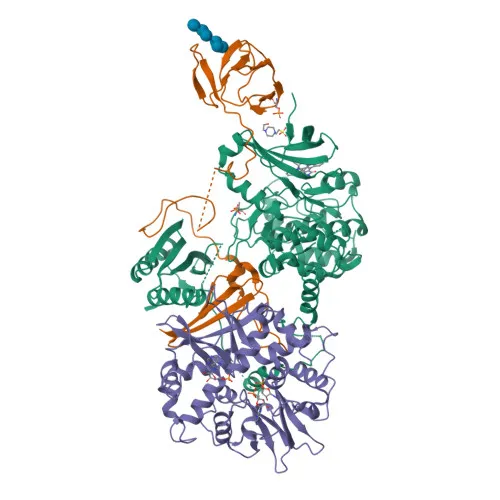
- AMPKα1 (PRKAA1) and AMPKα2 (PRKAA2) are two catalytic alpha subunit isoforms of the AMPK heterotrimeric complex, which also contains regulatory beta and gamma subunits.
- Catalytic subunit of AMPK, an energy sensor protein kinase that activates energy-producing pathways and inhibits energy-consuming processes (e.g., protein, carbohydrate, lipid biosynthesis) to maintain cellular energy homeostasis.
Related references:
PMID:17307971 PMID:17712357 PMID:24563466 - Regulates lipid metabolism by promoting lipolysis via phosphorylation of CHKA (PubMed:34077757) and by inactivating lipid biosynthetic enzymes such as ACACA, ACACB, and HMGCR (By similarity).
Related references:
PMID:34077757 - Phosphorylates key transcription regulators (e.g., CRTC2, FOXO3, HDAC5, MEF2C, MLXIPL, p53) and histone H2B to modulate gene expression linked to energy metabolism and stress responses.
Related references:
PMID:11518699 PMID:11554766 PMID:15866171 - Acts as a critical negative regulator of the mTORC1 signaling complex by phosphorylating RPTOR, TSC2, and WDR24, and promotes autophagy by activating ULK1 and WDR45 under nutrient limitation.
Related references:
PMID:14651849 PMID:18439900 PMID:20160076 PMID:21205641 PMID:28561066 PMID:36732624 PMID:37079666 - Additionally, AMPKα1 phosphorylates CASP6 to prevent its activation (PubMed:32029622), regulates actin cytoskeleton remodeling (PubMed:17486097), and modulates mitochondrial fragmentation and ALDH7A1 recruitment under stress conditions.
Related references:
PMID:32029622 PMID:17486097 PMID:36367943 PMID:31492851 PMID:40233740 - Subcellularly, AMPKα1 localizes to the cytoplasm, nucleus, and late endosomes, consistent with its broad regulatory roles.
- Characterized as a serine/threonine-protein kinase, phosphoprotein, and glycoprotein, with alternative splicing reported.
Experimental Guidance and Technical Tips
- The antibody was raised against a synthetic phospho-peptide spanning the activation loop phosphorylation sites (Thr183 in AMPKα1 and Thr172 in AMPKα2), making it specific for the active, phosphorylated forms of AMPKα.
- For Western blotting, expected bands are observed at approximately 64 kDa (AMPKα1) and 62/65 kDa (AMPKα2); inclusion of phosphatase inhibitors during sample preparation is critical to preserve phosphorylation.
- Validate detection specificity by treating lysates with λ‑phosphatase or by competitive inhibition with the non‑phosphorylated peptide in your relevant sample system (e.g., human, mouse, or rat cell lines).
- ELISA applications may require optimization of coating antigen concentration and detection conditions due to the peptide immunogen nature.
- Note that the antibody is validated for WB and ELISA; performance in other applications such as IHC, IF, or IP should be tested empirically.
CamelBio: Your One-Stop Sourcing Bridge
CamelBio is a dedicated IVD raw‑material partner providing diagnostic manufacturers and research laboratories with a reliable one‑stop supply chain for critical reagents. This phospho‑AMPKα antibody supports studies in energy metabolism, autophagy, and cancer signaling. Beyond monoclonal antibodies, CamelBio offers validated antibody pairs, bulk ancillary reagents, and tailored sourcing for rare‑target raw materials—helping you accelerate assay development from concept to clinic.
REQUEST A QUOTE
Our professional team will reply to you within one business day. Please feel free to contact us!