Phosphorylated Antibodies
Phospho-AKT1S1/PRAS40-T246 Rabbit pAb for WB, ELISA - Q96B36
Item Number : CM0001273
Price varies based on specs and customizations
- Application
- WB, ELISA
- Cross Reactivity
- Human
- Protein Weight
- 27kDa

Shipping:
Contact us to get shipping details Enjoy On-time Dispatch Guarantee.
Why Choose Us
Easy ordering process, quality products, and dedicated support for your business success.
Core Product Specifications and Parameters
| Parameter | Value |
|---|---|
| Product Name | Phospho-AKT1S1/PRAS40-T246 Rabbit pAb |
| Remarks/Alias | Lobe; PRAS40; Phospho-AKT1S1/PRAS40-T246 |
| Species | Human |
| Gene ID (Human) | 84335 |
| Gene ID | 84335 |
| Immunogen | Synthetic peptide |
| Source | Rabbit |
| Category | Phosphorylated Antibodies |
| Application | WB, ELISA |
| Cross Reactivity | Human |
| SWISS | Q96B36 |
| Protein Weight | 27kDa |
| Shipping | Ice bag |
Biological Background: AKT1S1/PRAS40 Function and Localization
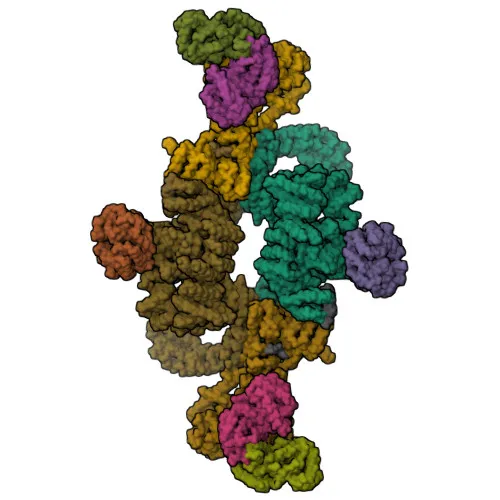
- AKT1S1 (also known as PRAS40, 40 kDa proline-rich AKT substrate) is a negative regulator of the mechanistic target of rapamycin complex 1 (mTORC1), an evolutionarily conserved central nutrient sensor that stimulates anabolic reactions and macromolecule biosynthesis to promote cellular biomass generation and growth. Related references: PMID:17277771 | PMID:17386266 | PMID:17510057
- In the absence of insulin and nutrients, AKT1S1 associates with the mTORC1 complex and directly inhibits mTORC1 activity by blocking the MTOR substrate-recruitment site. Related references: PMID:29236692
- In response to insulin and nutrients, AKT1S1 dissociates from mTORC1, a process dependent on its phosphorylation state and binding to 14-3-3 proteins. Related references: PMID:17386266 | PMID:18372248 | PMID:16174443
- Phosphorylation at Thr246 (the immunogen site) promotes 14-3-3 binding and relieves mTORC1 inhibition.
- AKT1S1 localizes predominantly to the cytoplasm and cytosol.
- Widely expressed with highest levels in liver and heart; expression is elevated in some cancer cell lines (e.g., A-549, HeLa) compared to normal cells (e.g., HEK293).
- May also play a role in nerve growth factor-mediated neuroprotection (By similarity).
- Classified as a phosphoprotein with a calculated molecular weight of approximately 27 kDa (UniProt: 27383 Da); undergoes alternative splicing.
Experimental Guidance and Technical Tips
- This antibody specifically detects the phosphorylated Thr246 form of AKT1S1; it does not recognize the non‑phosphorylated protein. Include phosphatase‑treated lysates as a negative control to confirm phosphorylation‑dependent signal.
- For Western blotting, expect a band near 27 kDa. Use phosphatase inhibitors in lysis buffers to preserve phosphorylation states.
- In ELISA applications, consider coating with the phospho‑peptide immunogen and validate specificity against the corresponding non‑phosphorylated peptide.
- When studying mTORC1 signaling, stimulate cells with insulin or growth factors to induce AKT1S1 phosphorylation and monitor dissociation from the mTORC1 complex.
- Validate the antibody in your experimental system; human cancer cell lines (e.g., HeLa, A-549) may exhibit higher endogenous expression, facilitating detection.
CamelBio: Your One‑Stop Sourcing Bridge
CamelBio is your one‑stop sourcing bridge for IVD raw materials, offering a comprehensive portfolio of validated antibody pairs, high‑quality monoclonal and polyclonal antibodies, and bulk ancillary reagents. For mTORC1 signaling and metabolic disease research, we can support your development with optimized phospho‑specific antibodies like this AKT1S1/PRAS40‑T246 antibody and customized supply solutions. Reach out to discuss how we can accelerate your diagnostic assay pipeline from concept to clinic.
REQUEST A QUOTE
Our professional team will reply to you within one business day. Please feel free to contact us!