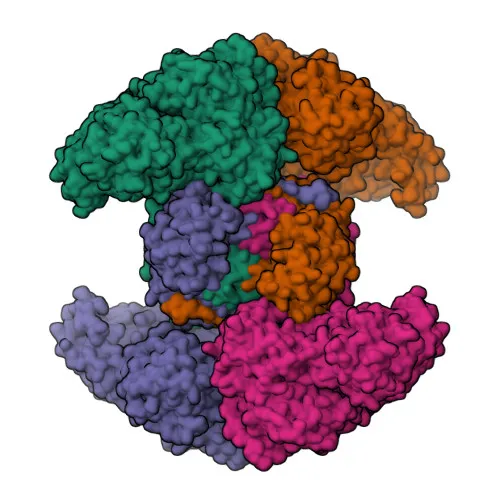
Phosphorylated Antibodies
Phospho-ACLY-S455 Rabbit mAb for WB IHC-P ELISA - P53396
Item Number : CM0001626
Price varies based on specs and customizations
- Application
- WB, IHC-P, ELISA
- Cross Reactivity
- Human, Mouse, Rat
- Protein Weight
- 121kDa

Shipping:
Contact us to get shipping details Enjoy On-time Dispatch Guarantee.
Why Choose Us
Easy ordering process, quality products, and dedicated support for your business success.
Core Product Specifications and Parameters
| Parameter | Value |
|---|---|
| Product Name | Phospho-ACLY-S455 Rabbit mAb |
| Remarks/Alias | ACL; ATPCL; CLATP; Phospho-ACLY-S455 |
| Species | Human |
| GeneID (Human) | 47 |
| GeneID | 47 |
| Immunogen | A synthetic phosphorylated peptide around S455 of human ACLY (NP_001087.2). |
| Source | Rabbit |
| Category | Phosphorylated Antibodies |
| Application | WB, IHC-P, ELISA |
| Cross Reactivity | Human, Mouse, Rat |
| SWISS | P53396 |
| Protein Weight | 121kDa |
| Shipping | Ice bag |
Biological Background: ACLY Function and Localization
- ACLY (ATP-citrate synthase) is also known as ATP-citrate lyase or citrate cleavage enzyme, encoded by the ACLY gene in humans.
- The primary function of ACLY is to catalyze the cleavage of citrate into oxaloacetate and acetyl-CoA, providing a key substrate for lipid, carbohydrate, and protein metabolism.
- ACLY serves as a critical link between glucose metabolism and de novo lipogenesis, supplying acetyl-CoA for fatty acid and cholesterol synthesis.
- Subcellularly, ACLY is predominantly localized in the cytoplasm, specifically the cytosol, where it participates in metabolic reactions.
- Phosphorylation at serine 455 (Ser455) is a key regulatory modification that enhances ACLY enzymatic activity, often via Akt or PKA signaling pathways.
- Alternative splicing of the ACLY gene yields isoforms, and the protein is subject to multiple post-translational modifications including acetylation and ubiquitination, affecting its function and stability.
- ACLY is implicated in cancer metabolism, as its upregulation supports tumor cell proliferation, making it a potential therapeutic target.
Experimental Guidance and Technical Tips
- For Western blot analysis, include phosphatase inhibitors in your lysis buffer to maintain phosphorylation status. Validate antibody specificity by treating samples with lambda phosphatase.
- When performing IHC-P, optimize antigen retrieval conditions and consider the use of phospho-specific controls (blocking peptides or phosphatase-treated sections) to confirm staining specificity.
- In ELISA applications, use the antibody to detect phosphorylated ACLY in cell or tissue lysates, ensuring appropriate positive and negative controls are included.
- The predicted molecular weight of ACLY is approximately 121 kDa; minor bands may appear due to isoforms or degradation, necessitating careful validation.
CamelBio: Your One-Stop Sourcing Bridge
CamelBio offers diagnostic manufacturers, research institutes, and laboratories a one-stop platform for IVD raw materials and technical support. This Phospho-ACLY-S455 Rabbit mAb is tailored for research in lipid metabolism and cancer biology. Beyond phospho-specific antibodies, we supply validated antibody pairs, optimized monoclonal and polyclonal antibodies, bulk ancillary reagents, and can efficiently source rare target raw materials to accelerate your assay development and manufacturing processes.
REQUEST A QUOTE
Our professional team will reply to you within one business day. Please feel free to contact us!