Polyclonal Antibodies
PGM1 Rabbit pAb for WB, ELISA - P36871
Item Number : CM0028413
Price varies based on specs and customizations
- Application
- WB, ELISA
- Cross Reactivity
- Human, Mouse, Rat
- Protein Weight
- 61kDa

Shipping:
Contact us to get shipping details Enjoy On-time Dispatch Guarantee.
Why Choose Us
Easy ordering process, quality products, and dedicated support for your business success.
Core Product Specifications and Parameters
| Parameter | Value |
|---|---|
| Product Name | PGM1 Rabbit pAb |
| Remarks/Alias | CDG1T; GSD14; PGM1 |
| Species | Human |
| Gene ID (Human) | 5236 |
| Gene ID | 5236 |
| Immunogen | Recombinant fusion protein containing a sequence corresponding to amino acids 1-300 of human PGM1 (NP_002624.2) |
| Source | Rabbit |
| Category | Polyclonal Antibodies |
| Application | WB, ELISA |
| Cross Reactivity | Human, Mouse, Rat |
| SWISS | P36871 |
| Protein Weight | 61kDa |
| Shipping | Ice bag |
Biological Background: PGM1 Function and Localization
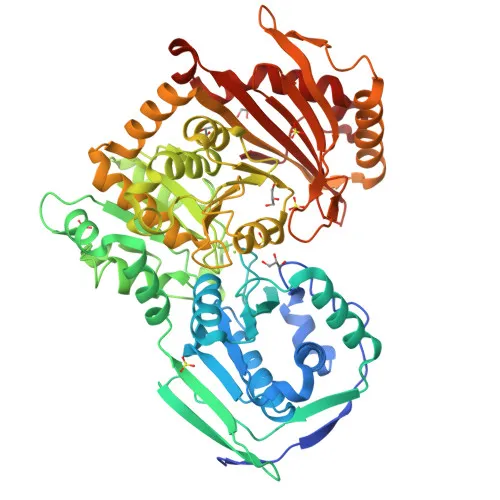
- Phosphoglucomutase-1 (PGM1), also known as glucose phosphomutase 1, is a key enzyme in carbohydrate metabolism, catalyzing the reversible isomerization of alpha-D-glucose 1-phosphate to alpha-D-glucose 6-phosphate.
Related references: PMID:15378030 PMID:25288802 - The enzymatic reaction proceeds through a glucose 1,6-bisphosphate intermediate, a mechanism that is central to its catalytic activity.
Related references: PMID:25288802 - PGM1 participates in both the breakdown and synthesis of glucose, playing a pivotal role in cellular energy homeostasis.
Related references: PMID:17924679 PMID:25288802 - The protein is primarily localized in the cytoplasm, where it facilitates rapid glucose interconversion.
- PGM1 is implicated in several metabolic disorders; mutations are associated with congenital disorders of glycosylation (CDG type 1T) and glycogen storage disease type 14 (GSD14).
- Post-translational modifications of PGM1 include acetylation and phosphorylation, which may regulate enzyme activity.
- The PGM1 gene undergoes alternative splicing, generating multiple transcript variants that add to functional diversity.
- PGM1 requires magnesium as a cofactor for its isomerase activity, reflecting its metal-binding properties.
Experimental Guidance and Technical Tips
- The immunogen covers the N-terminal 300 amino acids of human PGM1, a region that shows high cross-species conservation, potentially explaining the cross-reactivity with mouse and rat.
- For Western blot, consider using whole-cell lysates from human, mouse, or rat tissues; the predicted molecular weight is 61 kDa.
- ELISA application may be optimized with purified recombinant PGM1 protein as a positive control; serial dilutions can help determine working antibody concentrations.
- Since PGM1 is a cytoplasmic enzyme, subcellular fractionation can enrich the target and reduce background in WB.
- Non-specific binding may be minimized by using appropriate blocking buffers and incubating at optimized times and temperatures.
CamelBio: Your One-Stop Sourcing Bridge
CamelBio offers IVD manufacturers a streamlined procurement experience for raw materials like the PGM1 Rabbit pAb discussed here, along with validated antibody pairs, bulk ancillary reagents, and custom development services. Whether you need monoclonal or polyclonal antibodies, optimized for applications such as WB and ELISA, our supply network can support projects from feasibility to scale-up. For rare target sourcing or specialized carbohydrate metabolism research tools, our team provides reliable access and technical consultation.
REQUEST A QUOTE
Our professional team will reply to you within one business day. Please feel free to contact us!