Monoclonal Antibodies
PE/Cyanine7 Rabbit anti-Human CD314 Monoclonal Antibody for FC - P26718
Item Number : CM0005389
Price varies based on specs and customizations
- Application
- FC
- Cross Reactivity
- Human
- Protein Weight
- 25kDa

Shipping:
Contact us to get shipping details Enjoy On-time Dispatch Guarantee.
Why Choose Us
Easy ordering process, quality products, and dedicated support for your business success.
Core Product Specifications and Parameters
| Parameter | Value |
|---|---|
| Product Name | PE/Cyanine7 Rabbit anti-Human CD314 mAb |
| Remarks/Alias | KLR; CD314; NKG2D; NKG2-D; D12S2489E |
| Species | Human |
| GeneID (Human) | 22914 |
| Immunogen | Recombinant fusion protein containing a sequence corresponding to amino acids 73-216 of human CD314 (NP_031386.2) |
| Source | Rabbit |
| Category | Monoclonal Antibodies |
| Application | FC |
| Cross Reactivity | Human |
| SWISS | P26718 |
| Protein Weight | 25kDa |
| Shipping | Ice bag |
Biological Background: NKG2-D type II integral membrane protein Function and Localization
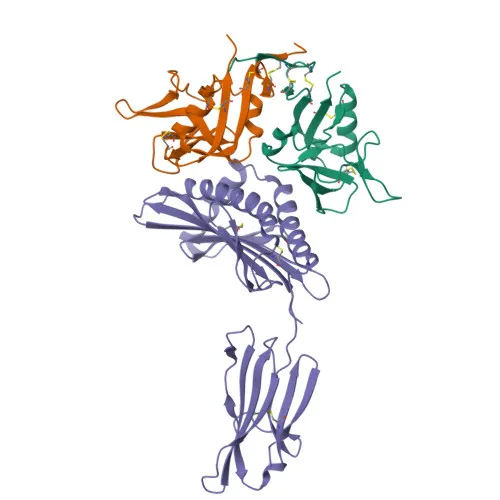
- The protein encoded by KLRK1 (GeneID 22914) is the NKG2-D type II integral membrane protein, also known as killer cell lectin-like receptor subfamily K member 1, CD314, or NKG2D. It functions as an activating and costimulatory receptor essential for immune surveillance.
- NKG2D binds to stress-inducible MHC class I-related glycoprotein ligands, including MICA, MICB, and various ULBP/RAET1 family members, with the affinity order ULBP2 > ULBP1 > ULBP3. This binding triggers innate and adaptive immune responses.
- Upon ligand engagement, NKG2D provides stimulatory signals in natural killer (NK) cells, promoting cytotoxic activity and perforin-mediated elimination of tumor cells. It costimulates CD8+ T-cell receptor (TCR) signaling, amplifying T-cell activation and TNF-α expression.
- The receptor participates in NK cell-mediated bone marrow graft rejection and may play a regulatory role in NK cell differentiation and survival.
- Subcellular localization is at the cell membrane, consistent with its role as a transmembrane receptor.
- Expression is restricted to NK cells, CD8+ αβ and γδ T-cells, and interferon-producing killer dendritic cells (IKDCs). On freshly isolated PBMCs, it is present on essentially all CD56+CD3− NK cells.
- Key structural features include a signal-anchor transmembrane domain, disulfide bonds, and N-linked glycosylation, classifying it as a lectin-like receptor.
Experimental Guidance and Technical Tips
- The immunogen corresponds to the extracellular domain (amino acids 73–216) of human CD314, covering the ligand-binding region. Consider this when interpreting staining patterns or potential blocking effects.
- For flow cytometry, titrate the antibody to determine the optimal concentration for your specific cell type and experimental conditions. Include appropriate isotype controls and use NK cell lines or primary NK cells for validation.
- Note that CD314 expression can be modulated upon activation; verify expression levels in your sample system under the relevant stimulation conditions.
- Shipping is on ice bags; upon receipt, store the antibody at recommended temperature (2–8°C) and protect from light to preserve the PE/Cyanine7 conjugate.
CamelBio: Your One-Stop Sourcing Bridge
CamelBio supports diagnostic manufacturers and research laboratories with a comprehensive portfolio of IVD raw materials. This PE/Cyanine7 anti-human CD314 antibody is tailored for flow cytometric detection of NKG2D, a critical immune checkpoint target in oncology and infectious disease research. Through our integrated sourcing platform, we offer validated antibody pairs, bulk ancillary reagents, and access to difficult-to-procure monoclonal/polyclonal antibodies to streamline your assay development.
REQUEST A QUOTE
Our professional team will reply to you within one business day. Please feel free to contact us!