Monoclonal Antibodies
PE/Cyanine7 Anti-Mouse CD3e Monoclonal Antibody for Flow Cytometry - P22646
Item Number : CM0009743
Price varies based on specs and customizations
- Application
- Flow Cytometry
- Cross Reactivity
- Mouse
- Protein Weight
- 21kDa

Shipping:
Contact us to get shipping details Enjoy On-time Dispatch Guarantee.
Why Choose Us
Easy ordering process, quality products, and dedicated support for your business success.
Core Product Specifications and Parameters
| Parameter | Value |
|---|---|
| Product Name | PE/Cyanine7 Armenian Hamster anti-Mouse CD3e mAb |
| Remarks/Alias | CD3; T3e; CD3epsilon |
| Species | Mouse |
| GeneID (Human) | 916 |
| GeneID | 12501 |
| Immunogen | Recombinant protein |
| Source | Armenian Hamster |
| Category | Monoclonal Antibodies |
| Application | Flow Cytometry |
| Cross Reactivity | Mouse |
| SWISS | P22646 |
| Protein Weight | 21kDa |
| Shipping | Ice bag |
Biological Background: CD3e Function and Localization
- CD3e is the epsilon chain of the T-cell surface glycoprotein CD3, also known as T3e or CD3epsilon, forming the TCR–CD3 complex.
- It plays an essential role in adaptive immune response by transducing TCR-mediated signals upon antigen recognition. Related references: PMID:9843989 PMID:10952314 PMID:19956738
- The cytoplasmic domain of CD3e contains immunoreceptor tyrosine-based activation motifs (ITAMs) that are phosphorylated by Src family kinases LCK and FYN, leading to ZAP70 recruitment and activation. Related references: PMID:10952314 PMID:19956738 PMID:24899501
- Beyond signaling, CD3e is critical for proper T-cell development. Related references: PMID:10952314 PMID:19956738 PMID:24899501
- Localized at the cell membrane, it functions as a single-pass type I membrane protein.
- CD3e also mediates internalization and down-regulation of TCR–CD3 complexes via endocytosis motifs, and serves as a receptor for ITPRIPL1 to inhibit T-cell activation (By similarity).
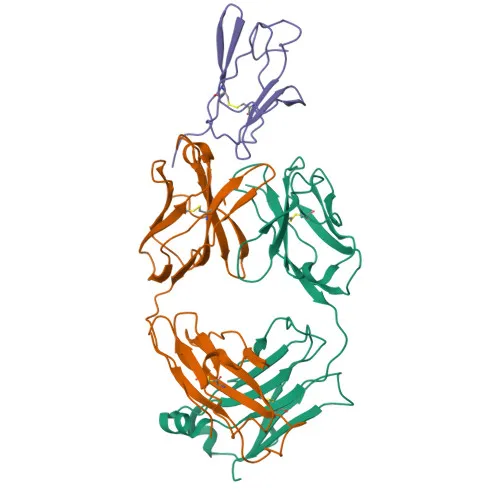
- Structurally, it contains an immunoglobulin domain, a disulfide bond, and a transmembrane helix.
Experimental Guidance and Technical Tips
- Since the immunogen is recombinant protein, the antibody may recognize linear epitopes; consider this when designing experiments involving denaturing conditions.
- For flow cytometry, validate optimal dilution and staining conditions in your specific sample system, including appropriate isotype controls and Fc receptor blocking.
- The antibody is conjugated to PE/Cyanine7; ensure that the fluorophore is compatible with your instrument's laser and filter configuration, and avoid prolonged light exposure during staining.
CamelBio: Your One-Stop Sourcing Bridge
CamelBio provides diagnostic manufacturers and research laboratories with integrated access to high-quality IVD raw materials, facilitating seamless transition from concept to clinic. This anti-CD3e monoclonal antibody, along with a broad portfolio of immune-related reagents, supports your immunophenotyping and T-cell research needs. Leverage our expertise in sourcing validated antibody pairs, optimized monoclonals, and bulk ancillary reagents to accelerate your assay development.
Product Datasheet
PE/Cyanine7 Anti-Mouse CD3e Monoclonal Antibody for Flow Cytometry - P22646
REQUEST A QUOTE
Our professional team will reply to you within one business day. Please feel free to contact us!