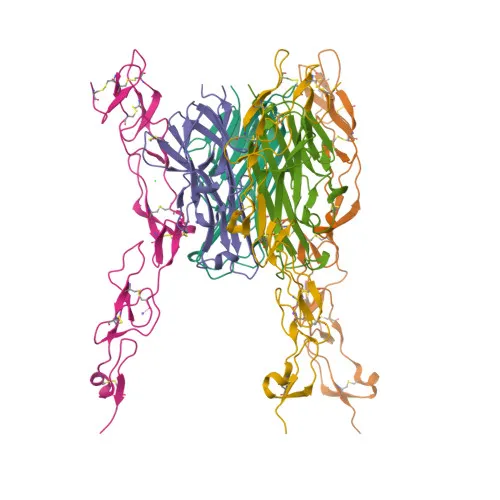
Monoclonal Antibodies
PE Rabbit anti-Mouse RANK/CD265 Monoclonal Antibody for Flow Cytometry - O35305
Item Number : CM0004566
Price varies based on specs and customizations
- Application
- FC
- Cross Reactivity
- Mouse
- Protein Weight
- 67kDa

Shipping:
Contact us to get shipping details Enjoy On-time Dispatch Guarantee.
Why Choose Us
Easy ordering process, quality products, and dedicated support for your business success.
Core Product Specifications and Parameters
| Parameter | Value |
|---|---|
| Product Name | PE Rabbit anti-Mouse RANK/CD265 mAb |
| Remarks/Alias | OFE; ODFR; Rank; Ly109; mRANK; TRANCE-R |
| Species | Mouse |
| GeneID (human) | 8792 |
| GeneID | 21934 |
| Immunogen | Recombinant fusion protein containing a sequence corresponding to amino acids 31-213 of mouse RANK/CD265 (NP_033425.3). |
| Source | Rabbit |
| Category | Monoclonal Antibodies |
| Application | FC |
| Cross Reactivity | Mouse |
| SWISS | O35305 |
| Protein Weight | 67kDa |
| Shipping | Ice bag |
Biological Background: RANK/CD265 Function and Localization
- RANK (also known as ODFR, TRANCE-R) is a member of the tumor necrosis factor receptor superfamily (TNFRSF11A), encoded by the Tnfrsf11a gene in mouse. It is a transmembrane receptor.
- RANK serves as the receptor for RANKL (TNFSF11), and this interaction is essential for RANKL-mediated osteoclastogenesis. It promotes the differentiation of osteoclasts from hematopoietic precursors. Related references: PMID:20483727, PMID:23478294, PMID:9878548
- Binding of RANK to EEIG1 promotes osteoclastogenesis by facilitating NFATC1 transcription and PLCG2 activation. Related references: PMID:23478294
- RANK is involved in the regulation of interactions between T-cells and dendritic cells, highlighting its role beyond bone metabolism. Related references: PMID:9367155
- RANK is localized to the cell membrane and is enriched in membrane rafts, which are microdomains important for signal transduction.
- RANK has ubiquitous expression with high levels in trabecular bone, thymus, small intestine, lung, brain, and kidney, and weaker expression in spleen and bone marrow.
- RANK undergoes glycosylation and phosphorylation, and contains disulfide bonds, a signal peptide, and a transmembrane helix. It also binds sodium and metal ions, which may be relevant for its structure and function.
Experimental Guidance and Technical Tips
- The immunogen covers amino acids 31-213 of mouse RANK, corresponding to the extracellular domain. This design targets the ligand-binding region, making it suitable for applications detecting surface-expressed RANK.
- For flow cytometry, ensure proper isotype controls and titrate the antibody for optimal staining. When using PE conjugate, account for compensation settings in multicolor panels.
- Consider validating the antibody in relevant cell systems such as RANKL-stimulated RAW 264.7 or primary osteoclast precursors.
CamelBio: Your One-Stop Sourcing Bridge
At CamelBio, we offer a comprehensive portfolio of IVD raw materials, including validated antibody pairs, optimized monoclonal/polyclonal antibodies, and ancillary reagents for bone metabolism and immunology research. Our one-stop sourcing service simplifies procurement from early-stage R&D to clinical applications, ensuring consistent supply of high-quality antibodies like this PE-conjugated anti-mouse RANK monoclonal antibody.
REQUEST A QUOTE
Our professional team will reply to you within one business day. Please feel free to contact us!