Monoclonal Antibodies
PE Rabbit anti-Human STAT1 Monoclonal Antibody for Flow Cytometry - P42224
Item Number : CM0012164
Price varies based on specs and customizations
- Application
- FC (intra)
- Cross Reactivity
- Human
- Protein Weight
- 83 kDa/87 kDa

Shipping:
Contact us to get shipping details Enjoy On-time Dispatch Guarantee.
Why Choose Us
Easy ordering process, quality products, and dedicated support for your business success.
Core Product Specifications and Parameters
| Parameter | Value |
|---|---|
| Product Name | PE Rabbit anti-Human STAT1 mAb |
| Remarks/Alias | CANDF7; IMD31A; IMD31B; IMD31C; ISGF-3; STAT91 |
| Species | Human |
| GeneID (Human) | 6772 |
| GeneID | 6772 |
| Immunogen | Synthetic peptide corresponding to amino acids 650-750 of human STAT1 (NP_009330.1) |
| Source | Rabbit |
| Category | Monoclonal Antibodies |
| Application | FC (intra) |
| Cross Reactivity | Human |
| SWISS | P42224 |
| Protein Weight | 83 kDa/87 kDa |
| Shipping | Ice bag |
Biological Background: STAT1 Function and Localization
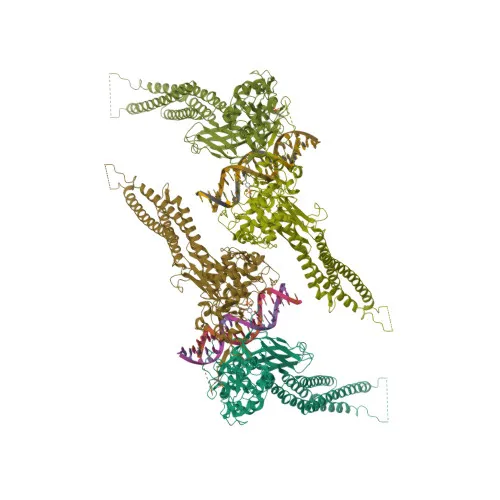
- STAT1 is a key signal transducer and activator of transcription that mediates cellular responses to interferons (IFNs), KITLG/SCF, and other cytokines and growth factors. Related references: PMID:12764129, PMID:12855578, PMID:15322115
- Following type I IFN binding, STAT1 is phosphorylated, forms the ISGF3 complex with STAT2 and IRF-9, translocates to the nucleus, and binds ISRE to drive antiviral gene expression. Related references: PMID:28753426, PMID:35568036
- In response to type II IFN (IFN-gamma), STAT1 forms a homodimer (GAF) that binds GAS elements to activate target genes, inducing a cellular antiviral state. Related references: PMID:8156998
- STAT1 is tyrosine- and serine-phosphorylated upon activation; phosphorylation at Thr-749 by IKBKB promotes transcription of ARID5A and IL12B. Related references: PMID:26479788, PMID:32209697
- STAT1 mediates responses to activated FGFR family members and has roles in food tolerance in the small intestine via association with Gasdermin-D p13 fragment and promotion of CIITA transcription in Tr1 cells.
- Subcellular localization is primarily cytoplasmic, with nuclear translocation upon activation.
- The protein undergoes various post-translational modifications including acetylation, ADP-ribosylation, methylation, and ubiquitination; classified under keywords such as antiviral defense, host-virus interaction, and disease variant.
Experimental Guidance and Technical Tips
- The immunogen spans the C-terminal region (aa 650–750) of human STAT1, which includes key regulatory sites. The antibody is expected to recognize total STAT1 irrespective of phosphorylation status.
- For intracellular flow cytometry (FC intra), optimize fixation and permeabilization protocols to ensure access to nuclear STAT1. Titrate the antibody to achieve optimal signal-to-noise ratios.
- Validate the antibody in your specific sample system, considering that STAT1 expression can be upregulated by interferons and other stimuli. Use appropriate positive (e.g., IFN-treated cells) and negative controls.
CamelBio: Your One-Stop Sourcing Bridge
CamelBio serves as a dedicated B2B sourcing partner for diagnostic manufacturers and research institutions, offering one-stop access to IVD raw materials. Our portfolio includes validated anti-STAT1 antibodies, recombinant proteins, and ancillary reagents tailored for antiviral and immune signaling research. We leverage global supply networks to source rare-target raw materials and provide technical support from development to commercialization.
Product Datasheet
PE Rabbit anti-Human STAT1 Monoclonal Antibody for Flow Cytometry - P42224
REQUEST A QUOTE
Our professional team will reply to you within one business day. Please feel free to contact us!