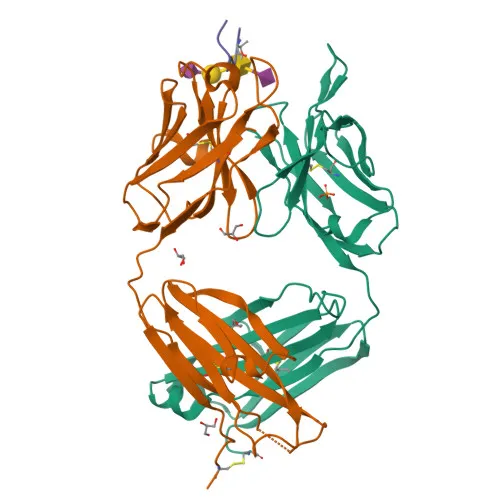
Monoclonal Antibodies
PE Rabbit anti-Human Podoplanin Monoclonal Antibody for Flow Cytometry - Q86YL7
Item Number : CM0010123
Price varies based on specs and customizations
- Application
- FC (Flow Cytometry)
- Cross Reactivity
- Human
- Protein Weight
- 17 kDa

Shipping:
Contact us to get shipping details Enjoy On-time Dispatch Guarantee.
Why Choose Us
Easy ordering process, quality products, and dedicated support for your business success.
Core Product Specifications and Parameters
| Parameter | Value |
|---|---|
| Product Name | PE Rabbit anti-Human Podoplanin mAb |
| Remarks/Alias | T1A; GP36; GP40; Gp38; OTS8; T1A2; TI1A; D2-40; T1A-2; AGGRUS; HT1A-1; PA2.26 |
| Species | Human |
| GeneID | 10630 |
| Immunogen | Recombinant fusion protein containing a sequence corresponding to amino acids 21-123 of Human Podoplanin (NP_006465.4) |
| Source | Rabbit |
| Category | Monoclonal Antibodies |
| Application | FC |
| Cross Reactivity | Human |
| SWISS | Q86YL7 |
| Protein Weight | 17kDa |
| Shipping | Ice bag |
Biological Background: Podoplanin Function and Localization
- Podoplanin (PDPN), also known as Aggrus, Gp36, and T1-alpha, is a heavily O-glycosylated transmembrane glycoprotein that plays critical roles in cell adhesion, migration, and epithelial-mesenchymal transition (EMT).
- During development, PDPN mediates blood and lymphatic vessel separation by binding to CLEC1B on platelets, triggering platelet activation and aggregation. Related references: PMID:14522983 PMID:15231832 PMID:17222411
- Interaction with CD9 attenuates PDPN-induced platelet aggregation, highlighting a regulatory mechanism in thrombosis. Related references: PMID:18541721
- Through binding to MSN or EZR, PDPN promotes EMT by triggering RHOA activation, which enhances cell migration and invasiveness in tumor cells. Related references: PMID:17046996 PMID:21376833
- PDPN interacts with CD44 to drive directional cell migration in both normal epithelial and tumor contexts. Related references: PMID:20962267
- In keratinocytes, PDPN induces dramatic morphological changes, including elongated shape, membrane protrusions, and increased motility, while reducing cell adhesion. Related references: PMID:15515019
- PDPN controls invadopodia stability and extracellular matrix (ECM) degradation in tumor cells via the RHOC-ROCK-LIMK-CFL1 signaling axis, facilitating metastasis. Related references: PMID:25486435
- PDPN localizes to specific membrane subdomains such as lamellipodia, filopodia, microvilli, ruffles, and membrane rafts, and is also found in the cytoplasm; it is highly expressed in placenta, lung, and skeletal muscle, with weak expression in brain, kidney, and liver, and is upregulated in colorectal and oral squamous cell carcinomas. The protein has a predicted molecular weight of ~17 kDa but runs at 36–43 kDa due to extensive glycosylation and sialic acid modification.
Experimental Guidance and Technical Tips
- The immunogen corresponds to the extracellular domain (amino acids 21–123), suggesting the antibody recognizes the native surface epitope; it is well-suited for flow cytometry (FC) detection of PDPN on live cells.
- Since this antibody is directly conjugated to phycoerythrin (PE), titration is recommended to determine the optimal staining concentration without the need for a secondary antibody.
- Include appropriate unstained and isotype control samples to set gates and assess background fluorescence in FC experiments.
- Validate antibody performance in known PDPN-expressing cell lines (e.g., lung or placental cells) and consider using PDPN-overexpressing cells as a positive control.
CamelBio: Your One-Stop Sourcing Bridge
CamelBio is a strategic partner for diagnostic developers and research institutions seeking reliable IVD raw materials. Our podoplanin antibody portfolio—including this PE-conjugated monoclonal—exemplifies our commitment to providing optimized, application-ready reagents for flow cytometry and beyond. Beyond individual antibodies, we offer validated antibody pairs, bulk ancillary reagents, and assistance with sourcing rare target raw materials to accelerate your assay development from concept to clinic.
Product Datasheet
PE Rabbit anti-Human Podoplanin Monoclonal Antibody for Flow Cytometry - Q86YL7
REQUEST A QUOTE
Our professional team will reply to you within one business day. Please feel free to contact us!