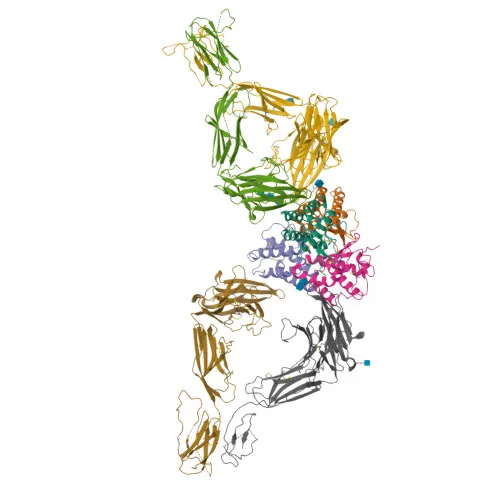
Monoclonal Antibodies
PE Rabbit anti-Human Flt3/CD135 Monoclonal Antibody for Flow Cytometry - P36888
Item Number : CM0009707
Price varies based on specs and customizations
- Application
- FC
- Cross Reactivity
- Human
- Protein Weight
- 108KDa/113kDa

Shipping:
Contact us to get shipping details Enjoy On-time Dispatch Guarantee.
Why Choose Us
Easy ordering process, quality products, and dedicated support for your business success.
Core Product Specifications and Parameters
| Parameter | Value |
|---|---|
| Product Name | PE Rabbit anti-Human Flt3/CD135 mAb |
| Remarks/Alias | FLK2; STK1; CD135; FLK-2 |
| Species | Human |
| GeneID (human) | 2322 |
| GeneID | 2322 |
| Immunogen | Recombinant fusion protein containing a sequence corresponding to amino acids 27-163 of human Flt3/CD135 (NP_004110.2) |
| Source | Rabbit |
| Category | Monoclonal Antibodies |
| Application | FC |
| Cross Reactivity | Human |
| SWISS | P36888 |
| Protein Weight | 108KDa/113kDa |
| Shipping | Ice bag |
Biological Background: Flt3/CD135 Function and Localization
- Flt3 (CD135) is a receptor-type tyrosine-protein kinase that serves as the cell-surface receptor for the cytokine FLT3LG, critically regulating differentiation, proliferation, and survival of hematopoietic progenitor cells and dendritic cells.
- Upon ligand binding, Flt3 initiates multiple signaling cascades, including phosphorylation of SHC1, AKT1, and activation of mTOR, as well as the RAS-MAPK pathway via MAPK1/ERK2 and MAPK3/ERK1.
- Flt3 also phosphorylates downstream targets such as FES, FER, PTPN6/SHP, PTPN11/SHP-2, PLCG1, and STAT5A/B; notably, wild-type FLT3 activation results in only marginal STAT5 activation.
- Mutations causing constitutive kinase activity lead to uncontrolled cell proliferation and apoptosis resistance, implicating FLT3 in leukemogenesis.
- The protein is localized to the cell membrane and endoplasmic reticulum lumen.
- Flt3 is predominantly detected in bone marrow, hematopoietic stem cells, myeloid progenitor cells, and granulocyte/macrophage progenitor cells; it is highly expressed in T-cell leukemia.
- Alternative splicing produces isoforms; the canonical isoform has a molecular weight of approximately 113 kDa, though glycosylation may affect the observed weight.
- Keywords: receptor, tyrosine-protein kinase, immunoglobulin domain, transmembrane, glycoprotein, proto-oncogene, host-virus interaction.
Experimental Guidance and Technical Tips
- This PE-conjugated antibody targets the extracellular domain (amino acids 27–163) of human Flt3, making it suitable for direct flow cytometry analysis of surface Flt3 expression.
- Consider validating staining in a relevant sample system, such as human peripheral blood mononuclear cells, bone marrow aspirates, or Flt3-expressing leukemia cell lines.
- Appropriate isotype controls and Fc receptor blocking steps may be applied to minimize nonspecific binding.
- The antibody’s performance should be verified under the specific experimental conditions (e.g., cell preparation, antibody titration, and instrument settings) of each laboratory.
CamelBio: Your One-Stop Sourcing Bridge
CamelBio supports diagnostic manufacturers and research laboratories with one-stop access to IVD raw materials, including this PE-conjugated anti-Flt3 monoclonal antibody for hematopoietic and leukemia research. Our portfolio encompasses validated antibody pairs, optimized monoclonal and polyclonal antibodies, bulk ancillary reagents, and tailored sourcing for rare targets, simplifying your transition from concept to clinic.
Product Datasheet
PE Rabbit anti-Human Flt3/CD135 Monoclonal Antibody for Flow Cytometry - P36888
REQUEST A QUOTE
Our professional team will reply to you within one business day. Please feel free to contact us!