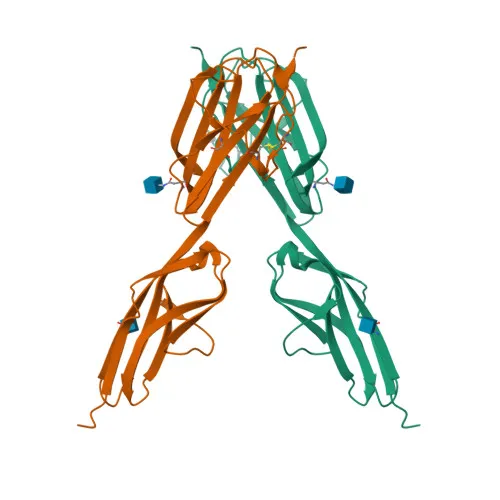
Monoclonal Antibodies
PE Anti-VEGFR-3/FLT-4 Rabbit Monoclonal Antibody for Flow Cytometry - P35916
Item Number : CM0011762
Price varies based on specs and customizations
- Application
- FC
- Cross Reactivity
- Human
- Protein Weight
- 153 kDa

Shipping:
Contact us to get shipping details Enjoy On-time Dispatch Guarantee.
Why Choose Us
Easy ordering process, quality products, and dedicated support for your business success.
Core Product Specifications and Parameters
| Parameter | Value |
|---|---|
| Product Name | PE Rabbit anti-Human VEGFR-3/FLT-4 mAb |
| Remarks/Alias | PCL, CHTD7, FLT-4, FLT41, LMPH1A, LMPHM1, VEGFR3, VEGFR-3 |
| Species | Human |
| GeneID (Human) | 2324 |
| Immunogen | Recombinant fusion protein containing a sequence corresponding to amino acids 25-776 of human VEGFR3/FLT4 (NP_002011.2) |
| Source | Rabbit |
| Category | Monoclonal Antibodies |
| Application | FC |
| Cross Reactivity | Human |
| SWISS | P35916 |
| Protein Weight | 153 kDa |
| Shipping | Ice bag |
Biological Background: VEGFR-3/FLT-4 Function and Localization
- VEGFR-3, also known as FLT-4, is a receptor tyrosine kinase that binds VEGFC and VEGFD, playing a central role in lymphangiogenesis and early cardiovascular development.
- It promotes endothelial cell proliferation, survival, and migration, and regulates angiogenic sprouting.
- Activated VEGFR-3 triggers downstream signaling via MAPK/ERK, JUN, and AKT1 pathways, and phosphorylates SHC1 and PIK3R1.
- A secreted isoform (isoform 3) may act as a decoy receptor, negatively regulating VEGFC-mediated lymphangiogenesis.
- The protein is located at the cell membrane, but also detected in cytoplasm and nucleus; alternative splicing generates isoforms with distinct C-termini and signaling efficiencies.
- Widely expressed in adult tissues (liver, muscle, thymus, placenta, lung, testis, ovary, prostate, heart, kidney) and detected in endothelial cells.
- Post-translational modifications include phosphorylation and glycosylation; categorized as a disulfide-linked glycoprotein with immunoglobulin-like domains.
- Mutations in FLT4 are associated with hereditary lymphedema (e.g., Milroy disease), highlighting its clinical significance.
Experimental Guidance and Technical Tips
- For flow cytometry, titrate the antibody to determine optimal staining concentration. Include appropriate isotype and compensation controls for PE.
- The immunogen corresponds to the extracellular domain (aa 25-776); therefore, this antibody should bind surface-expressed VEGFR-3 on live cells.
- Verify expression in the target cell type (e.g., human lymphatic endothelial cells) using known positive controls before experimental use.
- Ensure proper handling and storage at 2–8°C protected from light to maintain conjugate stability.
CamelBio: Your One-Stop Sourcing Bridge
CamelBio is a one-stop partner for IVD raw materials, providing diagnostic manufacturers, labs, and research institutes with reliable access to critical reagents like this PE-conjugated anti-VEGFR-3 monoclonal antibody for flow cytometry. Our sourcing capabilities encompass validated antibody pairs, optimized monoclonal and polyclonal antibodies, bulk ancillary reagents, and custom procurement of rare targets, supporting your projects from concept to clinic.
Product Datasheet
PE Anti-VEGFR-3/FLT-4 Rabbit Monoclonal Antibody for Flow Cytometry - P35916
REQUEST A QUOTE
Our professional team will reply to you within one business day. Please feel free to contact us!