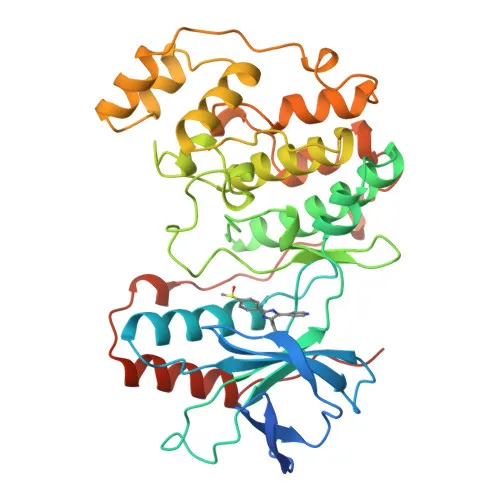
Polyclonal Antibodies
p38 MAPK Rabbit pAb - Q16539
Item Number : CM0015510
Price varies based on specs and customizations
- Application
- WB, IHC-P, IF/ICC, ELISA
- Cross Reactivity
- Human, Mouse, Rat
- Protein Weight
- 41kDa

Shipping:
Contact us to get shipping details Enjoy On-time Dispatch Guarantee.
Why Choose Us
Easy ordering process, quality products, and dedicated support for your business success.
Core Product Specifications and Parameters
| Parameter | Value |
|---|---|
| Product Name | p38 MAPK Rabbit pAb |
| Remarks/Alias | RK; p38; CSBP; EXIP; Mxi2; CSBP1; CSBP2; CSPB1; PRKM14; PRKM15; SAPK2A; p38ALPHA; p38 MAPK |
| Species | Human |
| GeneID (Human) | 1432 |
| GeneID | 1432 |
| Immunogen | A synthetic peptide corresponding to a sequence within amino acids 261-360 of human p38 MAPK (NP_620581.1). |
| Source | Rabbit |
| Category | Polyclonal Antibodies |
| Application | WB, IHC-P, IF/ICC, ELISA |
| Cross Reactivity | Human, Mouse, Rat |
| SWISS | Q16539 |
| Protein Weight | 41kDa |
| Shipping | Ice bag |
Biological Background: p38 MAPK Function and Localization
- p38 MAPK (Mitogen-activated protein kinase 14, MAPK14) is a serine/threonine kinase and a central component of the p38 MAP kinase signal transduction pathway, activated by pro-inflammatory cytokines and various stress stimuli to regulate cellular responses.
- Upon activation, MAPK14 phosphorylates the downstream kinases RPS6KA5/MSK1 and RPS6KA4/MSK2, which directly phosphorylate transcription factors (CREB1, ATF1, NF-kappa-B, STAT1/3) and histone H3, promoting chromatin remodeling and immediate-early gene expression. Related references: PMID:9687510 PMID:9792677
- MAPK14 controls gene expression post-transcriptionally via MAPKAPK2/MK2, MAPKAPK3/MK3, and MKNK1/2. MKNK1 and MKNK2 regulate protein synthesis by phosphorylating the initiation factor EIF4E2. Related references: PMID:11154262
- The kinase interacts with casein kinase II, leading to its autophosphorylation and subsequent phosphorylation of TP53/p53. In the cytoplasm, it regulates protein turnover by mediating proteasome-dependent degradation of CFLAR and by phosphorylating the ubiquitin ligase SIAH2. Related references: PMID:10747897 PMID:17003045
- MAPK14 modulates endocytosis: clathrin-mediated EGFR internalization depends on its phosphorylation of EGFR and RAB5A effectors. It also regulates autophagy by interfering with ATG9 trafficking and controls ectodomain shedding by phosphorylating ADAM17, which activates EGFR signaling. Related references: PMID:16932740 PMID:19893488 PMID:20188673
- The p38 MAPK pathway is essential for stress-induced cell cycle arrest; MAPK14 phosphorylates CDC25B and CDC25C, facilitating 14-3-3 binding and G2 delay after UV radiation. Upon DNA damage, it phosphorylates TIAR to prevent degradation of GADD45A mRNA. Related references: PMID:11333986 PMID:20932473
- MAPK14 is predominantly cytoplasmic but translocates to the nucleus upon activation. It is modified by multiple post-translational events, including phosphorylation, acetylation, and ubiquitin conjugation, which fine-tune its activity and interactions.
- Alternative splicing generates isoforms MXI2 and EXIP. MXI2 is activated by mitogens and oxidative stress but poorly phosphorylates ATF2; EXIP may play a role in early apoptosis. p38 alpha is widely expressed in brain, heart, placenta, pancreas, and skeletal muscle, with lower levels in lung, liver, and kidney. MAPK14 is also a target of microbial virulence factors; M.tuberculosis EsxA phosphorylates and inhibits IFN-gamma production in T-cells. Related references: PMID:21586573
Experimental Guidance and Technical Tips
- The immunogen corresponds to a sequence within amino acids 261-360 of human p38 MAPK. Cross-reactivity with mouse and rat is reported; however, verify specificity in your own experimental system.
- Predicted molecular weight is approximately 41 kDa; a band around this size is expected in Western blotting. Additional bands may represent isoforms or post-translationally modified forms.
- For immunohistochemistry (IHC-P), consider optimizing antigen retrieval and primary antibody dilution for your tissue type.
- In immunofluorescence/ICC, appropriate permeabilization is recommended as p38 MAPK localizes to both cytoplasm and nucleus.
- When using this antibody in ELISA or other applications, include proper positive and negative controls to confirm performance.
CamelBio: Your One-Stop Sourcing Bridge
CamelBio is dedicated to accelerating your diagnostic and research development by supplying a comprehensive range of IVD raw materials, from validated antibody pairs and optimized recombinant antibodies to bulk ancillary reagents. For your MAPK signaling and stress-response studies, we ensure consistent, high-quality access to p38 MAPK-targeting antibodies and related products. Partner with CamelBio to streamline your supply chain from concept to clinic.
REQUEST A QUOTE
Our professional team will reply to you within one business day. Please feel free to contact us!