Polyclonal Antibodies
OGT Rabbit pAb for WB - O15294
Item Number : CM0018886
Price varies based on specs and customizations
- Application
- WB, IHC-P, IF/ICC, ELISA
- Cross Reactivity
- Human, Mouse, Rat
- Protein Weight
- 117kDa

Shipping:
Contact us to get shipping details Enjoy On-time Dispatch Guarantee.
Why Choose Us
Easy ordering process, quality products, and dedicated support for your business success.
Core Product Specifications and Parameters
| Parameter | Value |
|---|---|
| Product Name | OGT Rabbit pAb |
| Remarks/Alias | OGT1; HRNT1; MRX106; XLID106; HINCUT-1; O-GLCNAC; OGT |
| Species | Human |
| GeneID (Human) | 8473 |
| GeneID | 8473 |
| Immunogen | Recombinant protein | Recombinant fusion protein containing a sequence corresponding to amino acids 510-699 of human OGT (NP_858058.1). |
| Source | Rabbit |
| Category | Polyclonal Antibodies |
| Application | WB, IHC-P, IF/ICC, ELISA |
| Cross Reactivity | Human, Mouse, Rat |
| SWISS | O15294 |
| Protein Weight | 117kDa |
| Shipping | Ice bag |
Biological Background: OGT Function and Localization
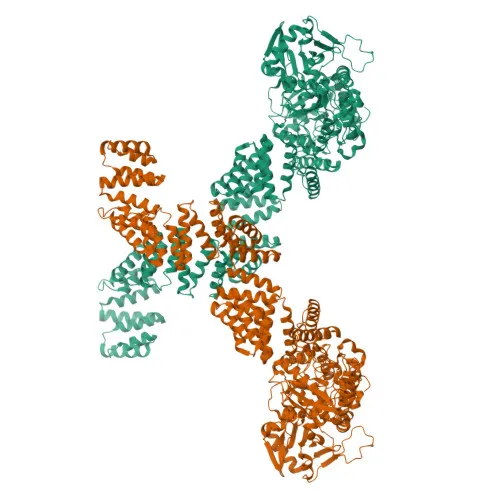
- OGT (UDP-N-acetylglucosamine--peptide N-acetylglucosaminyltransferase 110 kDa subunit) is the catalytic subunit that transfers a single N-acetylglucosamine (GlcNAc) from UDP-GlcNAc to serine or threonine residues of target proteins, forming a beta-linked O-GlcNAc modification that competes with phosphorylation and regulates protein function, stability, and interactions. Related references: PMID:12150998, PMID:15361863, PMID:19451179
- It glycosylates a wide array of cytoplasmic and nuclear substrates—including histones, kinases, and transcription factors—thereby influencing insulin signaling, glycolysis, chromatin remodeling, and circadian rhythms. Related references: PMID:19451179, PMID:20200153, PMID:21285374
- In the nucleus, OGT is recruited to CpG-rich transcription start sites via TET proteins to O-GlcNAcylate histone H2B at Ser‑112, directly impacting chromatin architecture and gene expression. Related references: PMID:22121020, PMID:23353889
- OGT stabilizes EZH2 through O‑GlcNAcylation at Ser‑75, which promotes H3K27me3 deposition by the PRC2 complex and reinforces epigenetic silencing. Related references: PMID:24474760
- O-GlcNAcylation of RPTOR and FNIP1 by OGT links nutrient status to mTORC1 activation, positioning OGT as a critical metabolic sensor. Related references: PMID:30699359, PMID:37541260
- Beyond its cytoplasmic and nuclear roles, a mitochondrially targeted isoform (mOGT) induces apoptosis, and OGT activity modulates autophagy via ATG4B glycosylation. Related references: PMID:27527864
- OGT is highly expressed in the pancreas, with lower levels in skeletal muscle, heart, brain, and placenta; it shuttles between the nucleus, cytoplasm, mitochondria, and membrane compartments, reflecting its pleiotropic functions. Mutations in OGT are linked to X-linked intellectual disability (MRX106, XLID106).
Experimental Guidance and Technical Tips
- The immunogen corresponds to amino acids 510–699 of human OGT (NP_858058.1), which covers part of the C‑terminal catalytic domain and TPR repeats; this design targets a region conserved across human, mouse, and rat, supporting the described cross-reactivity.
- For western blot (WB), a predominant band at ~117 kDa is expected; additional bands may appear due to O‑GlcNAcylated proteoforms or the reported 78 kDa mitochondrial isoform. Validate using appropriate positive controls.
- In immunohistochemistry (IHC‑P) and immunofluorescence (IF/ICC), consider antigen retrieval steps and confirm subcellular distribution patterns (nucleus, cytoplasm, mitochondria) against known localization data.
- Use in ELISA may require optimization of coating antigen and detection system; the antibody can be paired with appropriate anti‑rabbit secondary reagents.
- As a polyclonal antibody, lot‑to‑lot consistency should be monitored for critical applications; perform internal qualification if transitioning between batches or assay formats.
CamelBio: Your One-Stop Sourcing Bridge
CamelBio streamlines IVD raw‑material sourcing by offering a curated portfolio of high‑quality antibodies, immunoassay reagents, and custom development services. The OGT Rabbit pAb targets O‑GlcNAc transferase, a key player in metabolism, epigenetics, and signaling—relevant to diagnostics and research in diabetes, cancer, and neurology. Through validated pairs, bulk ancillary reagents, and one‑stop procurement, we help diagnostic manufacturers and labs accelerate assay development from concept to clinic.
REQUEST A QUOTE
Our professional team will reply to you within one business day. Please feel free to contact us!