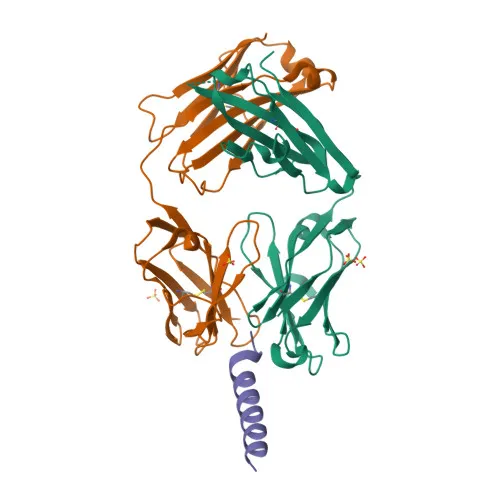
Monoclonal Antibodies
NPY Rabbit mAb for Western Blot, Immunofluorescence, Immunohistochemistry, ELISA - P01303
Item Number : CM0004475
Price varies based on specs and customizations
- Application
- WB, IF-F, IF-P, IHC-P, ELISA
- Cross Reactivity
- Human, Mouse, Rat
- Protein Weight
- 11 kDa

Shipping:
Contact us to get shipping details Enjoy On-time Dispatch Guarantee.
Why Choose Us
Easy ordering process, quality products, and dedicated support for your business success.
Core Product Specifications and Parameters
| Parameter | Value |
|---|---|
| Product Name | NPY Rabbit mAb |
| Remarks/Alias | PYY4 |
| Species | Human |
| GeneID (Human) | 4852 |
| GeneID | 4852 |
| Immunogen | A synthesized peptide derived from human NPY |
| Source | Rabbit |
| Category | Monoclonal Antibodies |
| Application | WB, IF-F, IF-P, IHC-P, ELISA |
| Cross Reactivity | Human, Mouse, Rat |
| SWISS | P01303 |
| Protein Weight | 11 kDa |
| Shipping | Ice bag |
Biological Background: NPY Function and Localization
- Neuropeptide Y (NPY), also known as PYY4, is a 36-amino acid peptide of the pancreatic polypeptide family, encoded by the NPY gene (GeneID: 4852). It is one of the most abundant and widely distributed neuropeptides in the mammalian nervous system.
- NPY acts as a high-affinity ligand for the G protein-coupled receptors NPY1R and NPY2R, triggering adenylate cyclase inhibition and a rise in intracellular Ca²⁺ levels (PubMed:1321422, PubMed:7592910, PubMed:35165283, PubMed:38882210). Related references: PMID:1321422 PMID:7592910 PMID:35165283 PMID:38882210
- Through this signaling, NPY centrally stimulates food intake and regulates energy homeostasis, and peripherally modulates colonic ion secretion and smooth muscle contractility.
- NPY is predominantly localized to secretory vesicles, especially large dense-core vesicles in neurons, and is released upon stimulation to act as a neuromodulator and hormone. It is also found in adrenal medullary chromaffin cells.
- The NPY preproprotein undergoes proteolytic cleavage at dibasic sites and C-terminal amidation to generate the mature, biologically active peptide.
- Keywords for NPY include neuropeptide, amidation, cleavage on pair of basic residues, phosphoprotein, cytoplasmic vesicle, and secreted, reflecting its synthesis, processing, and release pathways.
Experimental Guidance and Technical Tips
- The immunogen is a synthetic peptide derived from human NPY, so the antibody likely recognizes a linear epitope. It is expected to perform well in denaturing applications such as Western blotting.
- For WB, use brain, hypothalamus, or gut lysates. NPY is a small peptide (approx. 11 kDa); ensure the use of low-percentage or gradient gels and appropriate protein standards. Consider adding protease inhibitors to prevent degradation.
- For immunofluorescence (IF) and immunohistochemistry (IHC), antigen retrieval may enhance signal. Fixation methods (e.g., 4% PFA) are compatible, but validate in your specific tissue because NPY is a secreted and rapidly degraded peptide.
- In ELISA, the antibody can be used for capture or detection, but pairing with another NPY antibody for sandwich ELISA requires empirical optimization.
CamelBio: Your One-Stop Sourcing Bridge
CamelBio offers integrated supply solutions for IVD manufacturers and research labs, providing a comprehensive range of raw materials from antibody pairs to bulk ancillary reagents. This anti-NPY monoclonal antibody supports studies in neurobiology, metabolism, and gastrointestinal disorders, aligning with CamelBio's capability to source rare-target reagents and deliver quality-controlled products that accelerate assay development. With one-stop access to validated antibodies and technical consultation, CamelBio simplifies procurement for diagnostic and research workflows.
Product Datasheet
NPY Rabbit mAb for Western Blot, Immunofluorescence, Immunohistochemistry, ELISA - P01303
REQUEST A QUOTE
Our professional team will reply to you within one business day. Please feel free to contact us!