Polyclonal Antibodies
NLRP3 Rabbit Polyclonal Antibody for WB, IF/ICC, ELISA - Q8R4B8
Item Number : CM0022503
Price varies based on specs and customizations
- Application
- WB, IF/ICC, ELISA
- Cross Reactivity
- Human, Mouse, Rat
- Protein Weight
- 118kDa

Shipping:
Contact us to get shipping details Enjoy On-time Dispatch Guarantee.
Why Choose Us
Easy ordering process, quality products, and dedicated support for your business success.
Core Product Specifications and Parameters
| Parameter | Value |
|---|---|
| Product Name | NLRP3 Rabbit pAb |
| Remarks/Alias | FCU; MWS; FCAS; Cias1; Mmig1; NALP3; Pypaf1; AII/AVP; AGTAVPRL; NLRP3 |
| Species | Mouse |
| GeneID (human) | 216799 |
| GeneID | 216799 |
| Immunogen | Recombinant fusion protein containing a sequence corresponding to amino acids 1-93 of mouse NLRP3 (NP_665826.1) |
| Source | Rabbit |
| Category | Polyclonal Antibodies |
| Application | WB, IF/ICC, ELISA |
| Cross Reactivity | Human, Mouse, Rat |
| SWISS | Q8R4B8 |
| Protein Weight | 118kDa |
| Shipping | Ice bag |
Biological Background: NLRP3 Function and Localization
-
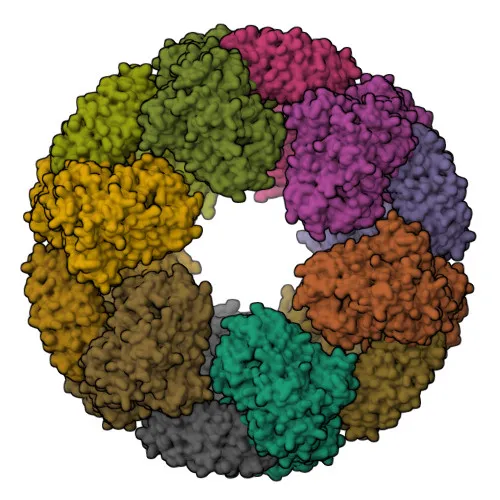
NLRP3 (NACHT, LRR and PYD domains-containing protein 3, also known as cryopyrin) is an intracellular sensor that forms the core component of the NLRP3 inflammasome, which mediates activation in response to membrane integrity defects, leading to secretion of IL1B and IL18 and pyroptosis. Related references: PMID:19362020, PMID:23582325, PMID:26642356
-
NLRP3 initiates the formation of a polymeric inflammasome complex with CASP1 and PYCARD/ASC, which activates caspase-1 to cleave pro-IL1B, pro-IL18, and gasdermin-D (GSDMD), resulting in cytokine release and pyroptotic cell death. Related references: PMID:16407889, PMID:18403674, PMID:19362020, PMID:16546100, PMID:17008311, PMID:26642356
-
Diverse pathogen- and damage-associated stimuli—including extracellular ATP, nigericin, crystals (urate, cholesterol), amyloid-beta, and particulates (asbestos, silica)—trigger NLRP3 activation, almost all converging on intracellular K+ efflux. Related references: PMID:16407888, PMID:16407889, PMID:16407890, PMID:23809161
-
NLRP3 inflammasome activation is also required for HMGB1 secretion and governs a homeostatic wound healing response that directs neutrophil migration to necrotic sites without damaging healthy tissue. Related references: PMID:22801494, PMID:20947763
-
Upon activation, NLRP3 is transported to the microtubule organizing center (MTOC), then to dispersed trans-Golgi network (dTGN) vesicles where it binds phosphatidylinositol 4-phosphate (PtdIns4P) and assembles active inflammasomes, a process unlocked by NEK7. Related references: PMID:26814970, PMID:34615873, PMID:34861190, PMID:30487600
-
NLRP3 is highly expressed in peripheral blood leukocytes (Th2 lymphocytes and macrophages) and at low levels in osteoblasts, consistent with its immunological and inflammatory roles. Related references: PMID:15302403, PMID:16546100, PMID:26098997, PMID:28847925, PMID:17907925
-
Independent of its inflammasome scaffold function, NLRP3 functions as a transcription regulator in Th2 cells, binding to DNA and modulating expression of IL4, IL5, IL13, and other genes critical for Th2 differentiation and allergic inflammation. Related references: PMID:26098997
-
NLRP3 possesses intrinsic ATPase activity and is regulated by various post-translational modifications including phosphorylation, palmitoylation, and ubiquitylation, which control its activation threshold and interactions. Related references: PMID:34861190
Experimental Guidance and Technical Tips
- The immunogen encompasses mouse NLRP3 amino acids 1–93, a region containing the pyrin (PYD) domain. Consider that the antibody may detect both full-length protein and PYD-containing fragments; validate specificity in your model system.
- For Western blotting, the predicted molecular weight is ~118 kDa; however, post-translational modifications may result in additional bands. Use appropriate positive and negative controls (e.g., LPS+ATP-stimulated macrophage lysates) and optimize gel percentages for high-molecular-weight proteins.
- In immunofluorescence/immunocytochemistry (IF/ICC), NLRP3 can exhibit punctate or diffuse staining depending on activation state. Fixation and permeabilization conditions should be optimized to preserve its native localization.
- For ELISA applications, pairing with another NLRP3-specific antibody may be required for sandwich formats; the polyclonal nature can be advantageous for capture or detection.
CamelBio: Your One-Stop Sourcing Bridge
CamelBio offers diagnostic manufacturers and research laboratories one-stop access to high-quality IVD raw materials, including a broad portfolio of antibodies, antigens, and ancillary reagents. This NLRP3 antibody supports investigational studies on inflammasome signaling, sterile inflammation, and immune regulation. Partner with CamelBio for reliable sourcing and technical support to streamline your assay development from concept to clinic.
REQUEST A QUOTE
Our professional team will reply to you within one business day. Please feel free to contact us!