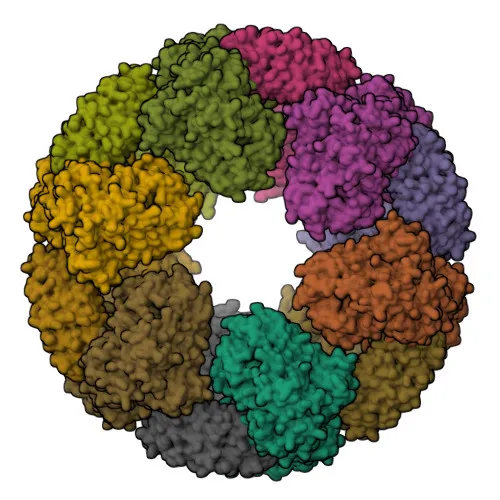
Monoclonal Antibodies
NLRP3 Rabbit mAb - Q8R4B8
Item Number : CM0007662
Price varies based on specs and customizations
- Application
- WB, IF/ICC, IP, ELISA
- Cross Reactivity
- Mouse
- Protein Weight
- 118kDa

Shipping:
Contact us to get shipping details Enjoy On-time Dispatch Guarantee.
Why Choose Us
Easy ordering process, quality products, and dedicated support for your business success.
Core Product Specifications and Parameters
| Parameter | Value |
|---|---|
| Product Name | NLRP3 Rabbit mAb |
| Remarks/Alias | FCU; MWS; FCAS; Cias1; Mmig1; NALP3; Pypaf1; AII/AVP; AGTAVPRL; NLRP3 |
| Species | Mouse |
| GeneID (Human) | 114548 |
| GeneID | 216799 |
| Immunogen | Recombinant protein|Recombinant fusion protein containing a sequence corresponding to amino acids 1-150 of mouse NLRP3(NP_665826.1). |
| Source | Rabbit |
| Category | Monoclonal Antibodies |
| Application | WB, IF/ICC, IP, ELISA |
| Cross Reactivity | Mouse |
| SWISS | Q8R4B8 |
| Protein Weight | 118kDa |
| Shipping | Ice bag |
Biological Background: NLRP3 Function and Localization
- NLRP3, also known as cryopyrin, is a member of the NLRP (NACHT, LRR and PYD domains-containing) family of intracellular sensors that assembles into the NLRP3 inflammasome. Alternative names include NALP3, CIAS1, Pypaf1, Mmig1, and others.
- As the sensor component, NLRP3 detects a wide range of pathogen- and damage-associated signals (e.g., ATP, nigericin, crystals, amyloid-β), triggering inflammasome formation. This leads to activation of caspase-1, which cleaves pro-IL-1β and pro-IL-18 into their active forms and induces pyroptosis through gasdermin-D. Related references: PMID:19362020, PMID:23582325, PMID:26642356
- Activation requires K⁺ efflux and often involves relocalization to the trans-Golgi network or mitochondria-ER contact sites. ATPase activity of NLRP3 is necessary for inflammasome assembly. Related references: PMID:34861190
- NLRP3 also functions independently as a transcription factor that promotes Th2 differentiation by binding to the IL-4 promoter and regulating expression of Th2 cytokines, thereby influencing allergic asthma and tumor growth. Related references: PMID:26098997
- Subcellular localization is dynamic: under resting conditions, NLRP3 resides in the cytosol and endoplasmic reticulum; upon activation, it moves to the microtubule organizing center, Golgi, and is secreted. It can also be found in the nucleus.
- High expression in peripheral blood leukocytes, including macrophages and Th2 lymphocytes, consistent with its role in innate and adaptive immunity. Related references: PMID:15302403, PMID:26098997
- Post-translational modifications include phosphorylation, palmitoylation, and ubiquitination, regulating its activity and stability. Keywords: Activator, ATP-binding, Inflammasome, Leucine-rich repeat, Reference proteome, Ubl conjugation.
Experimental Guidance and Technical Tips
- This antibody was raised against amino acids 1–150 of mouse NLRP3, suggesting recognition of the N-terminal PYD domain. It may detect both full-length and cleaved forms.
- For Western blotting (118 kDa protein), use a 6–8% SDS-PAGE gel and extended transfer (e.g., 2 hours at 100 V) for high-molecular-weight proteins. Include a positive control lysate from mouse macrophage or THP-1 cells treated with LPS and nigericin.
- For immunofluorescence, permeabilize cells with 0.1% Triton X-100 to access cytosolic and organelle-associated NLRP3. Co-stain with organelle markers to study activation-dependent translocation.
- In immunoprecipitation, use 1–2 µg antibody per 500 µg lysate; the protein may require cross-linking or careful lysis to maintain inflammasome complexes.
- Validate all applications with appropriate mouse tissue or cell systems, as cross-reactivity is reported for mouse only.
CamelBio: Your One-Stop Sourcing Bridge
CamelBio specializes in providing diagnostic manufacturers and research laboratories with a full range of IVD raw materials, from concept to clinic. For NLRP3 and inflammasome pathway projects, we supply validated antibody pairs, monoclonal antibodies, recombinant proteins, and ancillary reagents. Our one-stop procurement service simplifies sourcing, ensuring consistency and quality for your immunoassay development and innate immunity research.
REQUEST A QUOTE
Our professional team will reply to you within one business day. Please feel free to contact us!