Polyclonal Antibodies
NFS1 Rabbit Polyclonal Antibody for WB, IF/ICC, ELISA - Q9Y697
Item Number : CM0018225
Price varies based on specs and customizations
- Application
- WB, IF/ICC, ELISA
- Cross Reactivity
- Human, Mouse, Rat
- Protein Weight
- 50kDa

Shipping:
Contact us to get shipping details Enjoy On-time Dispatch Guarantee.
Why Choose Us
Easy ordering process, quality products, and dedicated support for your business success.
Core Product Specifications and Parameters
| Parameter | Specification |
|---|---|
| Product Name | NFS1 Rabbit pAb |
| Remarks/Alias | IscS; NIFS; COXPD52; HUSSY-08; NFS1 |
| Species | Human |
| GeneID (Human) | 9054 |
| GeneID | 9054 |
| Immunogen | Recombinant fusion protein containing a sequence corresponding to amino acids 208-457 of human NFS1 (NP_066923.3). |
| Source | Rabbit |
| Category | Polyclonal Antibodies |
| Application | WB, IF/ICC, ELISA |
| Cross Reactivity | Human, Mouse, Rat |
| SWISS | Q9Y697 |
| Protein Weight | 50kDa |
| Shipping | Ice bag |
Biological Background: NFS1 Function and Localization
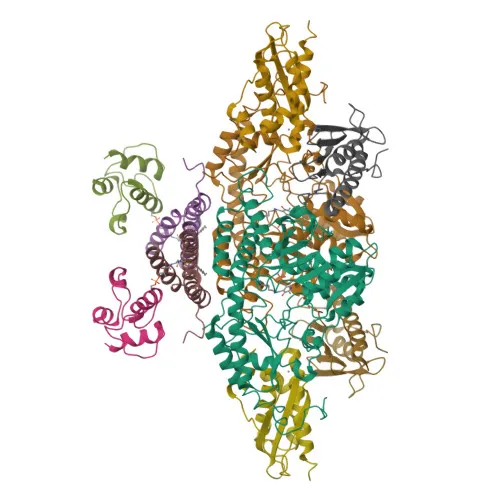
- NFS1 is a cysteine desulfurase belonging to the class-V pyridoxal-phosphate-dependent aminotransferase family. It serves as the core sulfur-delivering component of the mitochondrial iron-sulfur cluster (ISC) assembly complex, catalyzing the desulfuration of L-cysteine to L-alanine and forming a persulfide intermediate on its active site cysteine (PubMed:18650437, PubMed:29097656, PubMed:31101807).
- As part of the ISC machinery, NFS1 transfers persulfide sulfur to the scaffold protein ISCU in a FXN-dependent manner to initiate [2Fe-2S] cluster assembly. The process is completed with reducing equivalents from FDX2 and chaperone-mediated cluster transfer to target apoproteins.
- Beyond ISC biogenesis, NFS1 acts as a sulfur donor for MOCS3, participating in molybdenum cofactor biosynthesis, highlighting a dual role in essential sulfur-trafficking pathways (PubMed:18650437, PubMed:23593335).
- The protein localizes to multiple subcellular compartments: mitochondrion, cytoplasm, cytosol, nucleus, and centrosome, reflecting its broad cellular distribution.
- Tissue expression is highest in heart and skeletal muscle, with additional detection in brain, liver, and pancreas.
- UniProt keywords and features include alternative initiation, alternative splicing, disease variant (COXPD52), pyridoxal phosphate binding, and proteomics identification.
Experimental Guidance and Technical Tips
- The immunogen corresponds to amino acids 208–457 of human NFS1. This region lies within the conserved catalytic domain, and the resulting antibody may recognize full-length NFS1 and potentially certain splice isoforms. Validate specificity in your relevant sample system.
- For Western blot, the predicted molecular weight is approximately 50 kDa. Use appropriate loading controls and verify the band pattern in the tissue or cell line of interest.
- In immunofluorescence and immunocytochemistry, anticipate mitochondrial and cytosolic staining patterns. Co-staining with organelle markers is recommended to confirm localization.
- ELISA can be employed for quantifying recombinant or endogenous NFS1. Optimize coating conditions and antibody concentration using a standard curve of known antigen.
- Cross-reactivity is reported for human, mouse, and rat; for other species, in silico sequence alignment and pilot testing are advised.
CamelBio: Your One-Stop Sourcing Bridge
CamelBio supports diagnostic manufacturers and research institutions with comprehensive access to IVD raw materials. This NFS1 antibody addresses targeting needs in iron-sulfur cluster biology and mitochondrial dysfunction research. We offer validated antibody pairs, monoclonal and polyclonal antibodies, bulk ancillary reagents, and sourcing assistance for rare targets, ensuring reliable procurement from early development to clinical application.
REQUEST A QUOTE
Our professional team will reply to you within one business day. Please feel free to contact us!