Polyclonal Antibodies
NFKB1 Rabbit Polyclonal Antibody for WB, IHC-P, IF/ICC, ELISA - P19838
Item Number : CM0026003
Price varies based on specs and customizations
- Application
- WB, IHC-P, IF/ICC, ELISA
- Cross Reactivity
- Human, Mouse, Rat
- Protein Weight
- 105kDa

Shipping:
Contact us to get shipping details Enjoy On-time Dispatch Guarantee.
Why Choose Us
Easy ordering process, quality products, and dedicated support for your business success.
Core Product Specifications and Parameters
| Parameter | Value |
|---|---|
| Product Name | NFKB1 Rabbit pAb |
| Remarks/Alias | KBF1; EBP-1; NF-kB; CVID12; NF-kB1; NFKB-p50; NFkappaB; NF-kappaB; NFKB-p105; NF-kappa-B1; NF-kappabeta; NFKB1 |
| Species | Human |
| GeneID (Human) | 4790 |
| GeneID | 4790 |
| Immunogen | A synthetic peptide corresponding to a sequence within amino acids 41-365 of human NFKB1 (NP_001158884.1) |
| Source | Rabbit |
| Category | Polyclonal Antibodies |
| Application | WB, IHC-P, IF/ICC, ELISA |
| Cross Reactivity | Human, Mouse, Rat |
| SWISS | P19838 |
| Protein Weight | 105kDa |
| Shipping | Ice bag |
Biological Background: NFKB1 Function and Localization
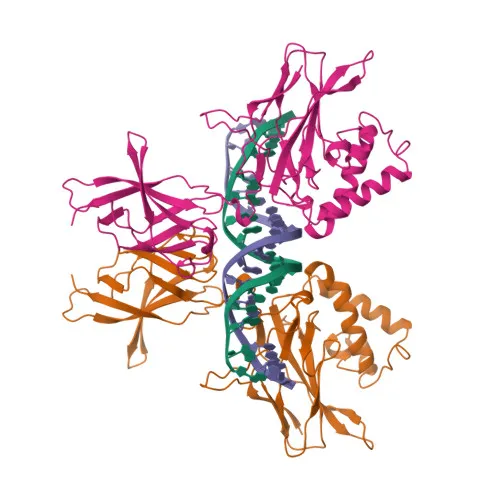
- NFKB1 encodes the p105 precursor, which is cotranslationally processed by the proteasome to generate the active p50 subunit (PubMed:1423592). Related references: PMID:1423592
- The p50 subunit forms functional NF-kB dimers by associating with other Rel family members, most notably the p65-p50 heterodimer, which acts as a potent transcriptional activator (PubMed:1740106, PubMed:7830764). Related references: PMID:1740106, PMID:7830764
- NF-kB dimers specifically bind to the kappa-B consensus DNA sequence (5'-GGRNNYYCC-3') located in enhancer regions of genes governing immune responses, acute-phase reactions, inflammation, and cell survival.
- In unstimulated cells, NF-kB is sequestered in the cytoplasm by inhibitor I-kB proteins; upon activation by diverse stimuli, I-kB is phosphorylated and degraded, freeing NF-kB to enter the nucleus and regulate target gene expression.
- The full-length p105 also functions as an I-kB-like inhibitor, retaining associated NF-kB proteins in the cytoplasm and modulating MAPK signaling by repressing MAP3K8 until its degradation releases active MAP3K8.
- Key post-translational modifications of NFKB1 include phosphorylation, acetylation, ubiquitination, and S-nitrosylation, which fine-tune its transcriptional activity and stability.
- Subcellular localization is primarily cytoplasmic in resting cells and nuclear upon pathway activation.
Experimental Guidance and Technical Tips
- This antibody, raised against a peptide within the N-terminal region common to both p105 and p50, is expected to detect both forms; in WB, expect bands at ~105 kDa (p105) and ~50 kDa (p50) depending on cell type and stimulation.
- For IHC-P and IF/ICC, antigen retrieval conditions and fixation methods may require optimization; consider testing both cytoplasmic and nuclear staining patterns.
- Verify antibody specificity using appropriate controls, such as siRNA-mediated knockdown or knockout cell lines.
- For ELISA applications, confirm that the antibody recognizes native protein conformations in your sample matrix.
- Adjust blocking and antibody dilution conditions empirically for your experimental system.
CamelBio: Your One-Stop Sourcing Bridge
CamelBio provides diagnostic manufacturers, laboratories, and research institutes with streamlined access to IVD raw materials, technical services, and consulting—from concept to clinic. For NF-kB pathway research and diagnostic development, we offer validated antibody pairs, optimized polyclonal antibodies, bulk ancillary reagents, and rare-target raw-material sourcing to accelerate your projects.
Product Datasheet
NFKB1 Rabbit Polyclonal Antibody for WB, IHC-P, IF/ICC, ELISA - P19838
REQUEST A QUOTE
Our professional team will reply to you within one business day. Please feel free to contact us!