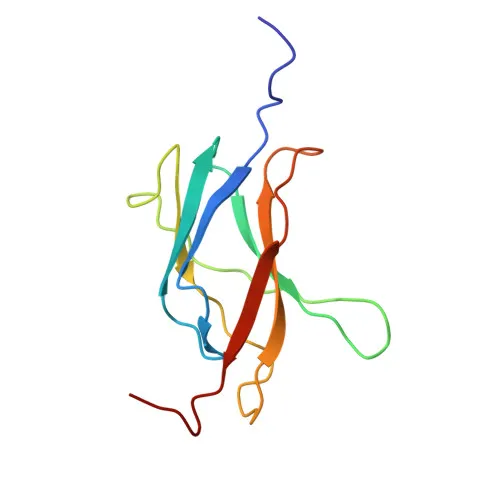
Polyclonal Antibodies
NFATC4 Rabbit pAb for WB and ELISA - Q14934
Item Number : CM0024542
Price varies based on specs and customizations
- Application
- WB, ELISA
- Cross Reactivity
- Human, Mouse
- Protein Weight
- 95kDa

Shipping:
Contact us to get shipping details Enjoy On-time Dispatch Guarantee.
Why Choose Us
Easy ordering process, quality products, and dedicated support for your business success.
Core Product Specifications and Parameters
| Parameter | Value |
|---|---|
| Product Name | NFATC4 Rabbit pAb |
| Remarks/Alias | NFAT3; NF-AT3; NF-ATC4; NFATC4 |
| Species | Human |
| GeneID (Human) | 4776 |
| GeneID | 4776 |
| Immunogen | Recombinant fusion protein containing a sequence corresponding to amino acids 560-710 of human NFATC4 (NP_004545.2). |
| Source | Rabbit |
| Category | Polyclonal Antibodies |
| Application | WB, ELISA |
| Cross Reactivity | Human, Mouse |
| SWISS | Q14934 |
| Protein Weight | 95kDa |
| Shipping | Ice bag |
Biological Background: NFATC4 Function and Localization
- NFATC4 (also known as NFAT3) is a member of the NFAT family of transcription factors, characterized by a conserved DNA-binding domain that recognizes the consensus sequence 5'-GGAAAAT-3'.
- It functions as a Ca2+-regulated transcription factor, shuttling between the cytoplasm and nucleus upon calcium-dependent activation.
- In T-cells, NFATC4 stimulates the transcription of cytokine genes, including IL2 and IL4, playing a pivotal role in immune activation. Related references: PMID:18347059, PMID:18668201, PMID:7749981
- NFATC4 is essential for embryonic heart development; it regulates cardiac genes such as NPPB/BNP and MYH7 and participates in mitochondrial energy metabolism in cardiomyocytes.
- It promotes adipocyte differentiation by binding to the PPARG gene promoter and modulating its transcriptional activity. Related references: PMID:11997522
- In the nervous system, NFATC4 contributes to hippocampal neurogenesis and long-term memory formation, and it activates the BACE1 promoter, potentially influencing APP processing. Related references: PMID:25663301
- Widely expressed, with high levels in placenta, lung, kidney, testis, ovary, and heart; in the hippocampus, it localizes to the dentate gyrus, CA3 neurons, and hippocampal fissure.
Experimental Guidance and Technical Tips
- The immunogen (aa 560-710) corresponds to a region conserved between human and mouse NFATC4, supporting expected cross-reactivity; always validate in your specific sample context.
- For Western blot (WB), the predicted molecular weight is ~95 kDa; use a low-percentage SDS-PAGE gel and optimize transfer conditions for high-molecular-weight proteins.
- As a polyclonal antibody, it may detect multiple NFAT family members if epitopes are conserved; confirm specificity by knockdown or overexpression experiments in your cell system.
- For ELISA, standard polyclonal antibody protocols should be optimized for coating concentration and blocking conditions to achieve optimal signal-to-noise ratio.
- Given the nuclear/cytoplasmic shuttling of NFATC4, consider subcellular fractionation or stimulation (e.g., ionomycin) to enrich for activated nuclear forms in your samples.
CamelBio: Your One-Stop Sourcing Bridge
CamelBio is a comprehensive IVD raw material partner, offering a broad range of high-quality antibodies, including this NFATC4 polyclonal antibody, to advance your immunology, cardiovascular, and neuroscience research. We supply validated antibody pairs, optimized monoclonal and polyclonal antibodies, bulk ancillary reagents, and can source even rare targets to meet your specific assay development needs. With end-to-end support from concept to clinic, CamelBio ensures reliable supply and technical guidance for your diagnostic and research projects.
REQUEST A QUOTE
Our professional team will reply to you within one business day. Please feel free to contact us!