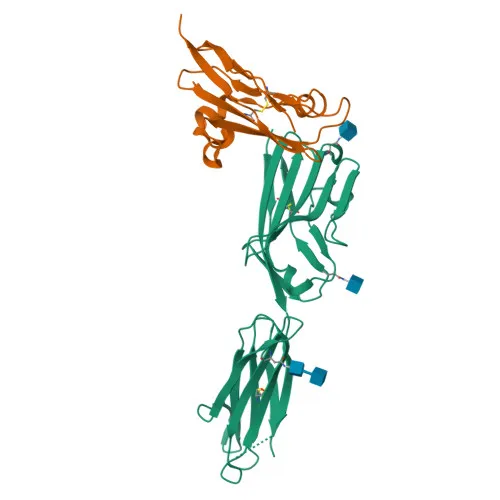
Polyclonal Antibodies
NCR3 Rabbit pAb for WB, ELISA - O14931
Item Number : CM0029910
Price varies based on specs and customizations
- Application
- WB, ELISA
- Cross Reactivity
- Human
- Protein Weight
- 22kDa

Shipping:
Contact us to get shipping details Enjoy On-time Dispatch Guarantee.
Why Choose Us
Easy ordering process, quality products, and dedicated support for your business success.
Core Product Specifications and Parameters
| Parameter | Value |
|---|---|
| Product Name | NCR3 Rabbit pAb |
| Remarks/Alias | 1C7; MALS; CD337; LY117; NKp30; NCR3 |
| Species | Human |
| GeneID (human) | 259197 |
| GeneID | 259197 |
| Immunogen | Recombinant fusion protein containing a sequence corresponding to amino acids 19-135 of human NCR3 (NP_667341.1) |
| Source | Rabbit |
| Category | Polyclonal Antibodies |
| Application | WB, ELISA |
| Cross Reactivity | Human |
| SWISS | O14931 |
| Protein Weight | 22kDa |
| Shipping | Ice bag |
Biological Background: NCR3 Function and Localization
- NCR3 (Natural cytotoxicity triggering receptor 3), also known as NKp30 or CD337, is an activating natural killer (NK) cell receptor encoded by the NCR3 gene.
- It functions as a cell membrane receptor that triggers NK cell cytotoxicity upon binding to extracellular ligands such as BAG6 and NCR3LG1, promoting killing of tumor cells.
- Engagement of NCR3 by its ligand BAG6 also promotes myeloid dendritic cell (DC) maturation, both by eliminating immature DCs and by inducing NK cell release of TNF-α and IFN-γ.
- The receptor is selectively expressed on the surface of all resting and activated NK cells, with weak expression detected in the spleen.
- As a type I transmembrane glycoprotein, NCR3 contains an immunoglobulin-like domain in its extracellular region and relies on associated adaptor proteins (e.g., CD3ζ, FcεRIγ) for signal transduction.
- Post-translational modifications include N-linked glycosylation and formation of a disulfide bond within the Ig domain, which are critical for proper folding and ligand recognition.
- Alternative splicing generates multiple isoforms, adding to the functional diversity of the receptor in immune surveillance.
Experimental Guidance and Technical Tips
- The immunogen corresponds to the extracellular domain (aa 19-135), which includes the ligand-binding Ig-like region; therefore, the antibody is expected to recognize the native receptor on the cell surface.
- For Western blotting under reducing conditions, consider a loading amount of 20-40 µg of lysate from NK cell lines (e.g., NK-92) or activated primary NK cells, and validate the band at the predicted molecular weight (~22 kDa).
- Due to glycosylation and potential isoform variation, the observed molecular weight in WB may appear slightly higher; inclusion of deglycosylation controls or use of specific cell lines can help verify specificity.
- In ELISAs, coating with recombinant NCR3 protein or cell-based formats can be explored; appropriate blocking and detection conditions should be optimized for the specific assay system.
CamelBio: Your One-Stop Sourcing Bridge
CamelBio is your trusted one-stop partner for IVD raw material sourcing, offering validated antibody pairs, optimized polyclonal and monoclonal antibodies, and bulk ancillary reagents to support your NK cell-targeted diagnostic development. With a focus on rare and critical targets like NCR3, we facilitate access to high-quality raw materials and technical support to accelerate your project from concept to clinic. Reach out to explore how our integrated supply solutions can meet your specific procurement needs.
REQUEST A QUOTE
Our professional team will reply to you within one business day. Please feel free to contact us!