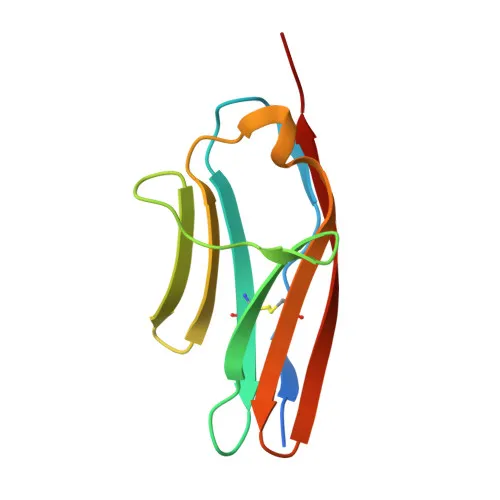
Monoclonal Antibodies
MYLK Rabbit mAb for WB, ELISA - Q15746
Item Number : CM0008691
Price varies based on specs and customizations
- Application
- WB, ELISA
- Cross Reactivity
- Human
- Protein Weight
- 211kDa

Shipping:
Contact us to get shipping details Enjoy On-time Dispatch Guarantee.
Why Choose Us
Easy ordering process, quality products, and dedicated support for your business success.
Core Product Specifications and Parameters
| Parameter | Value |
|---|---|
| Product Name | MYLK Rabbit mAb |
| Remarks/Alias | KRP; AAT7; MLCK; MLCK1; MMIHS; MYLK1; MMIHS1; MYLK-L; smMLCK; MLCK108; MLCK210; MSTP083; MYLK |
| Species | Human |
| GeneID (Human) | 4638 |
| GeneID | 4638 |
| Immunogen | Synthetic Peptide: A synthetic peptide corresponding to a sequence within amino acids 1800-1900 of human MYLK (Q15746). |
| Source | Rabbit |
| Category | Monoclonal Antibodies |
| Application | WB, ELISA |
| Cross Reactivity | Human |
| SWISS | Q15746 |
| Protein Weight | 211kDa |
| Shipping | Ice bag |
Biological Background: MYLK Function and Localization
- MYLK encodes myosin light chain kinase, smooth muscle (MLCK), a calcium/calmodulin-dependent enzyme also known as kinase-related protein (KRP) and telokin.
- It phosphorylates myosin light chains (MLC) to regulate smooth muscle contraction and modulates actin-myosin interaction via non-kinase activity.
- Involved in inflammatory processes such as apoptosis, vascular permeability, leukocyte diapedesis, and airway hyperreactivity linked to asthma.
- Promotes cell migration and tumor metastasis through mechanisms including RhoA-dependent membrane blebbing and TRPC5 channel activation.
- Localizes to the cytoplasm, lamellipodium, cleavage furrow, and stress fibers, where it controls cytoskeletal dynamics.
- Expressed in smooth muscle and various fetal/adult tissues; the non-muscle isoform 2 is the predominant splice variant.
- Telokin accumulates in well-differentiated intestinal enterocytes in response to TNF, and kinase activity is required for gastrointestinal motility and epithelial barrier function.
- Key molecular features include alternative splicing, calmodulin-binding, actin-binding, ATP-binding, and serine/threonine-protein kinase activity.
Experimental Guidance and Technical Tips
- For WB, consider the 211 kDa molecular weight; use low-percentage SDS-PAGE gels (e.g., 6-8%) and optimized transfer conditions for high-molecular-weight proteins.
- Validate antibody specificity in MYLK-expressing cell or tissue lysates, such as smooth muscle, endothelial, or certain cancer cell lines.
- For ELISA, pairing with detection antibodies or peptide competition assays may confirm epitope recognition; the immunogen is a linear peptide within residues 1800-1900.
- Fixation and antigen retrieval methods can influence immunoreactivity; test conditions appropriate for the sample type.
- Note that alternative splicing generates isoforms like telokin (~17 kDa); confirm the target band corresponds to full-length MYLK when using WB.
- Reported cross-reactivity is human; if needed, validate performance with orthologous proteins from other species.
CamelBio: Your One-Stop Sourcing Bridge
CamelBio supports diagnostic developers and researchers with comprehensive IVD raw material supply, from monoclonal antibodies like this MYLK clone to validated antibody pairs and ancillary reagents. Our catalog streamlines procurement for projects investigating smooth muscle biology, cell migration, and inflammatory pathways. For custom or bulk requirements, CamelBio offers tailored sourcing solutions to advance your assays from concept to clinic.
REQUEST A QUOTE
Our professional team will reply to you within one business day. Please feel free to contact us!