Polyclonal Antibodies
MYH10 Rabbit Polyclonal Antibody for WB & ELISA - P35580
Item Number : CM0015151
Price varies based on specs and customizations
- Application
- WB, ELISA
- Cross Reactivity
- Human, Mouse, Rat
- Protein Weight
- 229kDa

Shipping:
Contact us to get shipping details Enjoy On-time Dispatch Guarantee.
Why Choose Us
Easy ordering process, quality products, and dedicated support for your business success.
Core Product Specifications and Parameters
| Parameter | Value |
|---|---|
| Product Name | MYH10 Rabbit pAb |
| Remarks/Alias | NMMHCB; NMMHC-IIB; MYH10 |
| Species | Human |
| Gene ID (Human) | 4628 |
| Gene ID | 4628 |
| Immunogen | Recombinant fusion protein containing a sequence corresponding to amino acids 1908-2007 of human MYH10 (NP_001242941.1) |
| Source | Rabbit |
| Category | Polyclonal Antibodies |
| Application | WB, ELISA |
| Cross Reactivity | Human, Mouse, Rat |
| SWISS | P35580 |
| Protein Weight | 229kDa |
| Shipping | Ice bag |
Biological Background: Myosin-10 Function and Localization
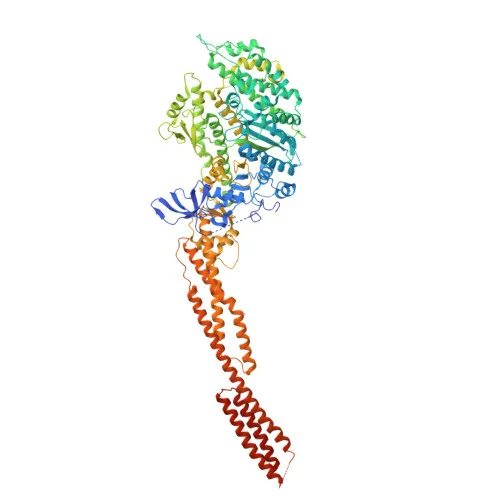
- Myosin-10 (UniProt entry P35580) is a cellular myosin heavy chain also designated non-muscle myosin heavy chain IIb (NMMHC-IIB) and encoded by the MYH10 gene in humans. Several alternatively spliced isoforms exist.
- It functions as an actin-based motor protein involved in cytokinesis, maintenance of cell shape, and specialized processes like secretion and capping.
- Myosin-10 cooperates with LARP6 to stabilize type I collagen mRNAs (COL1A1 and COL1A2), linking the cytoskeleton to extracellular matrix production.
- During cell spreading, it drives cytoskeleton reorganization, focal contact formation in central regions, and lamellipodial extension; this activity is mechanically counterbalanced by MYH9.
- The protein localizes to the lamellipodium and cell membrane, consistent with its role in membrane protrusion and adhesion.
- It acts as a cellular receptor for herpes simplex virus 1 envelope glycoprotein B, mediating viral entry.
- Expression is tissue-specific: isoform 1 is found in cerebellum and spinal cord, isoform 2 in cerebrum and retina, while isoform 3 is predominantly cerebral.
- Post-translational modifications include acetylation, methylation, and phosphorylation, and the protein is classified under keywords such as motor protein, myosin, actin-binding, and ATP-binding.
Experimental Guidance and Technical Tips
- The polyclonal antibody is generated against a recombinant fragment spanning amino acids 1908–2007 of human MYH10. This C-terminal region may influence epitope recognition and isoform detection.
- For Western blot, consider titrating the antibody using a dilution series (e.g., 1:500–1:2000) and optimizing based on endogenous expression levels in your cell or tissue lysates.
- Cross-reactivity with mouse and rat MYH10 has been confirmed; always validate expression patterns in your specific model system.
- In ELISA applications, the antibody can be employed as a capture or detection reagent; assay conditions should be optimized for coating and detection parameters.
- Given the large predicted molecular weight (229 kDa), ensure proper gel electrophoresis conditions (e.g., low-percentage gels) for efficient transfer and resolution.
CamelBio: Your One-Stop Sourcing Bridge
CamelBio streamlines IVD raw material procurement for cytoskeleton and viral entry research, offering this MYH10 polyclonal antibody as part of a comprehensive portfolio of validated immunological reagents. Our supply chain covers polyclonal and monoclonal antibodies, bulk ancillary reagents, and rare-target sourcing to support your assay development. Reach out to our team to explore flexible procurement solutions tailored to your diagnostic needs.
REQUEST A QUOTE
Our professional team will reply to you within one business day. Please feel free to contact us!