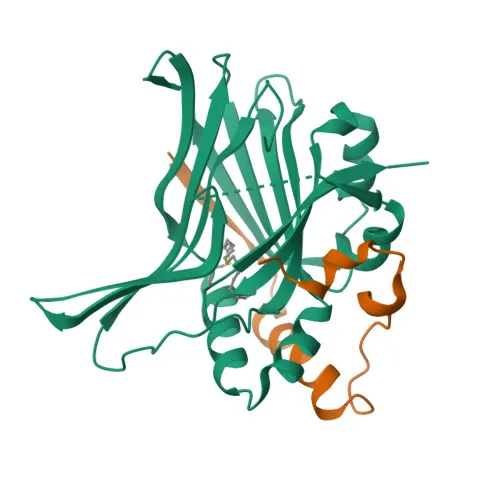
Methylated Antibodies
MonoMethyl-YAP1-K342 Rabbit Polyclonal Antibody (P46937) for WB and ELISA
Item Number : CM0000259
Price varies based on specs and customizations
- Application
- WB, ELISA
- Cross Reactivity
- Human, Mouse, Rat
- Protein Weight
- 54kDa

Shipping:
Contact us to get shipping details Enjoy On-time Dispatch Guarantee.
Why Choose Us
Easy ordering process, quality products, and dedicated support for your business success.
Core Product Specifications and Parameters
| Parameter | Description |
|---|---|
| Product Name | MonoMethyl-YAP1-K342 Rabbit pAb |
| Remarks/Alias | YAP; YKI; COB1; YAP2; YAP-1; YAP65; MonoMethyl-YAP1-K342 |
| Species | Human |
| GeneID (human) | 10413 |
| GeneID | 10413 |
| Immunogen | A synthetic monomethylated peptide around K342 of human YAP1 (NP_001123617.1). |
| Source | Rabbit |
| Category | Methylated Antibodies |
| Application | WB, ELISA |
| Cross Reactivity | Human, Mouse, Rat |
| SWISS | P46937 |
| Protein Weight | 54kDa |
| Shipping | Ice bag |
Biological Background: YAP1 Function and Localization
- YAP1 (Yes-associated protein 1) functions as a transcriptional coactivator and corepressor, acting as a pivotal downstream effector of the Hippo signaling pathway. This pathway critically regulates organ size and suppresses tumorigenesis by restricting cell proliferation and promoting apoptosis (PMID:17974916, PMID:18280240, PMID:18579750, PMID:21364637, PMID:30447097). Related references: PMID:17974916, PMID:18280240, PMID:18579750, PMID:21364637, PMID:30447097.
- Phosphorylation by the LATS1/2 kinases sequesters YAP1 in the cytoplasm, preventing its nuclear translocation and the subsequent activation of TEAD-dependent transcription. This phosphorylation-dependent regulation is central to its role in controlling cell growth, anchorage-independent growth, and epithelial-mesenchymal transition (EMT) (PMID:18158288, PMID:26598551, PMID:34404733). Related references: PMID:18158288, PMID:26598551, PMID:34404733.
- YAP1 is subject to extensive post-translational modifications, including phosphorylation at multiple serine, threonine, and tyrosine residues, as well as ubiquitination and methylation. The methylation of lysine 342 (K342) is a specific modification that this antibody recognizes. While not extensively characterized in UniProt, methylation at this site may influence YAP1 interactions or stability, adding another layer of Hippo pathway regulation.
- Subcellular localization of YAP1 is dynamically regulated; it predominantly localizes to the nucleus at low cell density and translocates to the cytoplasm at high cell density, a process modulated by phosphorylation. YAP1 also associates with tight junctions and the cell membrane in response to mechanical cues (PMID:18158288, PMID:20048001, PMID:31835537, PMID:25849865). Related references: PMID:18158288, PMID:20048001, PMID:31835537, PMID:25849865.
- Tissue-specific expression analysis reveals increased YAP1 levels in certain liver and prostate cancers, underscoring its oncogenic potential. Moreover, isoforms lacking the transactivation domain are detected in striatal neurons of Huntington disease patients (PMID:16461361, PMID:17974916, PMID:7782338). Related references: PMID:16461361, PMID:17974916, PMID:7782338.
Experimental Guidance and Technical Tips
- This antibody was raised against a synthetic monomethylated peptide corresponding to residues surrounding K342 of human YAP1, making it specific for the methylated form. For optimal detection in WB, consider using nuclear and cytoplasmic fractionation protocols to enrich YAP1, as its localization affects abundance.
- When performing ELISA, include a non-methylated peptide control to confirm specificity. A competitive ELISA approach with methylated and non-methylated peptides can help validate signal specificity.
- Cross-reactivity is predicted for mouse and rat based on sequence homology; however, validate reactivity in the relevant tissue or cell line before large-scale experiments.
- For WB, standard blocking and detection conditions are suitable; however, if non-specific bands appear, consider optimizing antibody dilution (e.g., 1:500-1:2000) and blocking buffer composition.
CamelBio: Your One-Stop Sourcing Bridge
At CamelBio, we specialize in providing high-quality IVD raw materials to diagnostic manufacturers and research laboratories worldwide. Our portfolio includes validated antibody pairs, optimized monoclonal and polyclonal antibodies, and bulk ancillary reagents tailored to your assay development needs. This MonoMethyl-YAP1-K342 rabbit polyclonal antibody exemplifies our commitment to offering rare and modification-specific reagents for the study of Hippo pathway targets, supporting your research from concept to clinic. Contact us for customized sourcing solutions and technical consultation.
REQUEST A QUOTE
Our professional team will reply to you within one business day. Please feel free to contact us!