Methylated Antibodies
MonoMethyl-Histone H3-K9 Rabbit Monoclonal Antibody (Q16695/P68431) for WB, IHC, ChIP, ELISA
Item Number : CM0000379
Price varies based on specs and customizations
- Application
- WB, DB, IHC-P, IF/ICC, ChIP, ELISA
- Cross Reactivity
- Human, Mouse, Rat, Other (Wide Range Predicted)
- Protein Weight
- 16 kDa

Shipping:
Contact us to get shipping details Enjoy On-time Dispatch Guarantee.
Why Choose Us
Easy ordering process, quality products, and dedicated support for your business success.
Core Product Specifications and Parameters
| Parameter | Value |
|---|---|
| Product Name | MonoMethyl-Histone H3-K9 Rabbit mAb |
| Remarks/Alias | H3/A; H3C2; H3C3; H3C4; H3C6; H3C7; H3C8; H3FA; H3C10; H3C11; H3C12; HIST1H3A; MonoMethyl-Histone H3-K9 |
| Species | Human |
| GeneID (human) | 8290/8350 |
| GeneID | 8290/8350 |
| Immunogen | Synthetic peptide - A synthetic monomethylated peptide around K9 of human Histone H3 (P68431) |
| Source | Rabbit |
| Category | Methylated Antibodies |
| Application | WB, DB, IHC-P, IF/ICC, ChIP, ELISA |
| Cross Reactivity | Human, Mouse, Rat, Other (Wide Range Predicted) |
| SWISS | Q16695/P68431 |
| Protein Weight | 16 kDa |
| Shipping | Ice bag |
Biological Background: Histone H3 Function and Localization
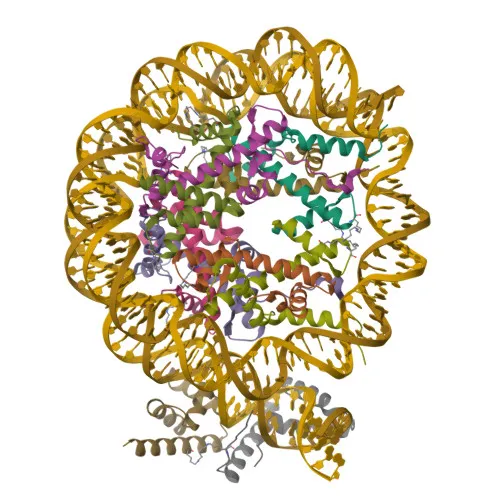
Histone H3 is a core component of the nucleosome, the fundamental repeating unit of chromatin. Nucleosomes wrap and compact DNA, thereby regulating access for transcription, replication, and repair. Both the canonical replication-dependent histone H3.1 (UniProt P68431) and the testis-specific variant H3.1t (UniProt Q16695) share highly conserved N-terminal tails, where key regulatory modifications occur.
The N-terminal tail of histone H3 is subject to a diverse array of post-translational modifications (PTMs), including methylation, acetylation, phosphorylation, citrullination, and others. These modifications constitute the 'histone code,' governing chromatin structure and gene expression. Methylation of lysine 9 (K9; corresponding to position 10 in the full precursor) is a critical epigenetic mark. Monomethylated H3K9 (H3K9me1) is associated with transcriptional silencing and heterochromatin formation, and can serve as a substrate for further methylation by specific methyltransferases.
This rabbit monoclonal antibody was generated against a synthetic monomethylated peptide around K9 of human histone H3.1 (P68431), enabling specific detection of H3K9me1. It does not recognize the unmethylated or differently methylated forms (e.g., H3K9me2/me3), as confirmed by immunogen design.
Subcellular localization: Histone H3 is predominantly nuclear and chromosome-associated. Tissue specificity: Canonical H3.1 variants are expressed in most dividing cells, while the H3.1t variant (Q16695) is specifically expressed in testicular cells.
Related references: PMID:11242053; PMID:16267050; PMID:17194708.
Experimental Guidance and Technical Tips
- The immunogen is a synthetic monomethylated peptide around K9; specificity for H3K9me1 should be verified using peptide competition assays with unmodified, mono-, di-, and trimethylated K9 peptides as negative and positive controls.
- In Western blot (WB) and dot blot (DB), a band/spot at approximately 16 kDa is expected. Ensure proper histone extraction and loading normalization with total H3 antibody.
- For immunohistochemistry (IHC-P) and immunofluorescence (IF/ICC), optimize antigen retrieval and blocking conditions for each tissue/cell type to obtain specific nuclear staining.
- Chromatin immunoprecipitation (ChIP) using this antibody can map H3K9me1 genomic distributions; cross-linking and antibody amount require empirical optimization. Consider sequential ChIP to confirm monomethylation specificity.
- The antibody is predicted to cross-react with a wide range of species due to high sequence conservation of the H3 N-terminus; validation in the relevant sample system (e.g., mouse, rat) is recommended.
- In ELISA, the antibody can serve as a capture or detection reagent for quantifying H3K9me1 in extracted histones or nucleosomes.
CamelBio: Your One-Stop Sourcing Bridge
CamelBio empowers diagnostic manufacturers, laboratories, and research institutes with seamless, one-stop access to premium IVD raw materials and technical services—from initial concept through clinical application. This MonoMethyl-Histone H3-K9 Rabbit mAb supports epigenetics research and assay development. Beyond this product, CamelBio offers validated antibody pairs, optimized polyclonal and monoclonal antibodies, bulk ancillary reagents, and specialized sourcing for rare epigenetic targets. Partner with CamelBio to streamline your supply chain and accelerate your diagnostic projects.
REQUEST A QUOTE
Our professional team will reply to you within one business day. Please feel free to contact us!