Methylated Antibodies
MonoMethyl-Histone H3-K9 Rabbit mAb (Q16695/P68431) — Monoclonal Antibody for Epigenetic Research
Item Number : CM0000319
Price varies based on specs and customizations
- Application
- WB, DB, IHC-P, IF/ICC, ELISA
- Cross Reactivity
- Human, Mouse, Rat, Other (Wide Range Predicted)

Shipping:
Contact us to get shipping details Enjoy On-time Dispatch Guarantee.
Why Choose Us
Easy ordering process, quality products, and dedicated support for your business success.
Core Product Specifications and Parameters
| Parameter | Value |
|---|---|
| Product Name | MonoMethyl-Histone H3-K9 Rabbit mAb |
| Remarks/Alias | H3t; H3.4; H3/g; H3FT; H3C16; HIST3H3; MonoMethyl-Histone H3-K9 |
| Species | Human |
| GeneID (human) | 8290/8350 |
| GeneID | 8290/8350 |
| Immunogen | Synthetic peptide|A synthetic monomethylated peptide around K9 of human Histone H3 (NP_003520.1). |
| Source | Rabbit |
| Category | Methylated Antibodies |
| Application | WB, DB, IHC-P, IF/ICC, ELISA |
| Cross Reactivity | Human, Mouse, Rat, Other (Wide Range Predicted) |
| SWISS | Q16695/P68431 |
| Protein Weight | 15 kDa |
| Shipping | Ice bag |
Biological Background: Histone H3 Function and Localization
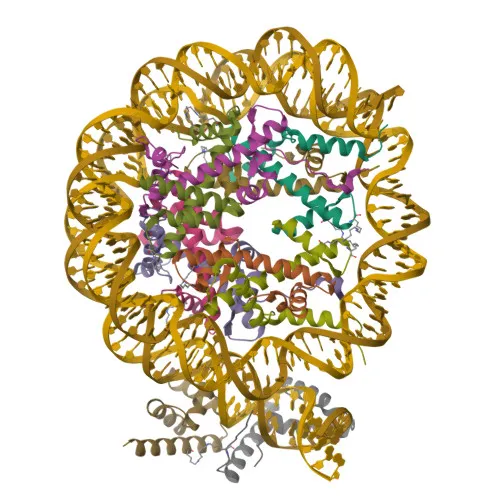
Histone H3 is a core component of nucleosomes, which wrap and compact DNA into chromatin, restricting DNA accessibility to transcriptional, repair, and replication machinery. Through extensive post-translational modifications (the “histone code”), histone H3 plays a central role in regulating transcription, DNA repair, replication, and chromosomal stability.
Related references: UniProt Q16695, UniProt P68431
Subcellularly, histone H3 is localized to the nucleus and chromosomes. Two main variants are represented by the Swiss-Prot entries: H3.1t (Q16695) is primarily expressed in testicular cells, while the canonical H3.1 (P68431) is expressed in most tissues.
Related references: UniProt Q16695, UniProt P68431
Among the many modifications, mono-methylation at lysine 9 (H3K9me1) is a key mark associated with gene silencing and heterochromatin formation. This modification is dynamically regulated by methyltransferases and demethylases, influencing chromatin architecture and gene expression profiles.
Related references: UniProt P68431
Experimental Guidance and Technical Tips
- The immunogen is a synthetic peptide specifically monomethylated at K9; consider using a non-methylated peptide or other methylation-state peptides as controls to confirm monospecificity.
- Validated applications include Western blot (WB), dot blot (DB), immunohistochemistry-paraffin (IHC-P), immunofluorescence/immunocytochemistry (IF/ICC), and ELISA. Optimal dilutions should be determined empirically.
- The antibody is predicted to cross-react with a wide range of species beyond human, mouse, and rat; validate in your specific sample system to ensure reactivity.
- For IHC-P and IF/ICC, appropriate antigen retrieval and permeabilization may enhance signal; consider testing different fixation protocols.
CamelBio: Your One-Stop Sourcing Bridge
CamelBio provides diagnostic manufacturers, labs, and research institutes with one-stop access to IVD raw materials, technical services, and consulting—covering every stage from concept to clinic. For your epigenetic or chromatin research needs, we offer validated monoclonal and polyclonal antibodies, optimized matched antibody pairs, and bulk ancillary reagents. Inquire about our rare-target raw-material sourcing capabilities, including highly specific mono-methylation state antibodies like this H3K9me1 mAb.
REQUEST A QUOTE
Our professional team will reply to you within one business day. Please feel free to contact us!