Methylated Antibodies
MonoMethyl-Histone H3-K9 Rabbit mAb | Q16695 / P68431 – Methylation-Specific Antibody for WB, ChIP, ELISA, and More
Item Number : CM0000411
Price varies based on specs and customizations
- Application
- WB, IF/ICC, IHC-P, DB, ChIP, ELISA
- Cross Reactivity
- Human, Mouse, Rat, Other (Wide Range Predicted)
- Protein Weight
- 16kDa

Shipping:
Contact us to get shipping details Enjoy On-time Dispatch Guarantee.
Why Choose Us
Easy ordering process, quality products, and dedicated support for your business success.
Core Product Specifications and Parameters
| Parameter | Value |
|---|---|
| Product Name | MonoMethyl-Histone H3-K9 Rabbit mAb |
| Remarks/Alias | H3/A; H3C2; H3C3; H3C4; H3C6; H3C7; H3C8; H3FA; H3C10; H3C11; H3C12; HIST1H3A |
| Species | Human |
| GeneID (human) | 8290/8350 |
| GeneID | 8290/8350 |
| Immunogen | Synthetic peptide: A synthetic monomethylated peptide corresponding to residues surrounding K9 of human histone H3 (NP_003520.1). |
| Source | Rabbit |
| Category | Methylated Antibodies |
| Application | WB, IF/ICC, IHC-P, DB, ChIP, ELISA |
| Cross Reactivity | Human, Mouse, Rat, Other (Wide Range Predicted) |
| SWISS | Q16695/P68431 |
| Protein Weight | 16kDa |
| Shipping | Ice bag |
Biological Background: Histone H3 Function and Localization
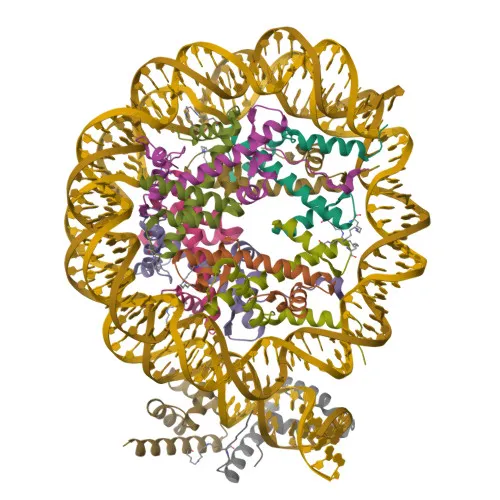
Histone H3 is a core component of the nucleosome, the fundamental repeating unit of chromatin. It plays a central role in compacting DNA and regulating its accessibility to transcription, replication, and repair machineries.
A key feature of histone H3 biology is the "histone code" hypothesis—specific combinations of post-translational modifications (PTMs) on its flexible N-terminal tail govern distinct chromatin states and downstream nuclear processes. Among these PTMs, methylation at lysine 9 (H3K9me) is one of the most intensively studied marks, often linked to transcriptional repression, heterochromatin formation, and genomic stability.
Related references: PMID:11242053 PMID:16267050 PMID:17194708
The lysine at position 9 of the mature H3 protein (corresponding to UniProt position 10) can be found in different methylation states—mono-, di-, or tri‑methylated—each with distinct biological outcomes. Monomethylated H3K9 (H3K9me1) is primarily enriched at promoters and enhancers of active genes in euchromatic regions, where it fine‑tunes transcriptional activity, although it has also been detected at pericentric heterochromatin during specific cellular contexts.
Related references: PMID:16185088 PMID:16457588
Histone H3 exists as multiple variants encoded by different genes. The canonical H3.1 (SWISS P68431) is expressed in a replication‑dependent manner and is incorporated into chromatin during S‑phase, while the testis‑specific H3.1t/H3‑4 (Q16695) variant is expressed solely in testicular cells and may contribute to spermatogenesis‑specific chromatin dynamics. This antibody’s epitope spans a region highly conserved across H3 variants, enabling broad detection.
Related references: None (tissue specificity based on sequence records)
Subcellularly, histone H3 is localized to the nucleus and tightly associated with chromosomal DNA.
This antibody specifically recognizes the monomethylated form of H3K9. Due to the conserved nature of the modification site, it is predicted to react with multiple species and H3 subtypes.
Experimental Guidance and Technical Tips
- Sample preparation for WB: Consider using acid‑extracted histones or nuclear‑enriched lysates to improve signal‑to‑noise ratio. For total cell lysates, include appropriate protease inhibitor cocktails and avoid denaturation conditions that may strip histone modifications.
- Specificity validation: In any assay, confirm antibody specificity by using synthetic monomethylated vs. unmethylated K9 peptides in a peptide competition experiment (dot blot or ELISA). A recombinant histone H3 protein array with defined methylation states can also serve as a rigorous control.
- ChIP optimization: For chromatin immunoprecipitation, the cross‑linking time, antibody amount, and sonication conditions must be empirically determined. The antibody’s high avidity for the monomethyl mark may require less antibody per reaction compared to pan‑H3 antibodies. Always include a monomethyl‑specific peptide blocking control.
- IHC and IF considerations: Fixation and antigen retrieval can influence epitope accessibility. For IHC‑P, standard formalin‑fixed paraffin‑embedded (FFPE) protocols with a heat‑mediated antigen retrieval step (citrate buffer, pH 6.0) often work well; however, preliminary testing is advised. In immunofluorescence, a brief methanol permeabilization may enhance nuclear staining.
- ELISA/dot blot applications: Coat plates with monomethylated H3(1‑21) peptide or full‑length recombinant H3K9me1 to evaluate binding affinity and linearity. Use BSA‑conjugated peptide as an alternative.
- Species cross‑reactivity: Though broad reactivity is predicted, we recommend validating the antibody in your specific sample system (e.g., mouse, rat, or other relevant species) before large‑scale experiments.
CamelBio: Your One-Stop Sourcing Bridge
CamelBio serves as a comprehensive IVD raw‑material partner, bridging diagnostic manufacturers, research laboratories, and institutes from concept to clinic. Whether you are developing histone modification‑based epigenetic assays or building methylation‑specific immunoassays, CamelBio can supply validated antibody pairs, optimized monoclonal/polyclonal antibodies, bulk ancillary reagents, and even assist in sourcing rare‑target raw materials. Our product portfolio includes this high‑affinity monomethyl‑histone H3‑K9 rabbit monoclonal antibody, designed to support your epigenetic research and diagnostic needs with reliable, batch‑to‑batch consistency.
REQUEST A QUOTE
Our professional team will reply to you within one business day. Please feel free to contact us!