Methylated Antibodies
MonoMethyl-Histone H3-K36 Rabbit mAb (Q16695/P68431) for WB, DB, IP, ELISA, ChIP
Item Number : CM0000361
Price varies based on specs and customizations
- Application
- WB, DB, IP, ELISA, ChIP
- Cross Reactivity
- Human, Mouse, Rat, Other (Wide Range Predicted)
- Protein Weight
- 15kDa

Shipping:
Contact us to get shipping details Enjoy On-time Dispatch Guarantee.
Why Choose Us
Easy ordering process, quality products, and dedicated support for your business success.
Core Product Specifications and Parameters
| Parameter | Value |
|---|---|
| Product Name | MonoMethyl-Histone H3-K36 Rabbit mAb |
| Remarks/Alias | H3/A; H3C2; H3C3; H3C4; H3C6; H3C7; H3C8; H3FA; H3C10; H3C11; H3C12; HIST1H3A; MonoMethyl-Histone H3-K36 |
| Species | Human |
| GeneID (human) | 8290/8350 |
| GeneID | 8290/8350 |
| Immunogen | Synthetic peptide|A synthetic monomethylated peptide around K36 of human histone H3 (NP_003520.1). |
| Source | Rabbit |
| Category | Methylated Antibodies |
| Application | WB, DB, IP, ELISA, ChIP |
| Cross Reactivity | Human, Mouse, Rat, Other (Wide Range Predicted) |
| SWISS | Q16695/P68431 |
| Protein Weight | 15kDa |
| Shipping | Ice bag |
Biological Background: MonoMethyl-Histone H3-K36 Function and Localization
-
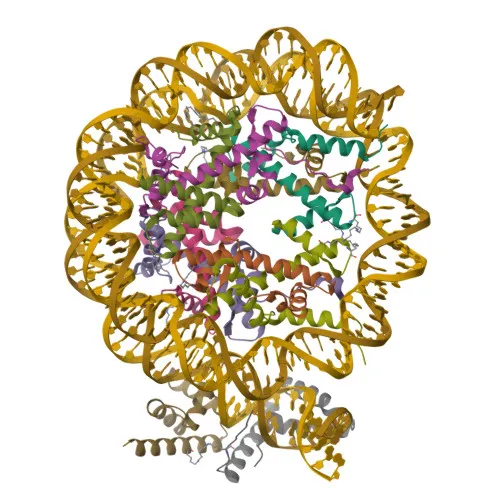
Histone H3 is a core component of the nucleosome, which wraps and compacts DNA into chromatin. This structure limits DNA accessibility and plays a central role in transcription regulation, DNA repair, DNA replication, and chromosomal stability. The dynamic regulation of chromatin is mediated in part by a complex array of post-translational modifications of histones, collectively referred to as the histone code.
-
In humans, multiple genes encode canonical histone H3 variants. H3.1 (represented by SWISS P68431 and its many gene products such as H3C1–H3C12) is the predominant replication-dependent form. A testis-specific H3 variant, H3.1t (SWISS Q16695; also known as H3/t or H3.4), is expressed exclusively in testicular cells and may contribute to chromatin reorganization during spermatogenesis.
-
The N-terminal tail of histone H3 undergoes extensive post-translational modifications, including methylation of specific lysine residues. Monomethylation of lysine 36 (H3K36me1) is one such critical modification, corresponding to the methylation of Lys-37 in the UniProt canonical sequence. This modification has been identified in multiple proteomic studies. Related references: PMID:15983376, PMID:16185088, PMID:16267050, PMID:16627869, PMID:17194708
-
H3K36me1 has been implicated in transcriptional elongation, pre-mRNA splicing, and DNA repair. The modification is established by methyltransferases such as NSD1, NSD2, and SETD2 (which can also catalyze higher methylation states), and is removed by histone demethylases. Its genomic distribution is typically associated with active gene bodies, underscoring its role in gene regulation.
Experimental Guidance and Technical Tips
-
The immunogen used to generate this antibody is a synthetic monomethylated peptide centered on K36 of human histone H3. When designing and validating experimental workflows, consider that the antibody's recognition may depend on the specific methylation state (me1) and could be influenced by adjacent post-translational modifications. For ChIP applications, ensure that the target chromatin context and antibody specificity are verified using appropriate positive and negative controls.
-
In Western blotting, the expected protein band is approximately 15 kDa. Use high-percentage gels (e.g., 12–15% SDS-PAGE) and optimized transfer conditions (low molecular weight) to achieve clear resolution. Including a histone marker or total H3 control is recommended for accurate identification.
-
For ELISA and dot blot (DB), including synthetic peptides representing unmethylated, monomethylated, dimethylated, and trimethylated H3K36 in the assay design can help confirm modification-specific recognition.
-
The product lists a wide predicted cross-reactivity (Human, Mouse, Rat, and others). While this suggests broad species compatibility, validation with your specific species and tissue type is strongly recommended, especially for non-human applications.
-
For all applications, optimal working dilutions and conditions should be determined experimentally using the relevant sample system.
CamelBio: Your One-Stop Sourcing Bridge
CamelBio is your one-stop IVD raw-material sourcing partner, providing validated antibody pairs, optimized monoclonal and polyclonal antibodies, bulk ancillary reagents, and rare target sourcing to diagnostic manufacturers and research institutes worldwide. Our portfolio includes a range of histone modification-specific antibodies like the MonoMethyl-Histone H3-K36 Rabbit mAb, which supports epigenetics research and IVD assay development. Contact CamelBio to explore customized, end-to-end sourcing solutions that accelerate your diagnostic workflow from concept to clinic.
REQUEST A QUOTE
Our professional team will reply to you within one business day. Please feel free to contact us!