Methylated Antibodies
MonoMethyl-Histone H3-K18 (Q16695/P68431) Rabbit mAb for ChIP & CUT&Tag | WB, IHC-P, IF, ELISA
Item Number : CM0000358
Price varies based on specs and customizations
- Application
- WB, DB, IHC-P, IF/ICC, IP, ChIP, CUT&Tag, ELISA
- Cross Reactivity
- Human, Mouse, Rat, Other (Wide Range Predicted)
- Protein Weight
- 15 kDa

Shipping:
Contact us to get shipping details Enjoy On-time Dispatch Guarantee.
Why Choose Us
Easy ordering process, quality products, and dedicated support for your business success.
Core Product Specifications and Parameters
| Parameter | Value |
|---|---|
| Product Name | MonoMethyl-Histone H3-K18 Rabbit mAb |
| Remarks/Alias | H3t; H3.4; H3/g; H3FT; H3C16; HIST3H3; MonoMethyl-Histone H3-K18 |
| Species | Human |
| GeneID (Human) | 8290/8350 |
| GeneID | 8290/8350 |
| Immunogen | A synthetic monomethylated peptide around K18 of human histone H3 (P68431) |
| Source | Rabbit |
| Category | Methylated Antibodies |
| Application | WB, DB, IHC-P, IF/ICC, IP, ChIP, CUT&Tag, ELISA |
| Cross Reactivity | Human, Mouse, Rat, Other (Wide Range Predicted) |
| SWISS | Q16695/P68431 |
| Protein Weight | 15 kDa |
| Shipping | Ice bag |
Biological Background: Histone H3 Function and Localization
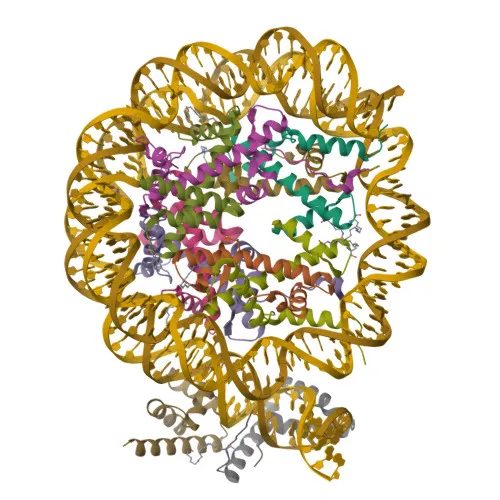
Histones are the main protein components of chromatin, acting as spools around which DNA winds. Histone H3, together with H2A, H2B, and H4, forms the nucleosome core. These nucleosomes compact DNA and regulate its accessibility for transcription, replication, repair, and chromosomal stability. The N-terminal tail of histone H3 is subject to numerous post-translational modifications (PTMs), including methylation, acetylation, phosphorylation, and others, which collectively constitute the "histone code" and orchestrate chromatin dynamics and gene expression.
Lysine 18 (K18) of histone H3 (corresponding to position 19 in the precursor) is a key residue that can be monomethylated. This modification, along with other PTMs at this site, influences the binding of effector proteins and modulates chromatin structure. While acetylation of K18 is often linked to transcriptional activation, methylation states can have context-dependent effects. Monomethylation of H3K18 has been implicated in regulating gene expression and maintaining proper chromatin function.
Related references: PMID:16267050, PMID:16627869, PMID:17194708.
The SWISS entries Q16695 (Histone H3.1t) and P68431 (Histone H3.1) represent two human histone H3 variants. Q16695 is predominantly expressed in testicular cells, where it replaces canonical H3.1 during spermatogenesis. P68431 is a replication-dependent histone expressed in somatic cells and is widely distributed. Both variants localize to the nucleus and chromosome.
Related references: UniProt Q16695, UniProt P68431.
Experimental Guidance and Technical Tips
- The antibody was generated using a synthetic monomethylated peptide around K18. To ensure specificity for the monomethylated form, consider performing a peptide competition assay using the corresponding unmodified or di-/tri-methylated peptides during initial validation.
- For Western blot (WB), histone extracts from human, mouse, or rat cells are recommended as starting material. A specific band around 15 kDa is expected. Run appropriate controls, including total H3 antibody, to confirm equal loading.
- In chromatin immunoprecipitation (ChIP) and CUT&Tag experiments, titration of the antibody is critical. It is advisable to include positive control genomic regions known to harbor H3K18 monomethylation (if available) and negative control loci. Crosslinking conditions may influence the epitope accessibility; consider both native and crosslinked ChIP protocols.
- For immunohistochemistry (IHC-P) and immunofluorescence (IF/ICC), antigen retrieval conditions may need optimization. Using tissue or cell samples with documented H3K18me1 levels is recommended for establishing staining specificity.
- ELISA and dot blot (DB) applications can be used for rapid antibody titer and specificity checks against various methyl-state peptides.
CamelBio: Your One-Stop Sourcing Bridge
CamelBio is dedicated to supporting diagnostic manufacturers, research laboratories, and institutes by providing a comprehensive one-stop access to critical IVD raw materials. This MonoMethyl-Histone H3-K18 Rabbit mAb exemplifies our offering in the epigenetics research area, where precise and specific reagents are essential. Beyond single antibodies, CamelBio’s sourcing expertise includes validated antibody pairs for immunoassays, optimized monoclonal and polyclonal antibodies tailored to your application, bulk ancillary reagents, and support for rare or emerging target raw-material procurement. We aim to streamline your development pipeline from concept to clinic, ensuring efficient and reliable supply.
REQUEST A QUOTE
Our professional team will reply to you within one business day. Please feel free to contact us!