Methylated Antibodies
MonoMethyl-Histone H3 (K14) Rabbit Polyclonal Antibody (Q16695/P68431) for WB, IF, ELISA
Item Number : CM0000369
Price varies based on specs and customizations
- Application
- WB, IF/ICC, ELISA
- Cross Reactivity
- Human, Mouse, Rat, Other (Wide Range Predicted)
- Protein Weight
- 15 kDa

Shipping:
Contact us to get shipping details Enjoy On-time Dispatch Guarantee.
Why Choose Us
Easy ordering process, quality products, and dedicated support for your business success.
Core Product Specifications and Parameters
| Parameter | Value |
|---|---|
| Product Name | MonoMethyl-Histone H3-K14 Rabbit pAb |
| Remarks/Alias | H3t; H3.4; H3/g; H3FT; H3C16; HIST3H3; MonoMethyl-Histone H3-K14 |
| Species | Human |
| GeneID (human) | H3 |
| GeneID | 8290/8350 |
| Immunogen | Synthetic peptide; A synthetic monomethylated peptide around K14 of human MonoMethyl-Histone H3-K14 (NP_003520.1). |
| Source | Rabbit |
| Category | Methylated Antibodies |
| Application | WB, IF/ICC, ELISA |
| Cross Reactivity | Human, Mouse, Rat, Other (Wide Range Predicted) |
| SWISS | Q16695/P68431 |
| Protein Weight | 15 kDa |
| Shipping | Ice bag |
Biological Background: Histone H3 Function and Localization
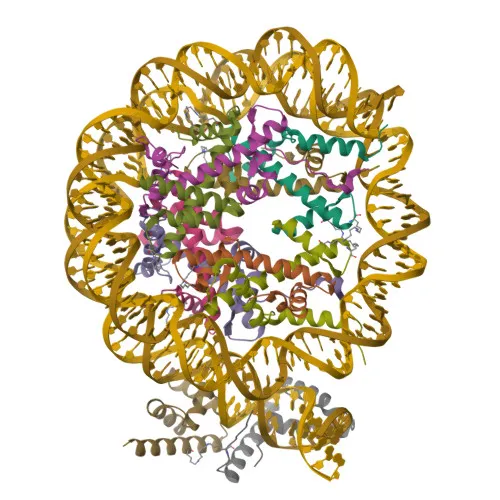
- Histone H3 is a core component of the nucleosome, wrapping and compacting DNA into chromatin. This limits DNA accessibility and plays a central role in transcription regulation, DNA repair, DNA replication, and chromosomal stability.
- There are multiple H3 variants; this antibody recognizes both the somatic H3.1 (SWISS: P68431) and the testis-specific H3.1t (SWISS: Q16695). H3.1t is predominantly expressed in testicular cells.
- Histone H3 undergoes extensive post-translational modifications, collectively referred to as the "histone code," which regulate chromatin dynamics. These include methylation, acetylation, phosphorylation, and others at numerous residues. Related references: PMID:16185088, PMID:16267050, PMID:10464286
- Monomethylation at lysine 14 (H3K14me1) is associated with transcriptional regulation and is a substrate for specific lysine demethylases. The antibody was raised against a monomethylated peptide around K14 and is expected to specifically recognize this modification.
Experimental Guidance and Technical Tips
- This antibody has been raised against a synthetic monomethylated peptide corresponding to residues around K14 of human Histone H3; it is expected to recognize the monomethylated form, but cross-reactivity with unmodified H3 or other modifications should be assessed.
- For Western blot, a band at approximately 15 kDa is expected corresponding to Histone H3. Consider including appropriate controls (e.g., lysates from cells treated with histone deacetylase/methyltransferase inhibitors) to verify specificity.
- For IF/ICC, fixation and permeabilization conditions may affect epitope accessibility; optimization is recommended.
- ELISA can be used for quantifying relative levels of H3K14 monomethylation; use of peptide competitors can confirm binding specificity.
CamelBio: Your One-Stop Sourcing Bridge
CamelBio provides diagnostic manufacturers, laboratories, and research institutes with a one-stop procurement platform for IVD raw materials, technical services, and consulting. This MonoMethyl-Histone H3-K14 rabbit polyclonal antibody is part of our expanding portfolio of epigenetic research tools. We supply validated antibody pairs, optimized monoclonal/polyclonal antibodies, bulk ancillary reagents, and can assist with sourcing rare-target raw materials to support your assay development and clinical transition.
REQUEST A QUOTE
Our professional team will reply to you within one business day. Please feel free to contact us!