Monoclonal Antibodies
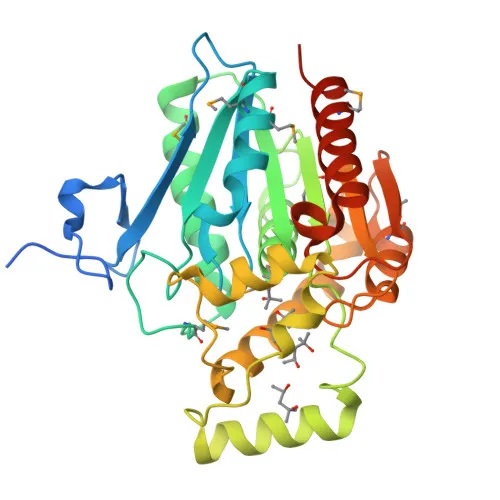
MGLL Rabbit PolymAb® for WB, IF-P, IHC-P, ELISA - Q99685
Item Number : CM0007120
Price varies based on specs and customizations
- Application
- WB, IF-P, IHC-P, ELISA
- Cross Reactivity
- Human, Mouse, Rat
- Protein Weight
- 33kDa

Shipping:
Contact us to get shipping details Enjoy On-time Dispatch Guarantee.
Why Choose Us
Easy ordering process, quality products, and dedicated support for your business success.
Core Product Specifications and Parameters
| Parameter | Value |
|---|---|
| Product Name | MGLL Rabbit PolymAb® |
| Remarks/Alias | MGL; HUK5; MAGL; HU-K5 |
| Species | Human |
| Gene ID (Human) | 11343 |
| Gene ID | 11343 |
| Immunogen | Recombinant fusion protein containing a sequence corresponding to amino acids 1-303 of human MGLL. (NP_001003794.1) |
| Source | Rabbit |
| Category | Monoclonal Antibodies |
| Application | WB, IF-P, IHC-P, ELISA |
| Cross Reactivity | Human, Mouse, Rat |
| SWISS | Q99685 |
| Protein Weight | 33kDa |
| Shipping | Ice bag |
Biological Background: MGLL Function and Localization
- MGLL, also known as monoglyceride lipase, monoacylglycerol lipase (MAGL), or HU-K5, is a serine hydrolase that catalyzes the hydrolysis of monoacylglycerides into free fatty acids and glycerol. Related references: PMID:19029917 PMID:20079333 PMID:21049984
- It plays a critical role in endocannabinoid signaling by degrading 2-arachidonoylglycerol (2-AG), a major endocannabinoid, thus regulating pain perception and nociception. Related references: PMID:19029917 PMID:20079333 PMID:21049984
- Through the modulation of free fatty acid levels, MGLL influences signaling pathways that promote cancer cell migration, invasion, and tumor growth. Related references: PMID:20079333 PMID:19029917 PMID:21049984
- MGLL localizes predominantly to the cytoplasm and cytosol, with association to membranes.
- It is widely expressed in tissues including adipose tissue, lung, liver, kidney, brain, and heart.
- The protein undergoes alternative splicing, generating multiple isoforms.
- It is subject to post-translational modifications such as nitration and phosphorylation, as identified by proteomics.
- As a key enzyme in lipid metabolism, MGLL is involved in both lipid biosynthesis and degradation.
Experimental Guidance and Technical Tips
- The immunogen corresponds to the N-terminal region (aa 1-303) of human MGLL, which may confer target specificity; always validate in your sample system.
- For Western blotting, use tissue lysates from brain, liver, or adipose tissue where MGLL is highly expressed; the predicted molecular weight is 33 kDa, though post-translational modifications may cause slight shifts.
- For immunohistochemistry (IHC) and immunofluorescence (IF), optimize fixation (e.g., 4% PFA) and antigen retrieval conditions to preserve epitope availability.
- When adapting to ELISA, consider pairing with a detection antibody recognizing a distinct epitope; titrate both capture and detection reagents.
- This antibody reacts with human, mouse, and rat, which is advantageous for cross-species translational research.
CamelBio: Your One-Stop Sourcing Bridge
At CamelBio, we streamline the acquisition of high-quality IVD raw materials for diagnostic developers and research labs. For your studies on endocannabinoid signaling, lipid metabolism, or cancer research, our global supply network can provide validated antibody pairs, optimized monoclonal and polyclonal antibodies, bulk ancillary reagents, and even rare target raw-material sourcing to accelerate your assay development and clinical transition. Partner with CamelBio to bridge research and clinical application with confidence.
REQUEST A QUOTE
Our professional team will reply to you within one business day. Please feel free to contact us!