Polyclonal Antibodies
MED26 Rabbit pAb for WB and ELISA - O95402
Item Number : CM0020943
Price varies based on specs and customizations
- Application
- WB, ELISA
- Cross Reactivity
- Human, Mouse, Rat
- Protein Weight
- 65kDa

Shipping:
Contact us to get shipping details Enjoy On-time Dispatch Guarantee.
Why Choose Us
Easy ordering process, quality products, and dedicated support for your business success.
Core Product Specifications and Parameters
| Parameter | Value |
|---|---|
| Product Name | MED26 Rabbit pAb |
| Remarks/Alias | CRSP7; CRSP70; MED26 |
| Species | Human |
| GeneID (Human) | 9441 |
| GeneID | 9441 |
| Immunogen | Recombinant protein|Recombinant fusion protein containing a sequence corresponding to amino acids 500-574 of human MED26 (NP_004822.2). |
| Source | Rabbit |
| Category | Polyclonal Antibodies |
| Application | WB, ELISA |
| Cross Reactivity | Human, Mouse, Rat |
| SWISS | O95402 |
| Protein Weight | 65kDa |
| Shipping | Ice bag |
Biological Background: MED26 Function and Localization
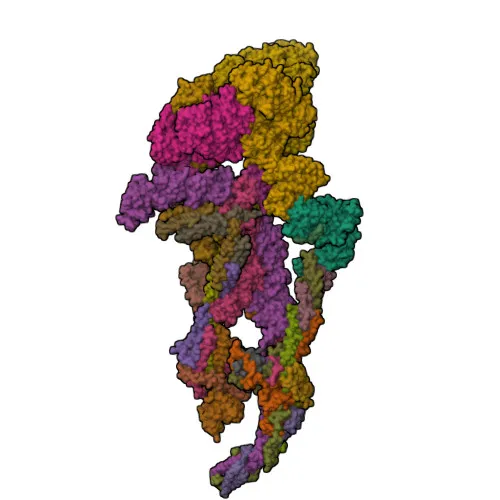
- MED26, also known as CRSP7, CRSP70, or ARC70, is a component of the Mediator complex, a large multi-protein coactivator required for regulated transcription of nearly all RNA polymerase II-dependent genes.
- The Mediator complex functions as a molecular bridge, conveying regulatory signals from gene-specific transcription factors to the basal RNA polymerase II transcription machinery to facilitate pre-initiation complex assembly.
- MED26 is one of many subunits of the Mediator complex, which is conserved across eukaryotes and acts as a central hub integrating diverse transcriptional inputs (Keyword: Activator).
- Subcellular localization studies indicate that MED26 is predominantly nuclear, consistent with its role in transcription regulation (SUBCELLULAR LOCATION: Nucleus).
- Post-translational modifications: MED26 is phosphorylated (Keyword: Phosphoprotein), which may modulate its activity or interactions within the Mediator complex.
- Alternative splicing of the MED26 gene generates multiple transcript variants (Keyword: Alternative splicing), suggesting functional diversity in different cellular contexts.
- MED26 has been identified through proteomics approaches (Keyword: Proteomics identification) and direct protein sequencing, confirming its expression in human cells.
Experimental Guidance and Technical Tips
- The immunogen is designed from a specific region (amino acids 500-574) of human MED26, which may confer specificity for certain isoforms or post-translational modification states; consider verifying in your sample system.
- For Western blotting, a band around 65 kDa is expected; use appropriate positive controls from human, mouse, or rat cell/tissue lysates.
- ELISA protocols may require titration to optimize antibody and antigen concentrations; consider testing with recombinant MED26 protein or cell lysates.
- Since MED26 is a transcription factor, consider using nuclear extracts to enrich the target and reduce background.
- As a polyclonal antibody, lot-to-lot variability should be assessed for batch consistency in your assays.
CamelBio: Your One-Stop Sourcing Bridge
CamelBio provides diagnostic manufacturers and researchers with one-stop access to reliable IVD raw materials, including validated antibody pairs, optimized polyclonal and monoclonal antibodies, and ancillary reagents. For MED26-related transcription and gene regulation studies, we offer a comprehensive portfolio of antibodies, recombinant proteins, and bulk reagents to support your workflow from target discovery to assay development. Our sourcing services can assist in identifying rare targets and custom antibody solutions, ensuring seamless integration into your research or diagnostic pipeline.
REQUEST A QUOTE
Our professional team will reply to you within one business day. Please feel free to contact us!