Polyclonal Antibodies
MCM7 Rabbit Polyclonal Antibody for WB, IF/ICC, IP, ELISA - P33993
Item Number : CM0015890
Price varies based on specs and customizations
- Application
- WB, IF/ICC, IP, ELISA
- Cross Reactivity
- Human, Mouse, Rat
- Protein Weight
- 81kDa

Shipping:
Contact us to get shipping details Enjoy On-time Dispatch Guarantee.
Why Choose Us
Easy ordering process, quality products, and dedicated support for your business success.
Core Product Specifications and Parameters
| Parameter | Value |
|---|---|
| Product Name | MCM7 Rabbit pAb |
| Remarks/Alias | MCM2; CDC47; P85MCM; P1CDC47; PNAS146; PPP1R104; P1.1-MCM3 |
| Species | Human |
| Gene ID (Human) | 4176 |
| Immunogen | Recombinant fusion protein containing a sequence corresponding to amino acids 1-140 of human MCM7 (NP_005907.3) |
| Source | Rabbit |
| Category | Polyclonal Antibodies |
| Application | WB, IF/ICC, IP, ELISA |
| Cross Reactivity | Human, Mouse, Rat |
| SWISS | P33993 |
| Protein Weight | 81kDa |
| Shipping | Ice bag |
Biological Background: MCM7 Function and Localization
-
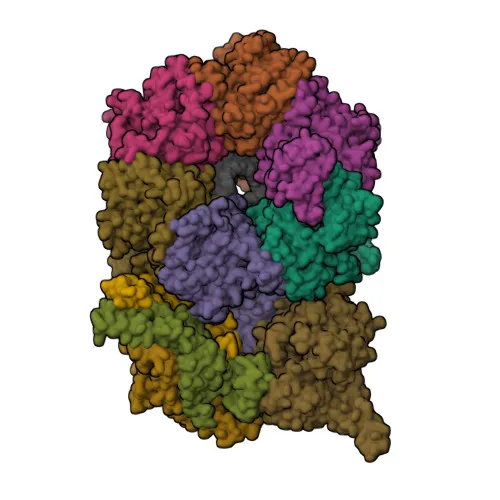
MCM7, also known as CDC47 homolog and P1.1-MCM3, is a key component of the MCM2-7 complex, which functions as the replicative helicase essential for DNA replication initiation and elongation. It is a core subunit of the CDC45-MCM-GINS (CMG) helicase that unwinds template DNA during replication. Related references: PMID:25661590 PMID:32453425 PMID:34694004
-
The ATPase active sites within the MCM2-7 ring are formed at the interface of two neighboring subunits, with a critical arginine finger motif provided in trans. The six ATPase sites are thought to contribute differentially to helicase activity. Related references: PMID:32453425
-
MCM7 is required for S-phase checkpoint activation in response to UV-induced DNA damage, highlighting its role in genome stability.
-
The protein localizes to the nucleus and associates with chromatin, consistent with its function in DNA replication and chromosome dynamics.
-
Post-translational modifications of MCM7, including acetylation, phosphorylation, and ubiquitination, likely regulate its activity during the cell cycle and in response to DNA damage.
Experimental Guidance and Technical Tips
- The immunogen corresponds to amino acids 1-140 of human MCM7, covering the N-terminal region. This region shows high homology among human, mouse, and rat, suggesting potential cross-reactivity. However, validation in the relevant species is recommended.
- For western blotting, a specific band at approximately 81 kDa is expected. Include proper loading controls and confirm specificity using knockdown or knockout cell lysates if available.
- In immunofluorescence and immunocytochemistry, MCM7 exhibits nuclear staining. Optimization of fixation and permeabilization conditions is advised for best results.
- For immunoprecipitation, the antibody may co-precipitate other MCM complex members; buffer conditions should be carefully tested.
- ELISA applications may be developed using direct or indirect formats, with appropriate antigen coating and detection conditions.
CamelBio: Your One-Stop Sourcing Bridge
CamelBio is a dedicated provider of IVD raw materials, offering a one-stop sourcing solution for diagnostic manufacturers and research laboratories. With expertise in DNA replication and cell cycle targets, we supply validated antibodies like this anti-MCM7 polyclonal antibody, along with matched antibody pairs, optimized monoclonal/polyclonal antibodies, bulk ancillary reagents, and rare target sourcing to accelerate your assay development from concept to clinic.
REQUEST A QUOTE
Our professional team will reply to you within one business day. Please feel free to contact us!